Apple's Rumored $1,000 HomeView Max: A Smart Home Breakthrough or a Dystopian Prop?
- Tags
- Apple
- Smart Home
- Technology
- Siri
- Smart Display
- HomeView Max
- Robotics
Apple is reportedly venturing deeper into the smart home landscape with a new, high-end device currently dubbed the 'HomeView Max.' According to insights from Bloomberg's Mark Gurman, this upcoming piece of hardware aims to shift the smart display from a static appliance to an interactive companion.
The Future of Smart Interaction
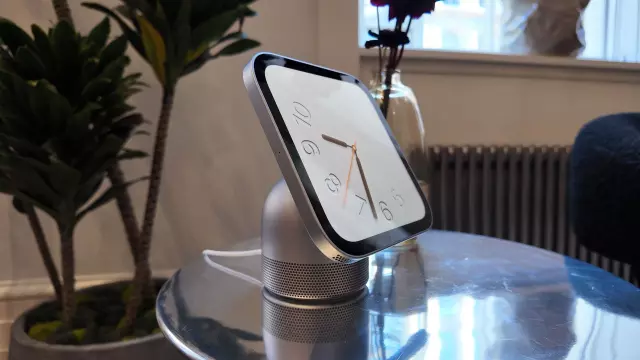
The most striking feature of the rumored HomeView Max is its sophisticated mechanical base. Unlike existing smart displays that remain fixed on a kitchen counter or desk, this device will reportedly utilize a motorized arm capable of 360-degree rotation. This allows the 9-inch display to physically turn and follow users as they move around a room, theoretically fostering a more natural engagement with virtual assistants like Siri.
From Abandoned Projects to Living Room Innovation
Interestingly, the engineering behind this movement appears to be a direct evolution of Apple's canceled 'Apple Car' project. Reports suggest that the gesture recognition, spatial awareness, and robotic motion technology developed for the ill-fated electric vehicle project are being repurposed for this home companion, transforming a multi-billion dollar failure into a pioneering consumer product.
The 'Black Mirror' Dilemma
While the prospect of a screen that mimics human presence through head tilts and tracking is technologically impressive, it raises significant concerns. Critics are already drawing parallels to dystopian science fiction, questioning whether users are truly comfortable with a device that proactively 'watches' them. The psychological shift from a tool you command to an entity that observes your presence creates a complex, potentially unsettling, user experience.
Challenges Ahead
Beyond the 'creep factor,' the HomeView Max faces a steep climb. Priced at a rumored $1,000, it faces significant market pressure. For such a premium price tag, Apple will need to deliver more than just a swivel screen; the AI integration, response times, and overall utility must be flawless. If the experience is marred by the typical latency associated with current voice assistants, the mechanical arm may feel more like an expensive gimmick than a revolutionary feature. With a projected launch window of 2027–2028, Apple has time to refine this vision, but it remains to be seen if consumers are ready to welcome a robotic companion into their living rooms.
Comments (0)
Sign in to join the conversation.Sign in
Loading comments...