You've Been Using Your Kitchen Sponge All Wrong — Here's How to Save Your Cookware
- Tags
- home cleaning
- cleaning hacks
- Tom's Guide
- Kitchen Sponge
- Cookware Maintenance
Introduction: The Deceptively Simple Kitchen Sponge
For as long as most of us can remember, treating the standard dual-layer kitchen sponge like a simple, one-size-fits-all scrubbing block has been the norm. The routine is usually mindless: squirt a dollop of dish soap onto the soft side, give it a quick squeeze to generate some foam, and then use whichever side happens to face downward to tackle the mess. If a dish features stubborn, burnt-on food residue, the immediate reaction is to flip straight to the abrasive scouring side and scrub aggressively.
However, this casual approach to dishwashing can carry a heavy price tag. Discovering that your favorite non-stick frying pan is flaking or scratched often comes as a rude awakening, prompting a closer look at how these everyday cleaning tools are actually engineered. That familiar two-tone design isn't just an aesthetic choice; mixing up the functions of each side is a fast track to ruining valuable kitchenware.
An Anatomy of a Dual-Layer Sponge: What Are the Materials?
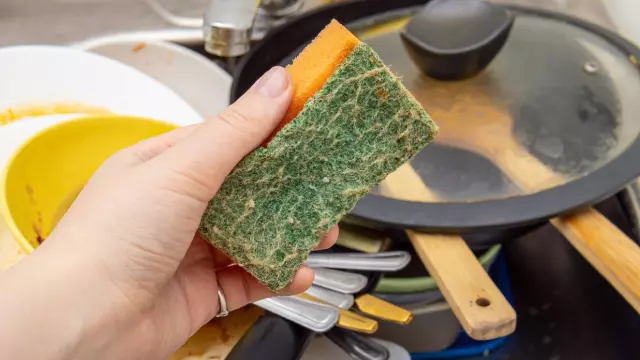
While the classic yellow-and-green sponge remains the ubiquitous standard in households worldwide, dual-layer sponges come in a multitude of color combinations. Regardless of the hues, that two-tone construction brings together two completely different cleaning instruments bonded into a single block, each carefully engineered for specific materials and household tasks.
The soft base layer is typically crafted from synthetic polyurethane foam or natural cellulose wood pulp. This porous material is designed for maximum liquid absorption and rapid foam creation. It holds soap and water efficiently while remaining soft, flexible, and completely non-abrasive against delicate surfaces.
Bonded directly to this base is the abrasive top layer, commonly known as the scouring pad. Built from dense synthetic fibers like nylon or polyester—and frequently infused with microscopic abrasive mineral particles—this rough surface is engineered strictly for heavy-duty scraping to break down hardened, burnt-on food particles.
The Common Mistakes Everyone Makes in the Sink
Relying on the rough scouring side as a universal shortcut for grease and grime is a trap many fall into. Unfortunately, the synthetic fibers in heavy-duty scouring pads act almost like micro-sandpaper. On non-stick pans, they slice through Teflon and ceramic coatings until food begins sticking permanently, rendering expensive cookware useless.
This abrasive friction causes subtle, cumulative damage elsewhere in the kitchen as well. On stainless steel appliances, plastic storage containers, and crystal glassware, it leaves fine scratch patterns that dull the original finish and create microscopic grooves where bacteria love to hide and multiply.
Furthermore, scrubbing directly with the scouring side is an inefficient use of dish soap. Because those dense fibers cannot trap air or hold water like the porous cellulose base, soap drains right through without producing a rich lather. This forces users to consume twice as much dish soap for every single load of dishes.
How to Use Each Side Correctly
Protecting kitchenware and significantly extending the lifespan of your cleaning tools requires adopting a strict rule of surface matching:
- The Soft Layer: Reserve this exclusively for items that scratch easily. This includes non-stick and ceramic-coated pans, glassware, plastic Tupperware, seasoned cast iron skillets, and wiping down smooth countertops or stainless appliances.
- The Scouring Side: Save this strictly for uncoated, durable surfaces that require structural muscle. Good candidates include uncoated stainless steel pots, baked-on casserole dishes, oven grates, and outdoor grill burners.
By shifting how you approach your daily dishwashing routine, you can keep your kitchen tools hygienic, your soap consumption low, and your prized cookware looking brand new for years to come.
Comments (0)
Sign in to join the conversation.Sign in
Loading comments...