


According to a large-scale study, AI both attracts and worries users.

While artificial intelligence occupies a prominent place in technological and economic debates, between promises of increased productivity and questions about the future of work, the perception of this technology is evolving rapidly as the tools become more widely available.
To better understand these expectations, Anthropic conducted one of the largest qualitative studies ever carried out on the subject, with more than 80,000 people from 159 countries interviewed in 70 different languages.
With the aim of understanding what users truly expect from AI, but also what worries them, the results highlight a complex relationship between fascination and mistrust…
Workplace Productivity: Users' Main Expectation
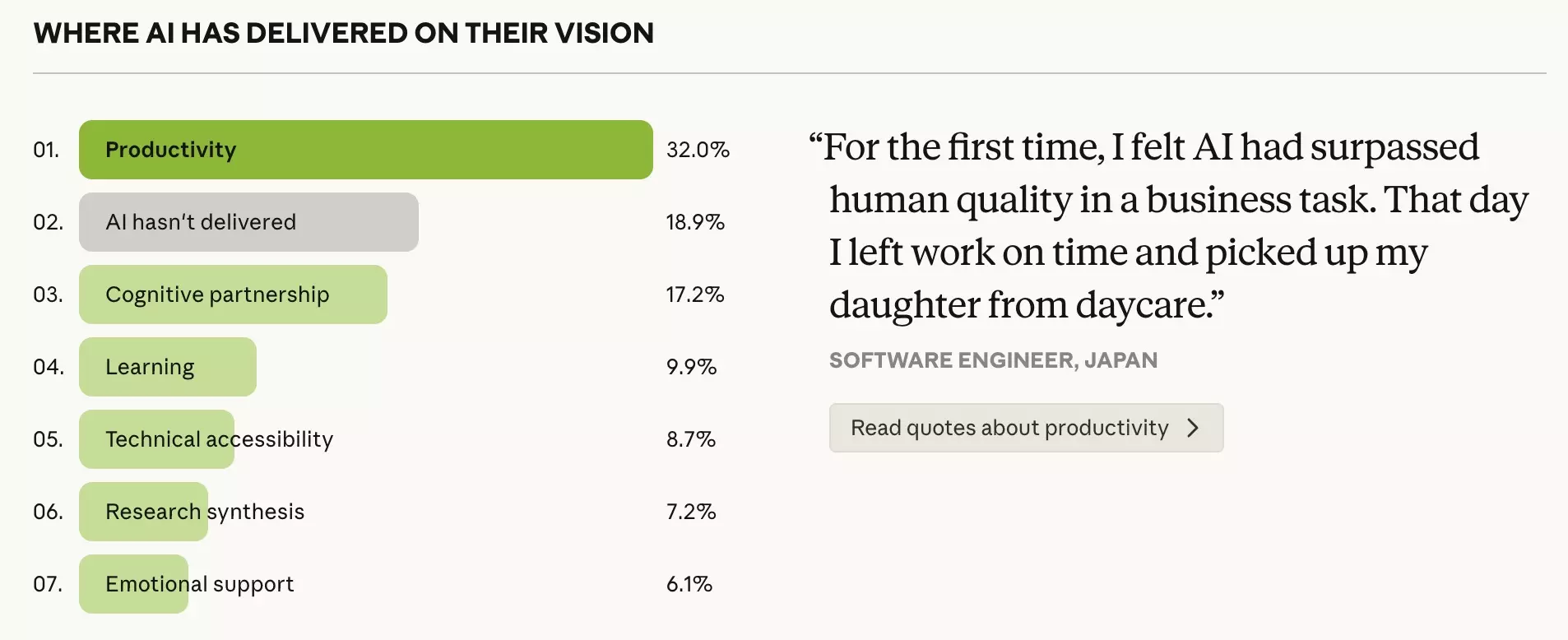
Better productivity thanks to AI? – Source: Anthropic
According to the Anthropic study, the professional use of AI is by far the most anticipated. A significant proportion of participants believe that these technologies could improve their work efficiency by automating certain repetitive tasks.
Approximately 32% of respondents report already seeing a gain in productivity thanks to AI, where the goal is often to delegate routine activities in order to dedicate more time to strategic or creative missions. Nearly 19% of respondents even hope to advance their careers through the use of these tools.
Beyond professional performance, some participants explain that AI allows them to better organize their daily lives. Several people specifically mention the possibility of freeing up time for personal or family activities, a benefit that comes up regularly in testimonials.
This positive perception is even more pronounced in emerging economies, where AI is sometimes seen as a lever for economic or entrepreneurial opportunities.
Between Enthusiasm and Concerns about the Future of Work
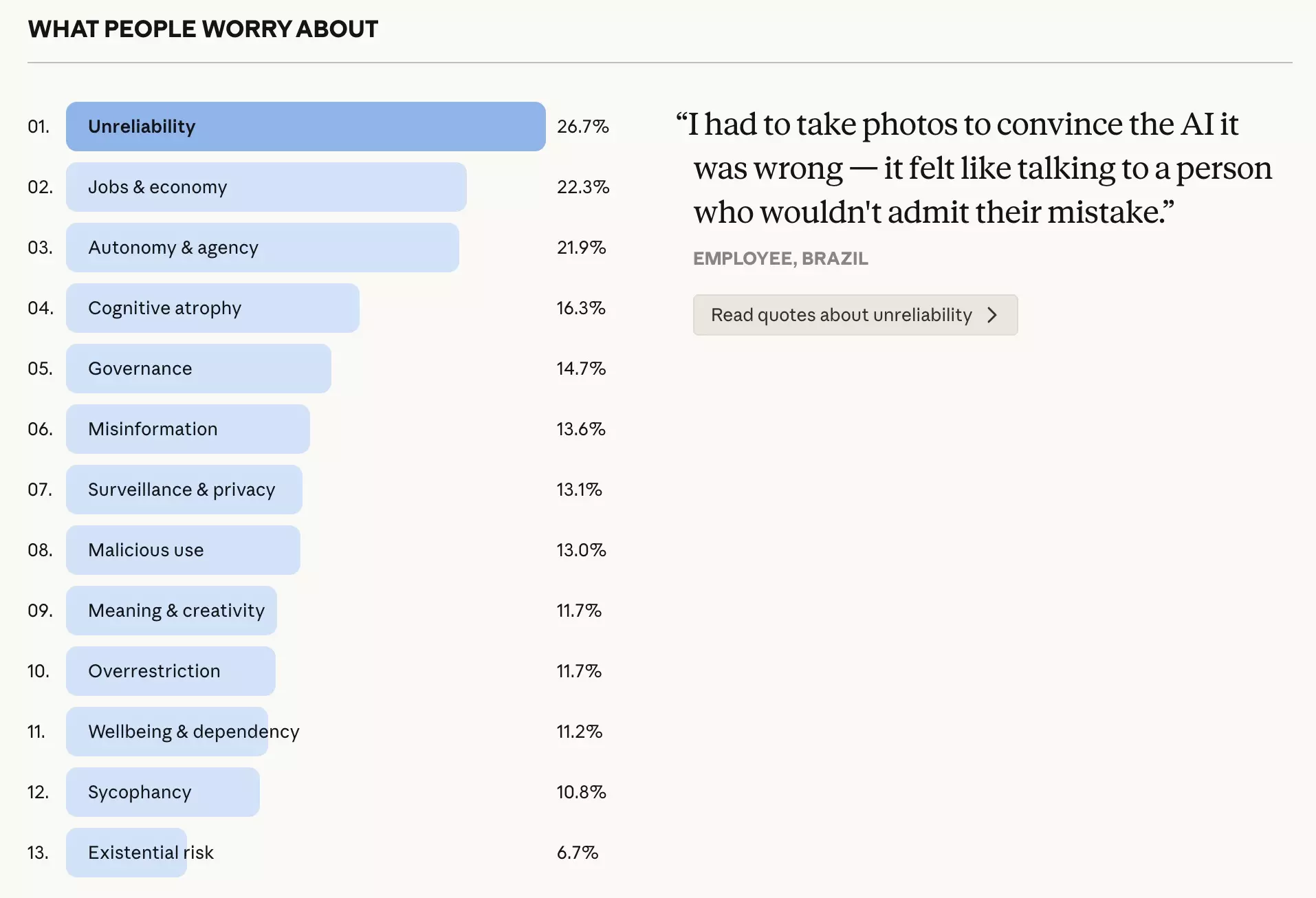
Serious Concerns Caused by AI… – Source: Anthropic
Despite these favorable prospects, the study highlights a kind of paradox, because Users appreciate AI for the same reasons that fuel their fears. The first concern relates to the reliability of the systems, where approximately 27% of respondents fear errors or "hallucinations" by AI models, which can produce incorrect answers while appearing credible. Economic impacts are also among the major concerns, as nearly 22% of participants wonder about the consequences of AI on employment, wages, and social inequality. Some professions are already feeling this tension, such as lawyers, who are among the users who report both benefiting most from AI in their work and being particularly wary of its limitations. Overall, the results of the Anthropic study show that AI is perceived both as an accelerator of opportunities and as a source of new challenges. questions about the future of work and society…
Please Login to leave a comment.
Want to Post Your Topic
Join a global community of creators, monetize your content easily. Start your passive income journey with Digbly today!
Post It Now
Comments