


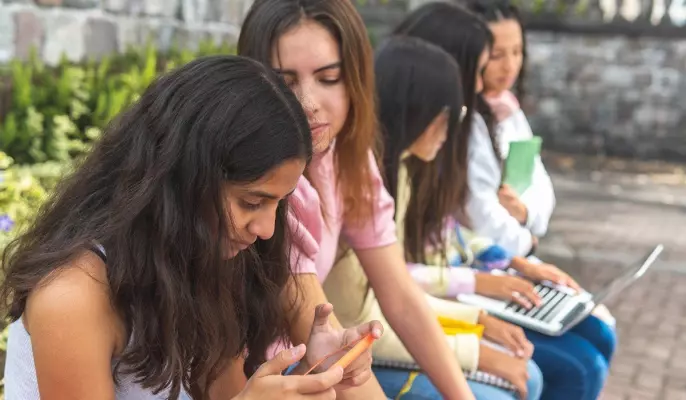
Among those under 25, intensive use of social media is having a negative impact on well-being.

While social media plays a prominent role in the daily lives of young people, and as they spend more and more time in front of screens, its impact is receiving increasing attention.
Indeed, the latest World Happiness Report, published under the auspices of the UN, highlights contrasting trends depending on the region and usage. And behind this data, a question persists: do these platforms truly contribute to improving the quality of life of younger generations?
A clear correlation between intensive use and ill-being
Released via an AFP dispatch, the report highlights a marked trend: intensive use of social networks is associated with a decline in well-being among young people.
This phenomenon is particularly noticeable in several Western countries such as the United States, Canada, Australia, and New Zealand. But even more striking, young women appear to be the most exposed.
The document notably mentions dramatic declines in happiness levels among those under 25 in these regions, echoing recent bills banning social media for younger people, including in France.
However, the relationship between social networks and well-being remains nuanced. For their part, researchers emphasize the multiplicity of factors at play, such as the duration of use, the type of platform, the methods of interaction, and the socio-economic context. In other words, not all uses are created equal.
A more complex impact than it seems
While excessive use is associated with negative effects, turning away from it completely is not without consequences either.
The report highlights that young people who voluntarily leave social media may also miss out on certain benefits, particularly in terms of social connection and access to information. This ambivalence illustrates the complex role of digital platforms in psychological well-being, and moreover, a reverse trend is emerging in other regions of the world, where the average level of happiness among young people has increased over the last twenty years. Beyond the issue of social media, the report relies on broader indicators such as GDP per capita, health, social support, and perceptions of corruption. In this ranking, Finland retains its first place for the ninth consecutive year, while France slips slightly to 35th. This overall overview ultimately serves as a reminder that well-being does not depend solely on digital usage, but on a range of structural factors. Thus, social networks are part of a larger ecosystem, the effects of which are still being evaluated…Please Login to leave a comment.
Want to Post Your Topic
Join a global community of creators, monetize your content easily. Start your passive income journey with Digbly today!
Post It Now
Comments