


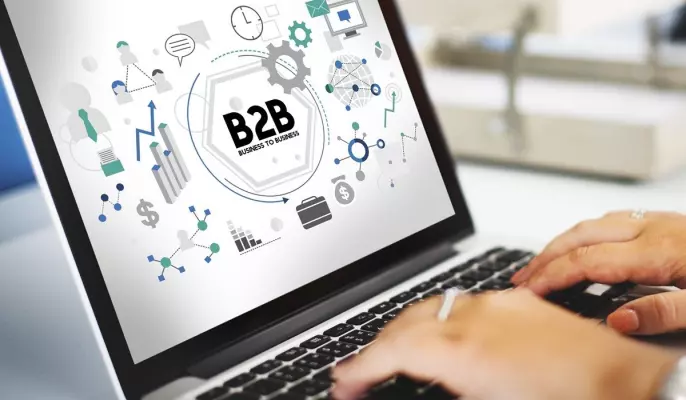
Building a B2B loyalty program: methods, steps and success indicators

A new customer typically costs between 5 and 7 times more than an existing one. Yet, the latter doesn't receive your attention. This reality is well-known, but B2B marketing budgets are overwhelmingly focused on acquisition. Customer retention has been neglected for many years. It's treated as a secondary concern, even though it directly determines long-term profitability.
Furthermore, a well-designed B2B loyalty program is more than just occasional perks or a monthly newsletter.
You need to plan a precise system to both develop and maintain the value of each customer relationship.Why does B2B customer loyalty deserve a dedicated strategy?
Contrary to popular belief, customer loyalty is not a luxury. You should consider it as a direct growth driver. A customer who stays for two years generates more revenue than a customer who signs and disappears after six months, even if the initial contract amount is the same. Customer lifetime value (LTV) is the true barometer of a B2B organization's commercial health. It depends almost entirely on the quality of the experience delivered after signing.
B2B customer loyalty has specific characteristics that B2C approaches do not cover. Purchasing decisions involve multiple stakeholders. Contracts are renewed over long cycles. A dissatisfied customer doesn't click the "cancel" button on their online interface. In most cases, they wait until the expiry date, ignoring your emails, discreetly seeking an alternative, and carefully avoiding recommending you. The early detection of this disengagement is as critical as the loyalty actions themselves. To build a B2B loyalty program, you must seriously address three dimensions: the value delivered throughout the contract, the quality of the relationship and communication, and satisfaction. The foundations of a successful loyalty program: Before building anything, two prerequisites are essential. Consider a reliable and centralized database. 400"> on your existing customers. You shouldn't just have billing information. Consider usage data, open support tickets, sales interactions, marketing exchanges, and satisfaction scores. The advantages of CRM are precisely related to this centralization. Indeed, all teams see the same customer, in the same state, at the same time. Defining customer segments should not be neglected. Not all your customers deserve the same level of attention or the same actions. A strategic client representing 30% of your revenue and a recent client on a standard annual contract don't require the same approach. Segment by contract value, tenure, growth potential, and level of engagement. You can then focus resources where the return is highest.
Build your program step by step
Given its importance, a B2B loyalty program shouldn't be improvised. Here are what we consider the most important steps to building it.
- Map the post-signing customer journey : Identify the key moments where the experience determines the desire to stay (onboarding, first renewal, first support incident, upgrade).
- Define your retention objectives : Target renewal rate, target LTV per segment, NPS score to achieve within 12 months.
- Choose your loyalty levers : Regular value-added communication, training sessions, privileged access to new features, exclusive customer events, a loyalty program Recommendation.
- Assign clear responsibilities : who owns the customer relationship beyond the signing ? The Customer Success Manager, the salesperson, or both ? Ambiguity in responsibilities is the leading cause of churn.
- Implement regular measures : NPS surveys, quarterly reports, annual account reviews… Customer loyalty can't be measured once a year and hope everything is fine.
The first instinct is to launch everything simultaneously. This is clearly not the right approach. Start with two or three priority segments, validate what works, and then adjust gradually. You should get much better results than a poorly managed, all-out rollout. Personalize this relationship to maintain engagement. B2B loyalty isn't bought with discounts that you multiply over the long term. You absolutely must focus on relevance and attention. Remember that a customer who receives communications tailored to their situation, their sector, and their challenges perceives much greater value. This will clearly not be the case for someone who receives the same monthly newsletter as the other 2,000 contacts in the database. Marketing personalization applied to customer loyalty works on the same principle as in acquisition. You can segment precisely, adapt the content and timing, and even use behavioral data to anticipate needs. A customer who hasn't used an important feature of your solution for 60 days receives content targeted to that feature. You shouldn't send a generic email that will offer them absolutely nothing. Proactive communications are among the most effective ways to maintain loyalty. Inform a customer about a product update before they discover it by chance, send them a personalized usage report, or offer them exclusive content related to industry news. These thoughtful gestures build long-term trust. Customers tend to feel heard, which is what helps retain them. Furthermore, these methods don't require an additional budget. You simply need to use clean data and have a well-defined organizational structure. Measure this satisfaction with HubSpot. Measuring customer satisfaction is the foundation of your loyalty program. Without regular data, you're operating blindly, and the results will never be what you expect. HubSpot natively integrates an NPS tool that allows you to send automated satisfaction surveys to your customers at a frequency you define. You can even centralize the results directly on contact and company records in your CRM. The value of NPS in HubSpot isn't limited to the score itself. When a customer responds with a low score, HubSpot automatically triggers an alert workflow (notification to the Customer Success Manager responsible for the account, creation of a priority follow-up task, and initiation of a contact sequence). The customer expressing dissatisfaction is addressed within hours. It won't be delayed three weeks later at the next team meeting. They deserve your immediate attention. Furthermore, 72% of HubSpot Sales Hub users report an increase in customer lifetime value. This figure clearly demonstrates the value of this methodology. This is what structured, long-term customer relationship management achieves. Customers stay longer and buy more when the relationship is actively nurtured with the right tools. HubSpot also gives you the means to track the complete relationship history on a single page (resolved tickets, opened emails, deals in progress, last interaction with the sales representative). A Customer Success Manager preparing a quarterly customer review has all the context in seconds, without having to contact three different teams to reconstruct the history. If you plan to build a loyalty program without measuring its results, you are investing without knowing if these measures will have a positive impact. Therefore, there are retention metrics that you should prioritize. They are precise and directly actionable in HubSpot. The renewal rate is the basic metric. What percentage of your annual contracts are renewed upon expiration? A rate below 80% in B2B reveals a structural problem in the customer experience. The Net Promoter Score measures your customers' likelihood to recommend you. A steadily increasing NPS indicates that your customers are satisfied and also active in recommending you. This generates inbound leads without additional acquisition costs. If you track these metrics in HubSpot, with automatic alerts for critical thresholds, you'll enjoy optimal customer retention. If you want to structure your customer tracking and manage your loyalty program with reliable data, feel free tocreate an account Free on HubSpot. In seconds, you'll have access to essential CRM tools, NPS, and even workflows to get started.What are the indicators that prove your program is working?
Please Login to leave a comment.
Want to Post Your Topic
Join a global community of creators, monetize your content easily. Start your passive income journey with Digbly today!
Post It Now
Comments