


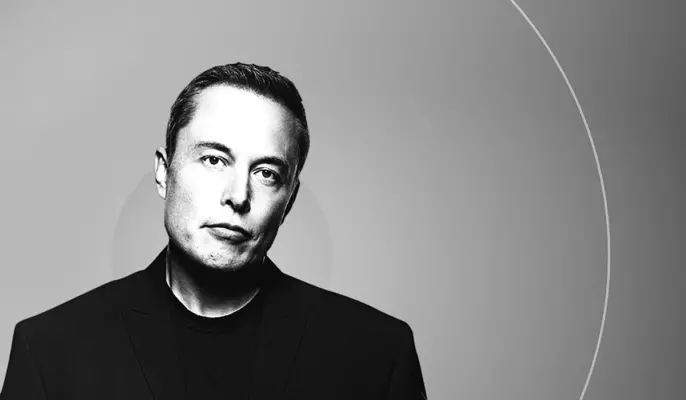
Elon Musk announces Terafab, a colossal project to satisfy AI's thirst for power

In recent years, access to semiconductors has emerged as one of the biggest challenges surrounding AI and the value chain.
Between supply chain tensions and the explosion in demand for computing power, chips have become a strategic lever for companies developing AI systems.
Faced with this reality, during a launch conference accessible on X, Elon Musk just announced a particularly ambitious new industrial project…
A mega-factory to produce one terawatt of power calculation
Named Terafab, this future facility should enable the production of chips to meet the growing needs of its companies, particularly in AI, robotics, and IT infrastructure.
The project will take the form of a semiconductor manufacturing facility located near Austin, Texas. According to Elon Musk, this factory could produce up to one terawatt of computing power per year. For comparison, a terawatt is equivalent to one trillion watts, a level close to the total electricity production capacity of the United States.
As expected, the facility will be developed jointly by Tesla and SpaceX, two companies associated with Elon Musk and already major consumers of computing power. The chips produced are expected to power AI systems, robots, and data centers designed to operate in space.
While the official amount of the investment has not been confirmed, several estimates suggest a project cost between $20 and $25 billion.
A way to meet an explosive demand for computing power…
The initiative is primarily driven by the growing computing needs of Elon Musk's ecosystem. Tesla's projects, particularly in autonomous driving and robotics, as well as SpaceX's projects in space exploration and orbital infrastructure, require increasingly higher computing power. Currently, these companies rely on external suppliers such as TSMC, Samsung, and Micron. But according to Elon Musk, these companies' expansion capacity is not keeping pace with his own technological ambitions. With Terafab, the goal would therefore be to produce chips capable of supporting between 100 and 200 gigawatts of computing power on Earth, and up to one terawatt for infrastructure in space. Thus, the project is part of a broader vision championed by Elon Musk: developing technologies capable of supporting a future human presence beyond the planet. For now, no precise production schedule has been announced, but if the project succeeds, Terafab could join the list of major industrial initiatives aimed at strengthening technological independence in the semiconductor sector.
Please Login to leave a comment.
Want to Post Your Topic
Join a global community of creators, monetize your content easily. Start your passive income journey with Digbly today!
Post It Now
Comments