


Google unveils the biggest overhaul of Google Maps in over ten years

In an official press release, Google has just announced the biggest evolution of Google Maps, its navigation app, in over ten years.
And behind the new 3D navigation experience, the redesigned voice directions, and the conversational assistant capable of answering complex questions about locations, we obviously find the Gemini AI models…
Immersive 3D navigation for better road understanding
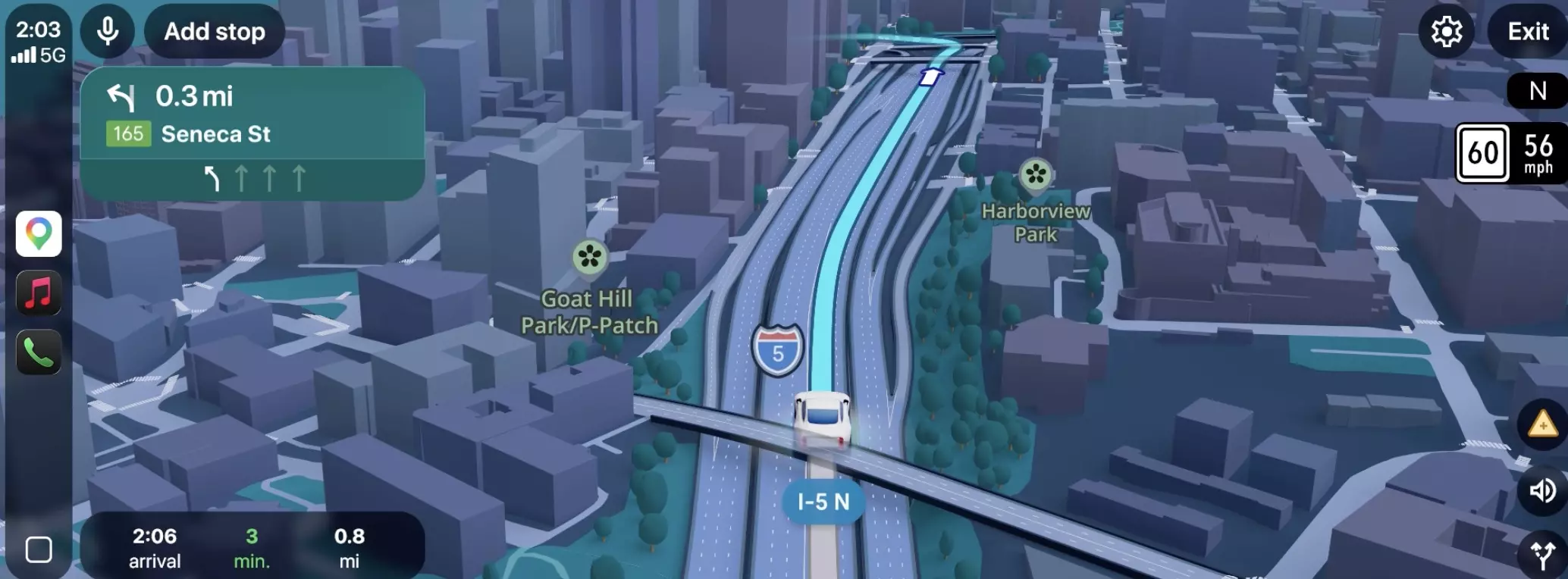
A preview of the "Immersive Navigation" feature – Source: Google
The first major change concerns the driving experience, where with "Immersive Navigation," Google Maps abandons the classic map representation to offer a 3D visualization of the environment.
Buildings, bridges, and terrain are now modeled using data from Google Street View and aerial images analyzed by Gemini models. The goal is to create a more accurate spatial representation of the road and its surroundings. This new interface displays traffic lanes, pedestrian crossings, traffic lights, stop signs, and even highway interchanges. In addition, Google is also adding intelligent zoom features for complex maneuvers. For example, the application can automatically enlarge the view and make certain buildings transparent to better anticipate lane changes or exits. Voice prompts are also evolving; instead of giving purely mechanical instructions, the voice can now contextualize directions, suggesting, for instance, passing an exit before taking the next one. Meanwhile, alternative routes are presented with more detailed information. The user can thus more easily compare the trade-offs between a faster but more expensive route, or a longer but smoother one.
Ask Maps: Chat with the map to find a place
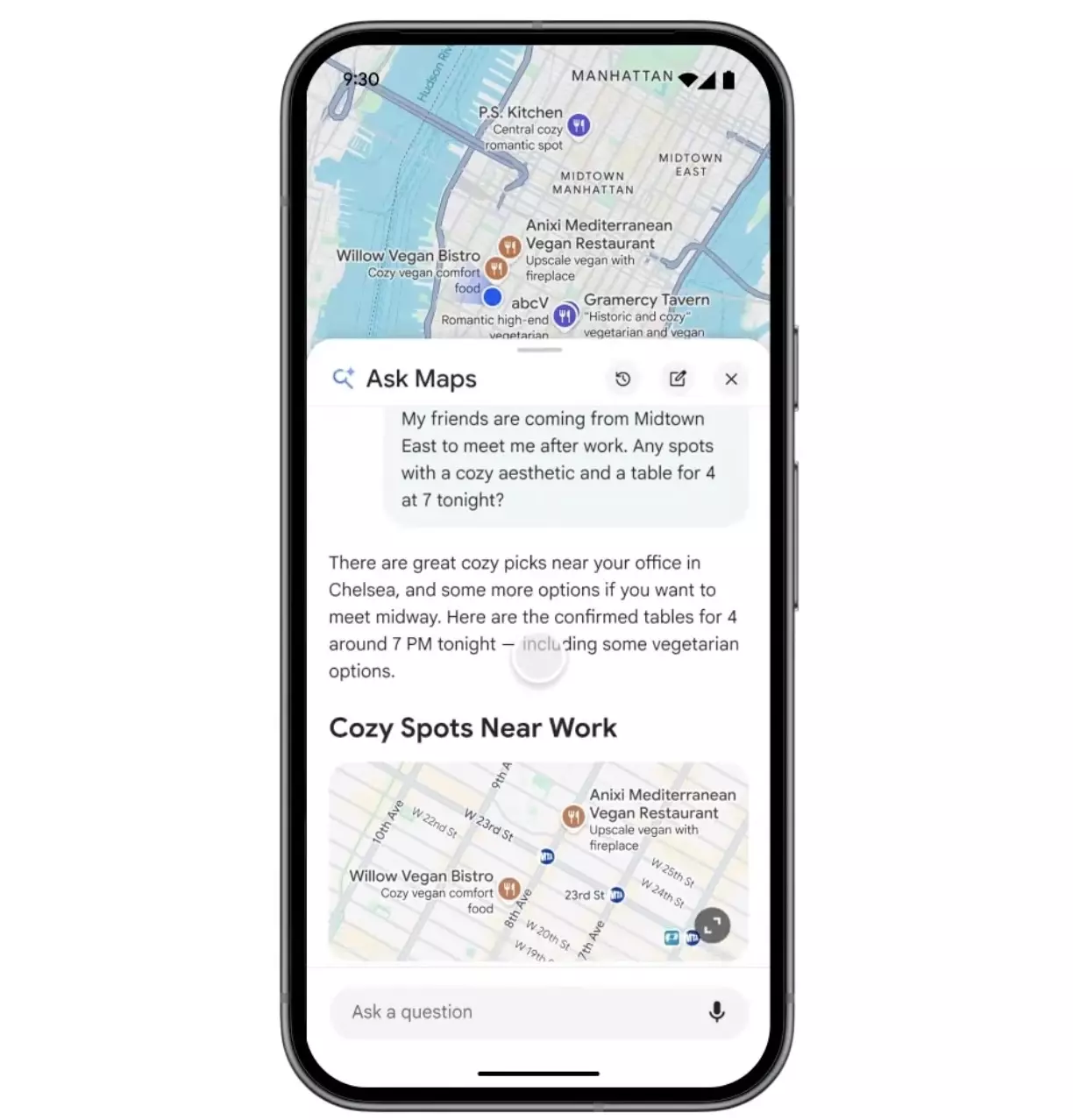
Google Maps becomes a conversational interface – Source: Google
The second new feature is called "Ask Maps", and consists of offering a conversational assistant integrated directly into Google Maps.
Instead of multiple manual searches, the user can ask a Natural language questions, such as asking where to charge your phone without having to wait in a crowded café, or finding a lit tennis court available in the evening. To generate these answers, Google Maps relies on a database of over 300 million listed locations and contributions from over 500 million users. The assistant can also take into account certain user preferences; for example, if someone regularly searches for vegetarian restaurants or specific cafés, these factors can influence the suggestions. Once a location is found, it's possible to perform actions directly within the application, such as booking a table, saving the address, or sharing the recommendation with friends and family.
Please Login to leave a comment.
Want to Post Your Topic
Join a global community of creators, monetize your content easily. Start your passive income journey with Digbly today!
Post It Now
Comments