


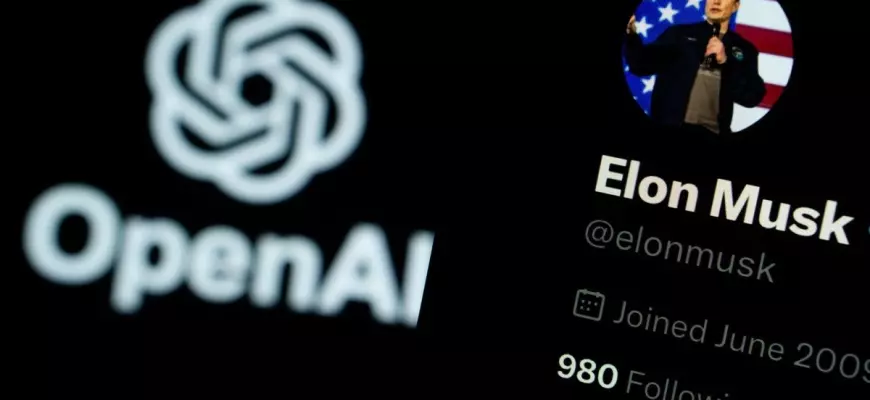
New episode in the Musk-Altman war: OpenAI wins a legal battle

Beyond public statements and social media sparring, this case illustrates the growing tensions around talent and technology in generative AI…
A complaint deemed insufficiently substantiated
In September 2025, xAI accused OpenAI of having benefited from the departure of two of its former employees, suspected of having taken source code and confidential information. According to Elon Musk's startup, this information was allegedly shared with OpenAI as part of a recruitment process. As the company stated in a press release, Federal Judge Rita F. Lin ruled that the complaint failed to demonstrate any wrongdoing on the part of OpenAI, and that there was no evidence that the company or its recruiters encouraged or organized an illegal transfer of data. Other allegations, such as storing work communications on personal devices and attempting to access internal data after hiring, also failed to convince the court. The complaint was therefore dismissed due to insufficient evidence regarding the alleged misconduct. of OpenAI, even though xAI has a deadline to submit an amended version of its application.
A rivalry that goes beyond competition
This dispute is part of a broader conflict between the two original co-founders of OpenAI.
Elon Musk left the board of directors in 2018, citing conflicts of interest with Tesla, which is involved in developing AI technologies for autonomous driving.Since then, he has openly criticized OpenAI's evolution towards a for-profit hybrid model, particularly its strategic partnership with Microsoft. At the same time, with xAI, Elon Musk aims to compete with his former organization.
Tensions took a dramatic turn in February 2025, when Elon Musk offered $97.4 billion to acquire OpenAI. Sam Altman then responded ironically to X, suggesting buying the social network for $9.74 billion.
Trade secrets at the heart of the battle
Beyond the media attention, the case highlights a key issue for the sector: the protection of trade secrets in AI. Indeed, foundational models, source code, proprietary datasets, and optimization techniques are the cornerstone of competitiveness for industry players.
In a market where engineers specializing in training large-scale models are scarce, talent mobility raises complex legal questions. Today, the line between acquired expertise and the illicit appropriation of know-how is particularly scrutinized. The decision handed down this week does not close all the proceedings between the two sides, especially since another trial, concerning the transformation of OpenAI from a non-profit organization to a commercial entity, is still to be examined by a jury in the coming months…
Comments