


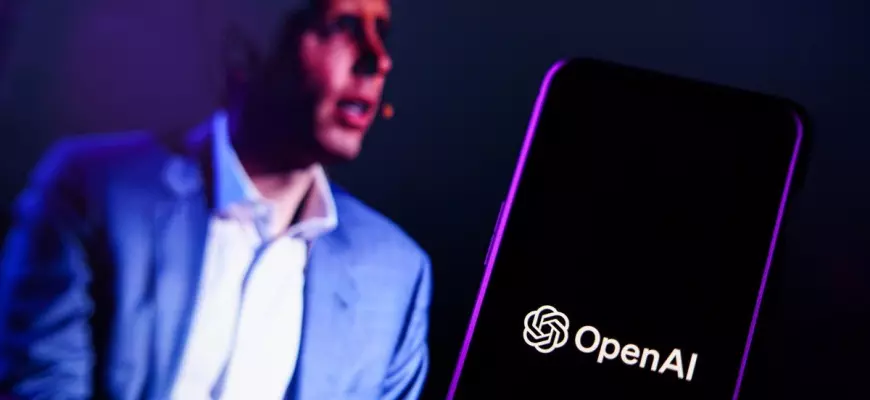
The head of ChatGPT fears a dangerous race towards AI and calls for global regulations.

As AI becomes increasingly prevalent in everyday life, the question of its regulation is being raised with increasing urgency.
Between technological acceleration, geopolitical rivalries, and economic upheavals, calls for international governance are multiplying. And this time, it is one of the most emblematic figures in the sector who is sounding the alarm.
A call for international coordination
As Le Figaro reminds us, at a world summit dedicated to AI in New Delhi, Sam Altman stated that the world urgently needs rules to regulate the development of this technology. This was far from a trivial statement, given that his company is behind ChatGPT, one of the most popular tools of this digital revolution. Addressing an audience of political leaders and tech figures gathered around Indian Prime Minister Narendra Modi, Sam Altman stressed the need for safeguards. "We urgently need them, as with any other technology of such power," he declared. The executive even mentioned the creation of a structure comparable to the IAEA (International Atomic Energy Agency) to ensure international coordination on artificial intelligence. Sam Altman's idea is to avoid an uncontrolled race for algorithmic power, where each state or company seeks to gain the upper hand without a common framework.
This proposal comes in a context where major powers, from the United States to China and the European Union, are each moving forward at their own pace on regulatory issues, echoing the debates surrounding the European AI Act.
Democratizing AI rather than concentrating it
Beyond regulation, Sam Altman advocated a broader vision: the democratization of artificial intelligence. According to him, centralizing this technology in the hands of a single organization or country would lead us to ruin. For analysts, this point remains strategic because even though a few players currently dominate the foundation model market, the question of the concentration of technological power is becoming central. AI is no longer limited to a software tool; it structures the economy, research, and even military balances. When asked about employment, the head of OpenAI pointed out that every technological revolution has transformed the job market while creating new opportunities. The coming years will, according to him, constitute a true large-scale test, where we will have to choose between giving more power to individuals or accepting an increased concentration of capabilities. In a world where AI is progressing at a rapid pace, Sam Altman's voice carries weight, but it remains to be seen whether this call will be followed by concrete actions on the international stage.
Comments