


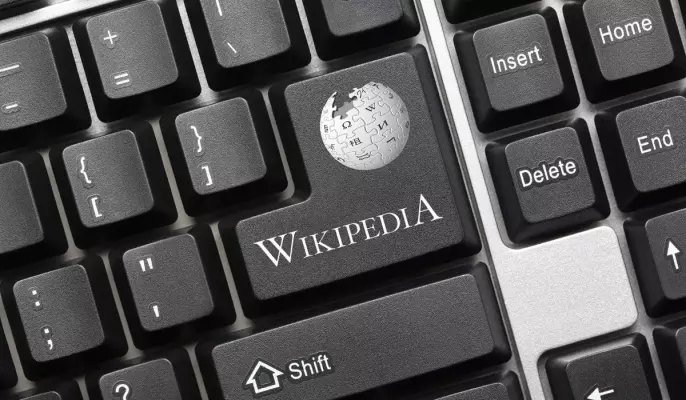
Wikipedia takes a stand against AI: automatically generated articles are now banned.

Since the arrival of AI capable of producing text in seconds, many sites have found themselves facing a delicate question: how far should these tools be allowed to intervene in content production?
This is particularly the case for Wikimedia Foundation and its collaborative encyclopedia Wikipedia, whose millions of articles rely on the work of volunteers. After celebrating its 25th anniversary, and faced with the rise of large language models, the community of editors of the English version of the encyclopedia has made its decision. Indeed, on a dedicated page, we learn that articles written or rewritten entirely by AI are prohibited. A decision that reflects the desire to preserve the reliability and human governance of the project…
AI-generated articles now prohibited
The new rule adopted by the editors of the English version of Wikipedia is clear: the use of AI to generate or rewrite articles is no longer permitted.
This decision comes after much debate within the community, where, on the one hand, AI models are widely trained on Wikipedia content to produce their answers, including Grokipedia, and on the other hand, these same tools allow for the rapid generation of long texts.
For moderators and contributors, the challenge is therefore to avoid an explosion of automated content, while maintaining the editorial standards that have built the site's reputation.
Thus, editors will now have to rely on content analysis and Contribution history to identify suspicious texts, rather than relying on simple stylistic cues…
AI remains authorized… but only as an assistant
In its press release, the encyclopedia does not completely close the door to artificial intelligence, and the new policy includes several exceptions, but these remain very strictly regulated.
Contributors can, for example, use an AI tool to improve the wording of a text they have written themselves. In this case, the AI acts only as a proofreader or style assistant, and any modification must be reviewed and validated by a human to verify that the meaning of the text has not been altered.
Furthermore, despite a recent controversy, AI remains authorized for translating articles. However, after these deviations, while AI tools can produce an initial translated version, the editor responsible for publication must be proficient in the languages involved to verify the accuracy of the content and correct any errors.
These exceptions reflect the strategy adopted by Wikipedia since last October, which consists of using AI to save time on certain tasks, without delegating to it the responsibility of producing knowledge.
A rule that is still difficult to apply…
This new policy currently only applies to the English version of Wikipedia, as each language version of the encyclopedia has its own editorial guidelines.
In the long run, communities in other languages could very well adopt different approaches, even if a similar direction remains likely. Nevertheless, detecting AI-generated text remains a complex issue, especially since Wikipedia articles often follow a neutral and factual style, similar to that produced by AI…
Please Login to leave a comment.
Want to Post Your Topic
Join a global community of creators, monetize your content easily. Start your passive income journey with Digbly today!
Post It Now
Comments