Asus ROG Xbox Ally X20 vs MSI Claw 8 EX AI+: Which Premium Handheld Gaming PC Should You Buy?
- Tags
- Handheld Gaming
- Gaming PC
- AMD
- Asus
- Intel
Introduction to the Ultra-Premium Era of Handheld Gaming
The Windows gaming handheld market has officially entered its ultra-premium era. If you are looking to upgrade from your Steam Deck to something packed with serious horsepower, the newly released Asus ROG Xbox Ally X20 ($1,299) and the MSI Claw 8 EX AI+ ($1,799) are likely leading your wish list. Both devices command prices higher than many traditional gaming laptops, yet they cater to entirely different types of gamers. Asus focuses heavily on a stunning OLED display and refined ergonomics, while MSI flexes the raw performance and extreme battery efficiency of its Intel Arc G3 Extreme architecture alongside 32GB of RAM. With a steep $500 price gap separating the two, determining which device truly deserves your investment requires a deep dive into their respective capabilities.
Specifications Comparison
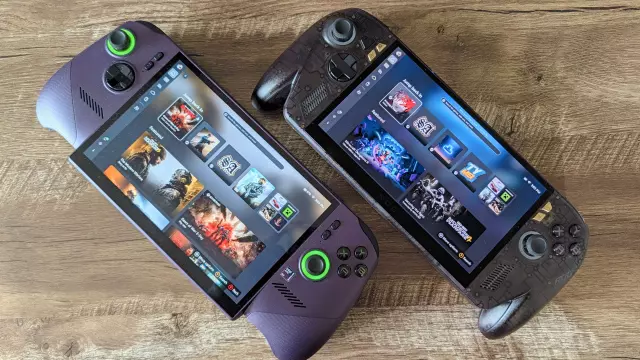
When stacking up these high-end machines, the differences in hardware choices become immediately clear. The Asus ROG Xbox Ally X20 measures 11.8 x 4.8 x 2 inches and weighs 1.67 pounds, powered by the AMD Ryzen AI Z2 Extreme processor paired with 24GB of LPDDR5x RAM and a 1TB PCIe Gen 4 SSD. It features a 7.4-inch FHD 120Hz OLED display, Wi-Fi 6E, and versatile ports including USB 4 Type-C and a microSD card slot. On the other hand, the MSI Claw 8 EX AI+ measures 11.6 x 5.1 x 1.9 inches and weighs 1.7 pounds, featuring the Intel Arc G3 Extreme CPU, a generous 32GB of LPDDR5x RAM, and a 1TB PCIe Gen 4 storage drive. Its display is a larger 8-inch FHD+ (1920 x 1200) IPS panel with a 48-120Hz variable refresh rate. It also supports cutting-edge Wi-Fi 7 and Bluetooth 6, alongside dual Thunderbolt 4 ports.
Price and Value Analysis
Let's address the elephant in the room: neither of these handheld gaming PCs is cheap. The ROG Xbox Ally X20 comes with a $300 markup compared to its predecessor, a jump that Asus justifies through its translucent design, gorgeous OLED screen, rubberized grips, and re-engineered tactile buttons, though the internal processing power remains largely similar to the previous generation. Meanwhile, MSI pushes portable pricing boundaries even further, launching the Claw 8 EX AI+ at an eye-watering $1,799. For that extra $500, users receive a larger 1200p display (albeit IPS rather than OLED), the powerhouse Intel Arc G3 Extreme chip, and an extra bump to 32GB of RAM. While $1,299 is exceptionally steep for a handheld, it presents a much more palatable value proposition than MSI's luxury pricing.
Design, Display, and Ergonomics
Asus takes a decisive lead in the visual department thanks to its 1080p OLED panel. Games explode off the screen with vibrant colors, deep blacks, and exceptional contrast. Furthermore, the ROG Xbox Ally X20 is arguably the most comfortable handheld on the market; its smaller form factor makes reaching buttons effortless, rubberized grips minimize hand fatigue, and the innovative rotatable D-Pad allows seamless switching between 4-way control for platformers and 8-way control for fighting games. Conversely, MSI drew inspiration from standard Xbox controllers for the Claw 8 EX AI+, resulting in a comfortable grip and a larger 8-inch screen estate. However, because it relies on an IPS panel without HDR support, it simply cannot match the breathtaking visual fidelity of the Asus OLED screen, and its larger dimensions might not suit every user.
Raw Gaming Performance
When the focus shifts to pure processing muscle, the tables turn dramatically, and the MSI Claw 8 EX AI+ flexes its superiority. In demanding AAA titles, the MSI handheld thoroughly outperforms the Ally X20, whether running at full 35W wattage or dialed back to more conservative power states. For instance, in Red Dead Redemption 2 at 1080p Medium settings, the Asus machine manages roughly 23 FPS at 35W, whereas the MSI Claw crushes the benchmark with 63.8 FPS. Even when restricted to 17W, the MSI unit still pumps out 48.8 FPS—more than double the performance at a fraction of the power consumption. This incredible leap is driven by the sheer grunt of the Intel Arc G3 Extreme chip, expanded 32GB RAM capacity, and advanced XeSS upscaling capabilities that far outperform AMD's current FSR iteration on handheld devices. Games like Cyberpunk 2077 showcase this clearly, scaling to incredible frame rates with proper upscaling and multi-frame generation enabled.
Battery Life and Power Efficiency
High performance traditionally comes at the cost of battery longevity, but Intel has achieved remarkable efficiency with the architecture inside the MSI Claw 8 EX AI+. During rigorous gaming battery rundown tests, the ROG Xbox Ally X20 lasts just under three hours (02:47), which is respectable for a high-end Windows handheld. However, the MSI Claw 8 EX AI+ blows past its competitor, delivering an impressive four hours and ten minutes (04:10) of continuous gaming. This difference can easily mean the distinction between completing your gaming session or suffering a dead battery mid-flight. Combined with its ability to throttle down power draw while maintaining superior frame rates, MSI's endurance is practically unmatched in this generation.
Final Verdict: Which Handheld Should You Buy?
Ultimately, choosing between these two premium devices depends entirely on your gaming priorities and budget. If you are an immersion junkie who prioritizes the absolute best screen quality, supreme physical ergonomics, and predominantly plays indie titles or less punishing AAA games, the Asus ROG Xbox Ally X20 is the superior choice. It saves you $500 while offering one of the finest OLED displays ever integrated into a portable system. However, if you are a performance purist who demands smooth, uncompromised frame rates in heavy AAA games wherever you go, the MSI Claw 8 EX AI+ justifies its exorbitant price tag. Intel's Arc G3 Extreme chip delivers performance that Asus cannot touch, paired with stellar battery life that proves a premium price can indeed buy a true generational leap in mobile gaming.
Comments (0)
Sign in to join the conversation.Sign in
Loading comments...