I Waited 5 Years for the iPhone Duo — Here Are 7 Reasons I Decided Not to Pre-Order
- Tags
- iPhone Duo
- Apple
- foldable phone
- Tech News
- Smartphones
Introduction
For half a decade, ever since the original foldable phones entered the market, I have eagerly awaited Apple's entry into the fold. Time and time again, I promised myself that the moment a foldable iPhone was announced, I would be first in line on day one to secure my pre-order. However, when the day finally arrived and pre-orders went live, my digital wallet remained firmly closed. Despite watching the stock quickly deplete during my live coverage of the launch, a sudden shift in perspective made me realize that this device simply wasn't the right fit for me—at least not right now.
While none of these seven concerns serve as an absolute dealbreaker on their own, combined they painted a clear picture: holding off on Apple's first foldable generation is the smarter financial and practical choice. Here is a breakdown of why I decided to pass on the iPhone Duo pre-order.
1. The Steep $2,000 Price Tag
The most glaring deterrent is the sheer cost. Starting at a staggering $1,999 for the base model, the iPhone Duo sits at the absolute peak of smartphone pricing. As a current owner of an iPhone 17 Pro Max—a device that earned a stellar 4.5-star rating in our review thanks to its incredible performance and durability—dropping nearly $2,000 on a brand-new form factor felt impossible to justify. Even if I had purchased my current phone entirely out of pocket, paying double the price for a first-generation foldable is a tough pill to swallow.
2. Letting Early Adopters Iron Out the Kinks
While competitors like Samsung have had multiple iterations to refine their foldable technology, the iPhone Duo marks Apple's inaugural attempt at the foldable market. First-generation hardware is notoriously prone to unforeseen technical hurdles. Whether it be long-term screen durability, outer display hiccups, MagSafe limitations, or software transition bugs within iOS, early adopters inevitably bear the brunt of the growing pains. I would rather let others work through the initial hardware teething issues and wait for a more refined successor.
3. Waiting for App Ecosystem Optimization
Apple will undoubtedly update its native applications to make full use of the iPhone Duo's expanded canvas, and select third-party apps like Slack and Netflix are already on board. However, millions of existing iPhone applications lack native optimization. For a significant transition period, many apps will simply appear as stretched-out standard phone applications on the massive interior screen, diminishing the premium software experience we expect from Apple.
4. Skepticism Surrounding the Nano-Texture Finish
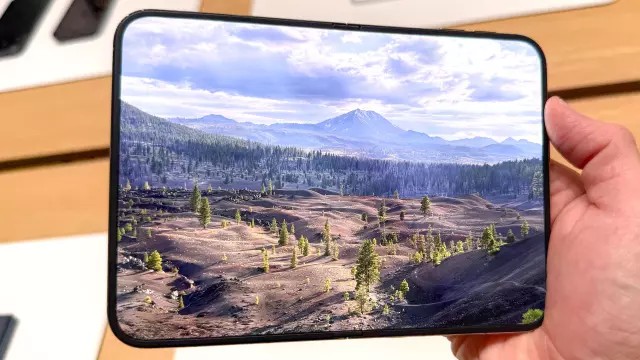
While I haven't tested the hardware firsthand, early impressions suggest that Apple’s choice of a nano-texture finish for the main display is intended to minimize glare and reduce the crease. Unfortunately, this often comes at the expense of color vibrancy and crispness. On a massive 7.6-inch display, sacrificing visual pop to reduce reflections feels like an unfortunate compromise. I prefer to wait and see how the display holds up in real-world lighting conditions before committing.
5. The Absence of a Telephoto Zoom Lens
One of the most disappointing hardware omissions on this ultra-expensive device is the lack of a telephoto lens. In an era where smartphone manufacturers are pushing camera boundaries further than ever, the iPhone Duo leaves zoom capabilities behind—likely due to the space constraints of a folding chassis. As someone who loves using optical zoom for concerts, sports events, and distant subjects, giving up that level of photographic versatility is a massive drawback.
6. Realizing I Don't Need a Massive Screen
When analyzing my daily device usage, I realized that very few of my most-used apps would genuinely benefit from a tablet-sized screen. Much like how my iPad mostly gathers dust while my iPhone and MacBook see constant use, a folding screen doesn't align with my workflow. I am not an artist, I don't draw on my device, and I have little use for a freestanding selfie monitor. The core selling points of a foldable simply do not fit my daily habits.
7. A Surprisingly Heavy, Brick-Like Build
Finally, there is the matter of physical ergonomics. Weighing in at a hefty 8.96 ounces, the iPhone Duo is the heaviest iPhone ever released. While some added weight is inevitable for a dual-screen device, it falls short when compared to sleeker folding competitors like the Samsung Galaxy Z Fold 8. While weight alone wouldn't have deterred me, combined with the extreme price, missing zoom lens, and first-generation risks, it cemented my decision to wait.
Comments (0)
Sign in to join the conversation.Sign in
Loading comments...