VisionQuest Premiere Review: A Surprising and Deep Dive Into the WandaVision Follow-Up
- Tags
- streaming
- Marvel
- TV Review
- Disney+
- VisionQuest
- WandaVision
- Paul Bettany
Introduction to VisionQuest
The Marvel Cinematic Universe (MCU) has reached an interesting crossroads. After years of interconnected stories building toward massive cinematic events, the franchise has struggled to maintain that same momentum, with its television shows playing an increasingly vital role in filling the narrative gaps between blockbuster movies. Now, Marvel is returning to one of its most intriguing characters for “VisionQuest,” the final chapter in the trilogy that began with “WandaVision” and continued with “Agatha All Along.” Picking up the threads left dangling by Wanda’s destroyed hex, the new series sets up fascinating developments for the wider MCU.
A Promising Start for White Vision
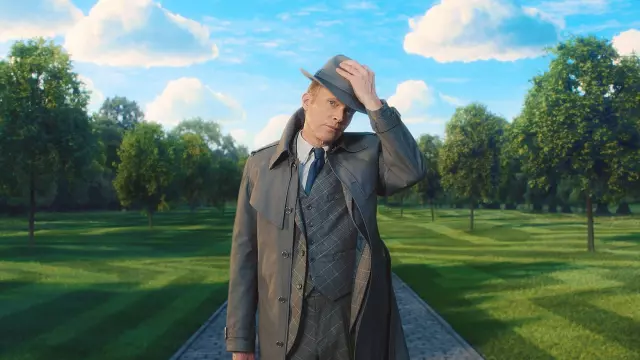
“VisionQuest” follows White Vision (Paul Bettany), who inherited the original Vision’s memories at the end of “WandaVision” but has spent years struggling to understand what they mean to him. Living quietly in Edinburgh, he attempts to make sense of humanity with help from the artificial intelligence programs inside his system, including Jarvis, Friday, and Edith. However, his attempts to keep a low profile are interrupted when a bounty hunter comes looking for him. With the dangerous Ultron (James Spader) also lurking within his digital mind, Vision must confront his past.
Inside the Mindspace: A Digital World
Having watched the first two episodes on Disney+, the direction “VisionQuest” is taking is particularly striking in its return to the questions of identity and memory that made “WandaVision” so compelling. One of the show’s most innovative concepts is Vision’s mindspace—a digital world inside his own mind where the AI programs stored in his system take on human forms and interact with him. Jarvis (James D'Arcy), Friday (Orla Brady) and Edith (Emily Hampshire) are all present, while Ultron (James Spader) is kept behind a firewall due to the threat he poses. It's a fascinating way to explore Vision’s inner workings, and Ultron’s presence adds a much darker, more foreboding edge to the story.
Expanding the Universe with Familiar and New Faces
The show also introduces Thomas (Ruaridh Mollica), a teenager and grifter who experiences panic attacks and struggles with memories of a life he doesn’t believe is his own. Those memories belong to Tommy, the son of Wanda and Vision whose soul was transferred into Thomas’ body after the events of “Agatha All Along,” when his brother Billy (Joe Locke) used his magic to bring him back. It’s a slightly convoluted setup if you haven’t seen the previous series, but “VisionQuest” does a decent job of establishing the connection between Thomas and White Vision, as both characters struggle to understand who they are and where they belong.
Pacing Issues and Repetitive Exposition
That said, a notable weakness in these first two episodes is how often “VisionQuest” feels the need to explain things the audience already knows. On top of a lengthy recap of Vision’s story in the first five minutes of episode one, the show utilizes literal clips from “WandaVision” to remind viewers of events that have already played out. Too many of these moments also come through conversations where Vision sits down with someone to explain his problems, memories, and emotional baggage. This makes parts of the story feel unnecessarily repetitive, slowing down the momentum when the series should be building curiosity.
Verdict
Ultimately, “VisionQuest” offers enough potential to keep viewers invested. While it has pacing hurdles to overcome, the show treats its titular character with depth, exploring the fragile boundary between humanity and machinery. If future episodes can lean into risk-taking storytelling without leaning heavily on exposition, it could become one of Marvel's strongest television outings yet.
Comments (0)
Sign in to join the conversation.Sign in
Loading comments...