Why I Waited 5 Years for the iPhone Duo and Then Decided Not to Pre-Order
- Tags
- iPhone Duo
- Tech Review
- Apple
- foldable phone
- Smartphone Technology
- iPhone 17 Pro Max
For over half a decade, Apple enthusiasts have eagerly anticipated the arrival of a foldable iPhone. When news of the 'iPhone Duo' broke, the buzz was palpable, with many tech fans—myself included—ready to be among the first to secure a unit. Yet, when the pre-order window finally opened, I found myself hesitating, and ultimately, I walked away. Here is a detailed breakdown of the seven factors that led me to skip this high-profile launch.
1. The Prohibitive $2,000 Price Tag
The most glaring barrier is the steep cost. Starting at $1,999, the iPhone Duo is a massive financial commitment. When balanced against the capabilities of the current iPhone 17 Pro Max—a device that already delivers a nearly perfect user experience—the jump in price felt impossible to justify, even for an early adopter.
2. The Risk of First-Generation Hardware
Unlike Samsung, which has refined its foldable technology over eight generations of the Galaxy Z Fold, this is Apple’s inaugural attempt. Historically, first-generation hardware often harbors unforeseen defects or 'teething issues.' I prefer to let early adopters navigate the initial troubleshooting phase while I wait for a more mature second-generation iteration.
3. Software Optimization Concerns
While Apple’s first-party apps will undoubtedly look crisp, the broader ecosystem remains a question mark. With millions of third-party apps available on the App Store, it will take time for developers to optimize their interfaces for the unique dual-screen form factor. Until then, many applications risk looking like unpolished, stretched versions of their standard phone counterparts.
4. Skepticism Surrounding the Nano-texture Finish
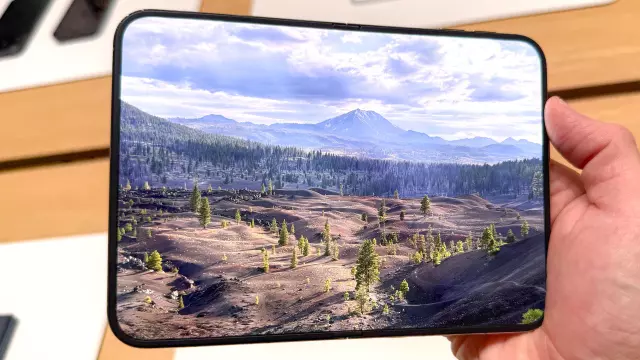
Early reports suggest the screen uses a nano-texture finish to combat glare and minimize the crease. While these are noble goals, concerns regarding color vibrancy persist. A display that trades color accuracy for reduced glare may not be the optimal viewing experience for a high-end flagship device.
5. Absence of a Dedicated Telephoto Lens
In an era where competitors are pushing boundaries with advanced optical zoom, the decision to omit a telephoto lens from such an expensive device is puzzling. I rely heavily on optical zoom for concerts and sports, and the loss of this feature is a significant dealbreaker for my daily usage.
6. The Utility Gap: I Don't Need a Larger Screen
After evaluating my actual usage habits—which lean heavily toward communication and productivity via my laptop and standard phone—I realized I don't have a legitimate need for a tablet-sized foldable. The massive form factor, while impressive, simply doesn't integrate into my workflow as effectively as I once imagined.
7. Weight and Ergonomics
Finally, the device is heavy. At 8.96 ounces, it is notably cumbersome compared to its primary rivals. In a world where portability is paramount, the added heft of the iPhone Duo, while expected for a foldable, was the final weight on the scale that convinced me to wait for a thinner, lighter future model.
Comments (0)
Sign in to join the conversation.Sign in
Loading comments...