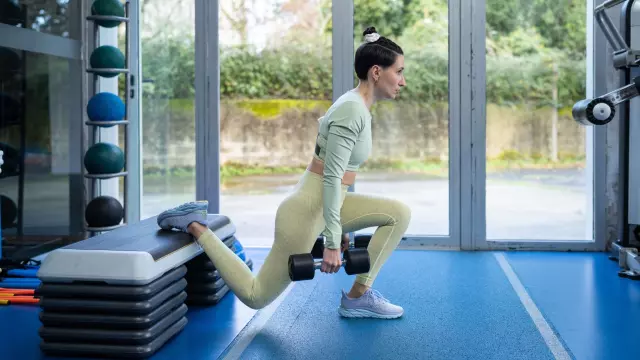
A Personal Trainer's Top Choice: Why the Bulgarian Split Squat is Essential for Lower Body Mobility
- Tags
- Fitness
- Mobility
- Leg Workout
- personal trainer
- lower body strength
- exercise guide
In the quest for a stronger, more mobile lower body, many gym-goers find themselves overwhelmed by the sheer volume of exercise options available. However, according to personal trainers, there is one movement that stands head and shoulders above the rest: the Bulgarian Split Squat. While often feared for its intensity, when executed with proper form, this exercise is an unparalleled tool for building muscle and functional strength.
The Anatomy of the Move
The Bulgarian Split Squat (BSS) is a unilateral exercise, meaning it targets one leg at a time. This approach is highly effective for correcting muscle imbalances, improving balance, and enhancing overall coordination. To perform it, you start by placing your back foot on an elevated surface like a bench or chair, with your front foot planted firmly on the ground. By keeping your spine long and your core engaged, you descend into a lunge, which heavily recruits the quadriceps and glutes.
The 'Twist' for Added Mobility
What sets this version apart is a subtle, yet effective, twist that incorporates a rotational component. As you rise from the bottom of your split squat, you can introduce a controlled rotation of the torso away from the front leg. This variation engages the obliques—essential core stabilizers—and forces the hip to work in a dynamic range of motion. This movement pattern doesn't just build raw strength; it actively works on your internal and external rotation, fostering better hip mobility and alleviating tightness in the adductors.
Important Safety Considerations
While the BSS is a high-return exercise, it is important to remember that 'high return' also implies 'high demand.' Because of the load placed on the knee joint during unilateral movements, those with pre-existing knee conditions should proceed with caution. Always prioritize controlled, steady reps over heavy weight, especially when you are first learning the movement. If you feel any sharp or persistent pain, stop immediately and consult a professional.
Why You Should Start Today
By integrating this exercise into your routine, you are doing more than just building leg muscle. You are investing in your long-term mobility. The combination of stability, strength, and range-of-motion work makes it a staple for anyone looking to stay active, regardless of age. Start with 6-8 heavy, controlled repetitions per side, and you will soon see why trainers keep coming back to this classic movement.
Comments (0)
Sign in to join the conversation.Sign in
Loading comments...