Microsoft's New Fanless Snapdragon X2 Plus Surface Pro and Laptop: A Formidable Challenge to the MacBook Air
- Tags
- Laptop Review
- Qualcomm
- Microsoft Surface
- Snapdragon X2 Plus
- MacBook Air alternative
- Fanless Laptop
- Windows 11
- AI PC
A New Era of Silent Performance
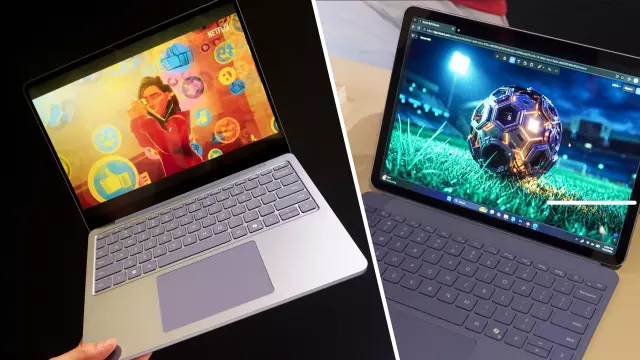
For years, Apple has held a virtual monopoly on the 'thin, light, and silent' computing experience. The MacBook Air has long been the industry benchmark, praised for its ability to maintain cool temperatures under sustained workloads while offering exceptional battery life—all without a single moving part. However, Microsoft is poised to disrupt this status quo with the launch of the new Surface Pro 12-inch and Surface Laptop 13-inch.
Powered by the Qualcomm Snapdragon X2 Plus, these devices represent a significant architectural shift for Microsoft. Launching on October 13th, these machines aim to bridge the gap between Windows versatility and the efficiency typically reserved for Apple Silicon.
Thermal Innovation: Cold Under Pressure
The most striking achievement of the new Surface lineup is its thermal management. Both the Surface Pro and Surface Laptop are entirely fanless, relying on high-density cooling pipes rather than active air circulation. Historically, fanless Windows laptops have been plagued by thermal throttling—where the system slows down to prevent overheating—and chassis that become uncomfortably hot to the touch.
In rigorous hands-on testing, the Snapdragon X2 Plus proved these fears are a thing of the past. A heavy creative pipeline was deployed, involving real-time sketching, 3D rendering in Blender, and multi-layered editing in Photoshop. Despite these resource-intensive applications running simultaneously in the background, the devices exhibited zero perceptible stutter. Most impressively, the back of the Surface Pro chassis remained cool to the touch, suggesting that Microsoft has finally mastered the art of passive cooling for high-performance silicon.
Power and AI Integration
Under the hood, the X2 Plus architecture delivers a massive leap in capabilities. The system boasts up to 60% faster graphics rendering compared to its predecessors, making it a viable tool for creators who previously relied on more cumbersome workstations. Furthermore, the inclusion of an 80 TOPS NPU (Neural Processing Unit) ensures that on-device AI tasks are handled with lightning speed and efficiency.
Premium Hardware and Ergonomics
Beyond the internal specs, Microsoft has doubled down on premium build quality. Both devices feature upgraded 500-nit PixelSense displays that are vibrant and punchy, ensuring clarity even in bright environments. The aluminum shells are not only aesthetically pleasing with a playful range of colors but also feel robust and professional.
The Surface Pro continues to push the envelope with its haptic Surface Pen. The pen now offers tactile feedback, creating a 'two-way conversation' with the OS. From feeling the texture of sand in a digital zen garden to experiencing a 'snapback' when aligning images in Photoshop, the pen transforms from a simple input tool into a sensory experience.
The 'Lapability' Trade-off
Despite the praise, the Surface Pro 12-inch introduces a notable ergonomic change. Unlike previous iterations where the keyboard deck could snap magnetically to the bottom bezel for maximum stability, this new version attaches strictly at the bottom spine. While this may not affect desktop users, it raises questions about 'lapability.' Without the angled magnetic brace, the device may feel wobblier when used on a lap compared to a traditional clamshell laptop.
Final Verdict: The MacBook Air's Biggest Threat
Priced at $1,149 for the Surface Pro and $1,199 for the Surface Laptop, Microsoft is positioning these devices directly against Apple's core lineup. While the Surface Pro is the clear choice for digital artists and creators, the Surface Laptop offers a more balanced, traditional experience.
By combining fanless operation, sustained thermal composure, and snappy ARM-based silicon, Microsoft has created its most legitimate challenger to the MacBook Air to date. For the first time, Windows users can have the 'everyday magic' of a silent, powerful, and portable machine without compromising on performance.
Comments (0)
Sign in to join the conversation.Sign in
Loading comments...