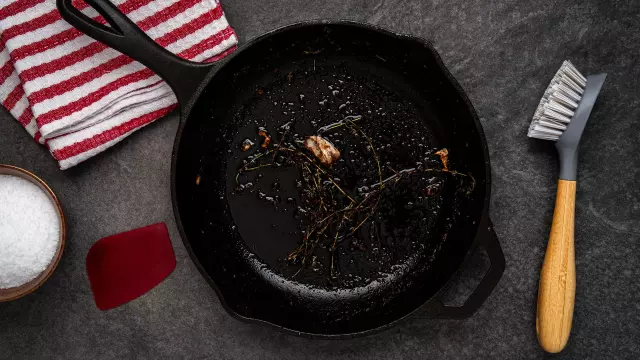
A Simple, Scratch-Free Trick to Clean Burnt Cast Iron in Seconds
- Tags
- home maintenance
- cleaning tips
- cooking
- cast iron care
- kitchen hacks
The Challenge of Cast Iron Maintenance
Cast iron skillets are beloved by home cooks for their superior heat retention and the ability to develop a non-stick patina over time. However, even the most experienced cooks encounter the frustration of burnt-on food residue. When this happens, the instinct might be to reach for harsh soaps, metal scouring pads, or even a dishwasher—but doing so is a cardinal sin of cast iron care. Using aggressive tools can strip away the essential seasoning that makes these pans work, forcing you to start the long process of re-seasoning from scratch.
The Miracle of the Salt and Oil Method
I have recently discovered a highly effective, gentle, and incredibly fast method to lift stubborn, burnt-on food without causing any damage to the pan's surface. The best part? You likely already have the only two ingredients you need in your pantry: plain salt and a standard cooking oil.
How It Works
The science behind this trick is simple and effective. Since salt does not dissolve in oil, it remains in its crystalline, granular form. When mixed with oil and applied to the skillet, the salt acts as a natural, mild abrasive. It creates enough friction to lift the charred food particles away from the metal, while the oil lubricates the surface, ensuring the pan remains protected and hydrated during the process.
Step-by-Step Instructions
- Heat the pan: Set your cast iron skillet on the stove over low to medium-low heat. While this method can work on a cold pan, gentle heat significantly speeds up the process by loosening the bonded residues.
- Add ingredients: Add a generous drizzle of oil (any affordable vegetable or canola oil will work) and a handful of coarse salt to the pan.
- Scrub carefully: Use long, heat-resistant tongs to hold a folded paper towel. Use this to firmly rub the salt and oil mixture into the burnt areas. The texture of the salt will do the heavy lifting, scraping away the residue without damaging the seasoning beneath.
- Rinse and Dry: Once the pan is clean, rinse it briefly with warm water. Ensure the pan is dried thoroughly using a clean cloth, and always finish by applying a very light coating of oil to maintain the finish.
Why This Matters for Your Cookware
Maintaining your cast iron correctly doesn't just mean clean pans; it means better cooking results. Proper maintenance leads to better heat distribution and superior searing. By avoiding harsh chemicals and abrasive metal sponges, you preserve the integrity of your skillet for decades of use. If you find that cleaning is becoming a recurring battle or the surface remains uneven, it may be time to reassess your seasoning routine or consider whether the pan is nearing the end of its life cycle.
Comments (0)
Sign in to join the conversation.Sign in
Loading comments...