AMD Brings FSR 4.1 to Xbox Consoles and Handhelds: Will It Be Enough to Beat XeSS 3 and DLSS?
- Tags
- Tech News
- Xbox
- DLSS
- AMD
- Gaming Handhelds
- FSR 4.1
- XeSS 3
AMD Expands FSR 4.1 to Consoles and Handhelds
AMD has officially announced that its flagship FidelityFX Super Resolution (FSR) 4.1 scaling technology is expanding to a broader range of hardware, including Xbox consoles and select gaming handhelds. Previously, AMD stopped short of confirming FSR 4.1 support for portable gaming devices, leaving many enthusiasts wondering how the company planned to compete against rival upscaling solutions.
FSR 4.1 marks a massive evolution over older iterations of AMD's upscaling suite by incorporating machine learning capabilities. By rendering games at a lower native resolution and leveraging AI to reconstruct a high-fidelity image, FSR 4.1 significantly optimizes GPU efficiency, directly translating power savings into boosted frame rates and smoother performance.
Compatibility Across Xbox and Portable Devices
According to the latest announcements, AMD is collaborating closely with Microsoft to bring FSR 4.1 to the Xbox Series X and the Xbox Series S. While the hardware-heavy Series X will benefit from enhanced visual clarity and performance overhead, the more constrained Series S could see critical performance relief, helping developers overcome hardware bottlenecks.
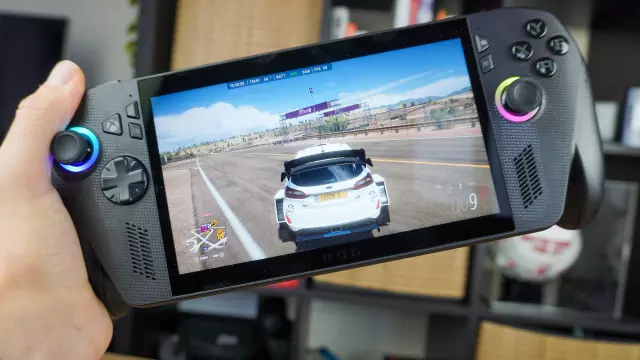
In the handheld sector, FSR 4.1 is slated for the Asus ROG Xbox Ally X and X20 systems, which are powered by AMD Ryzen Z2 Extreme and Ryzen Z2A processors. Unfortunately, the vanilla Xbox Ally models will not support the new feature due to hardware limitations. While exact release dates for the Xbox rollout remain marked as "coming soon," the ROG Xbox Ally integration is expected before the end of the year.
Broader Ecosystem Updates
Beyond consoles and handhelds, AMD confirmed that FSR 4.1 will roll out to Radeon RX 6000 graphics cards, Ryzen AI Max processors, and Ryzen AI 9-powered laptops like the Asus TUF Gaming A14. AMD's ongoing expansion aims to cement its presence across desktop, laptop, and mobile gaming form factors.
Can FSR 4.1 Compete with NVIDIA DLSS and Intel XeSS 3?
The timing of this rollout is crucial, as AMD faces stiff competition from NVIDIA's DLSS and Intel's XeSS 3, both of which have dominated the upscaling conversation over the past year. Recent blind testing data indicates that a significant percentage of gamers still favor NVIDIA's solutions for image reconstruction and ray tracing fidelity. With FSR 4.1, AMD hopes to close the gap and prove its AI-driven upscaling can stand toe-to-toe with the industry's heaviest hitters.
Comments (0)
Sign in to join the conversation.Sign in
Loading comments...