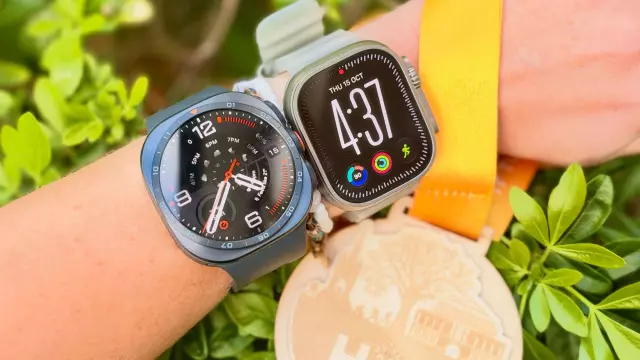
I ran a half marathon with the Apple Watch Ultra 4 and Samsung Galaxy Watch Ultra 2 — here's the one that came out on top
- Tags
- Apple Watch Ultra 4
- Wearable Tech
- Fitness Tracking
- Smartwatches
- Running
- Samsung Galaxy Watch Ultra 2
- Product Face-Off
Introduction: The Ultimate Smartwatch Race Test
When you are looking for a reliable smartwatch to double up as an advanced sports watch for your next big race, you are likely choosing between two of the toughest heavyweights on the market: the Apple Watch Ultra 4 and the Samsung Galaxy Watch Ultra 2. While both devices have been thoroughly reviewed, the true test of a running watch happens on the pavement over 13.1 miles. I strapped both of these flagship wearables to my wrists and ran a half marathon to see how they truly stack up in real-world conditions.
Before diving into the results, it is crucial to consider platform compatibility. The Apple Watch Ultra 4 strictly requires an iPhone, whereas the Samsung Galaxy Watch Ultra 2 is designed for Android and Galaxy users. Both feature bulky, rugged titanium cases—49mm for Apple and 47mm for Samsung—complete with built-in GPS, comprehensive sleep tracking, workout metrics, and recovery stats. However, with the Apple Watch Ultra 4 priced at $799 and the Samsung Galaxy Watch Ultra 2 at $699, which one delivers the ultimate performance?
GPS Accuracy and Distance Tracking
When wearing a smartwatch for a race, precise GPS tracking is non-negotiable. Putting both devices side by side during the half marathon revealed that the GPS performance was exceptionally close to spot-on for both, matching the official course map remarkably well.
Using auto-lap features, both watches hit the distance markers almost precisely where expected. Naturally, both recorded a total distance slightly longer than the official 13.1-mile race route, which is standard due to weaving through crowds of runners and never quite maintaining a straight tangent line. The Apple Watch Ultra 4 recorded the run as 13.23 miles, while the Samsung Galaxy Watch Ultra 2 recorded it as 13.21 miles. Both devices offer top-tier spatial tracking.
Heart Rate Monitoring Performance
Without a chest strap, evaluating optical wrist sensors requires a reliable baseline. For this test, my Oura Ring 5 served as the reference point, indicating an average heart rate of 163 beats per minute with significant time spent in heart rate zones 4 and 5, reflecting a strenuous, high-effort race.
The heart rate graphs generated by both the Apple Watch Ultra 4 and the Samsung Galaxy Watch Ultra 2 mirrored each other closely. The Apple Watch recorded an average heart rate of 159 bpm, while the Samsung Galaxy Watch registered 160 bpm. Both heart rate monitors responded dynamically to spikes in exertion, making this metric virtually too close to call.
Elevation Tracking and Altimeter Sensitivity
Elevation data can often be a point of contention with rugged smartwatches due to altimeter sensitivity and GPS drift. While some reviewers noted minor inaccuracies on the Samsung Galaxy Watch Ultra 2 during previous tests, my experience during the half marathon told a different story.
The official race course featured a total elevation gain of 311 feet. The watch recorded a total elevation gain of 342 feet, a minor variance entirely normal for consumer-grade wearable altimeters affected by atmospheric shifts and minor course deviations.
Comfort, Usability, and Display Visibility
As a petite runner, both devices felt undeniably chunky on the wrist. The Samsung Galaxy Watch Ultra 2 sports a slightly wider design, but the physical footprint on smaller wrists remains substantial for both models.
Both watches excel in physical usability, featuring tactile, responsive physical buttons that make operating the device effortless even with sweaty fingers. Furthermore, their high-nit displays proved brilliant and easily readable in harsh, direct sunlight. The Apple Watch Ultra 4 offers a slightly larger viewable screen area, but the difference in everyday usability is negligible.
Final Verdict: Which Smartwatch Should You Buy?
Ultimately, your choice between the Apple Watch Ultra 4 and the Samsung Galaxy Watch Ultra 2 comes down to your smartphone ecosystem. iPhone users must stick with Apple, as the Galaxy Watch Ultra 2 does not support iOS. Conversely, Android users have a stellar rugged companion in Samsung's offering.
Both smartwatches performed exceptionally during a rigorous 13.1-mile race, successfully blending deep smartwatch connectivity with robust sports tracking features. If you are looking for wristwear that bridges the gap between daily lifestyle tech and serious athletic training, both of these ultra-tier devices stand proudly at the pinnacle of modern wearables.
Comments (0)
Sign in to join the conversation.Sign in
Loading comments...