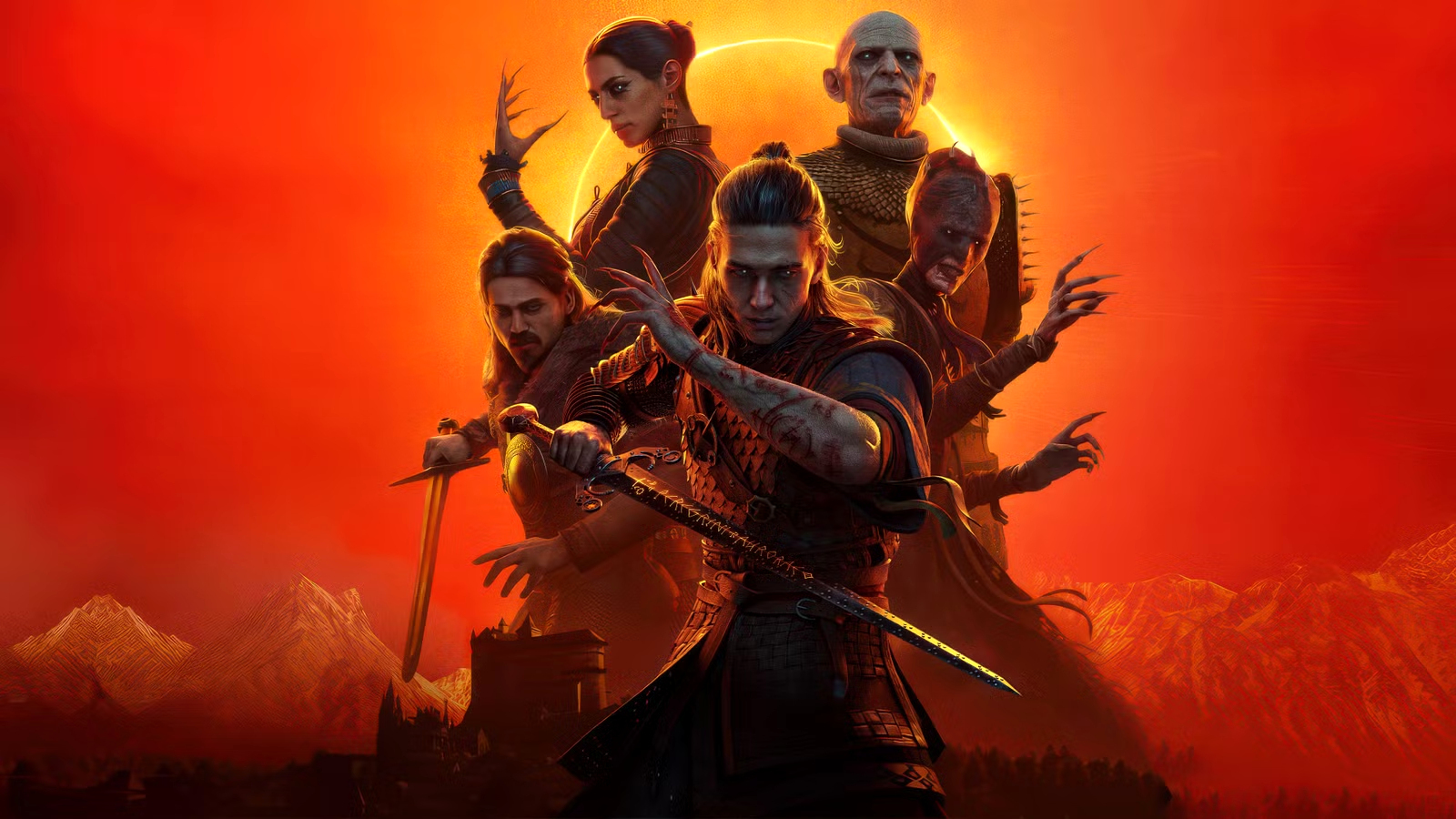
The Blood of Dawnwalker Review: A Dark Fantasy Evolution Born from the Legacy of The Witcher 3
This post has no video
A New Era of Dark Fantasy from Industry Veterans
In 2022, the gaming world buzzed with the announcement of Rebel Wolves, a studio founded by veterans of CD Projekt RED—the minds behind the legendary The Witcher 3: Wild Hunt. Their promise was simple yet ambitious: to create "unforgettable solo RPG experiences." Four years later, that vision has materialized in The Blood of Dawnwalker, released on September 3, 2026, for PC, PS5, and Xbox Series X/S. While the DNA of The Witcher 3 is clearly visible, this is no mere clone; it is a sophisticated evolution featuring a daring vampiric twist that breathes new life into the dark fantasy genre.
A Haunting Setting: The Valley of Sangora
The game transports players to the 14th-century Carpathians, specifically within the fictional enclave of Vale Sangora. This atmospheric region is a melting pot of devout Christians and the Uriashis—mysterious human-goat hybrids. However, the valley is far from a paradise. It is ruled with an iron fist by Brencis, an ancient and tyrannical vampire, and his inner circle of three terrifying lieutenants.
The social contract in Sangora is macabre: the vampires protect the inhabitants from the plague ravaging the rest of Europe, but in exchange, they demand a blood tithe every lunar cycle. This oppressive atmosphere sets the stage for a story rooted in survival, sacrifice, and revenge.
The Dual Life of Coen: Human by Day, Vampire by Night
Players step into the boots of Coen, a young man whose life is shattered when his family is abducted by Brencis. In a tragic turn of events, Coen is transformed into a Vespéral—a hybrid being who remains human during the day but transforms into a vampire at night. The stakes are immediate and high: Coen has exactly 30 days and 30 nights to rescue his family before Brencis sacrifices them during his coronation ceremony.
This dual identity is the cornerstone of the game's narrative and gameplay. Players must navigate the moral gray area between Coen's fading humanity and his burgeoning bloodlust. Choices are pivotal; you can strive to remain honorable or embrace the darkness to gain the power necessary to overthrow Brencis. These decisions dynamically alter how NPCs perceive Coen and can lead to radically different endings, including the possibility of betraying your own family for ultimate power.
Gameplay Mechanics: A Tale of Two Systems
Rebel Wolves has implemented a brilliant duality in the control schemes to reflect Coen's nature:
- Daytime Gameplay: Coen operates similarly to a traditional Witcher. He uses "heightened senses" to track clues and fights with a sword. However, the traditional signs are replaced by Blood Magic, which allows for powerful spells at the cost of the player's own health.
- Nighttime Gameplay: The experience shifts dramatically. Coen gains vampiric abilities, including teleportation and the ability to scale walls. Swords are cast aside for visceral claw attacks and mental domination powers. While the feeling of power is intoxicating, the risk is high: if Coen's thirst isn't managed, he may involuntarily kill a key NPC during a dialogue sequence, permanently locking out their associated quests.
The combat system is significantly more proactive than its predecessors, featuring a four-directional attack and parry system reminiscent of Kingdom Come: Deliverance. While the boss fights are spectacular, the general enemy variety is somewhat lacking, with basic mobs following predictable patterns.
World Exploration and Technical Performance
The open world of Vale Sangora is vast and rewards exploration with sabotage missions, monster hunting, and ancient ruins to pillage. An "Infamy System" tracks the player's rebellion, causing Brencis to react by deploying bounty hunters or imposing curfews in villages, making the world feel reactive and alive.
However, the world design occasionally feels dated. Much like the 2015 formula of The Witcher 3, the spaces between major hubs can feel empty. Visually, the game is a triumph during key story moments, though some wilderness areas are generic. On high-end PCs, the game maintains a smooth 100+ FPS at 1440p, though crowded cities can cause dips. Console players can expect a Performance Mode at 60 FPS on PS5 and Series X, while the Series S is capped at 30 FPS.
Final Verdict
The Blood of Dawnwalker is a bold statement from Rebel Wolves. By blending a tight time-limit narrative with a dual-form gameplay loop, it manages to stand on its own shoulders rather than hiding in the shadow of The Witcher. Despite some technical hiccups and a sparse open world, it is a must-play for any fan of dark fantasy RPGs.