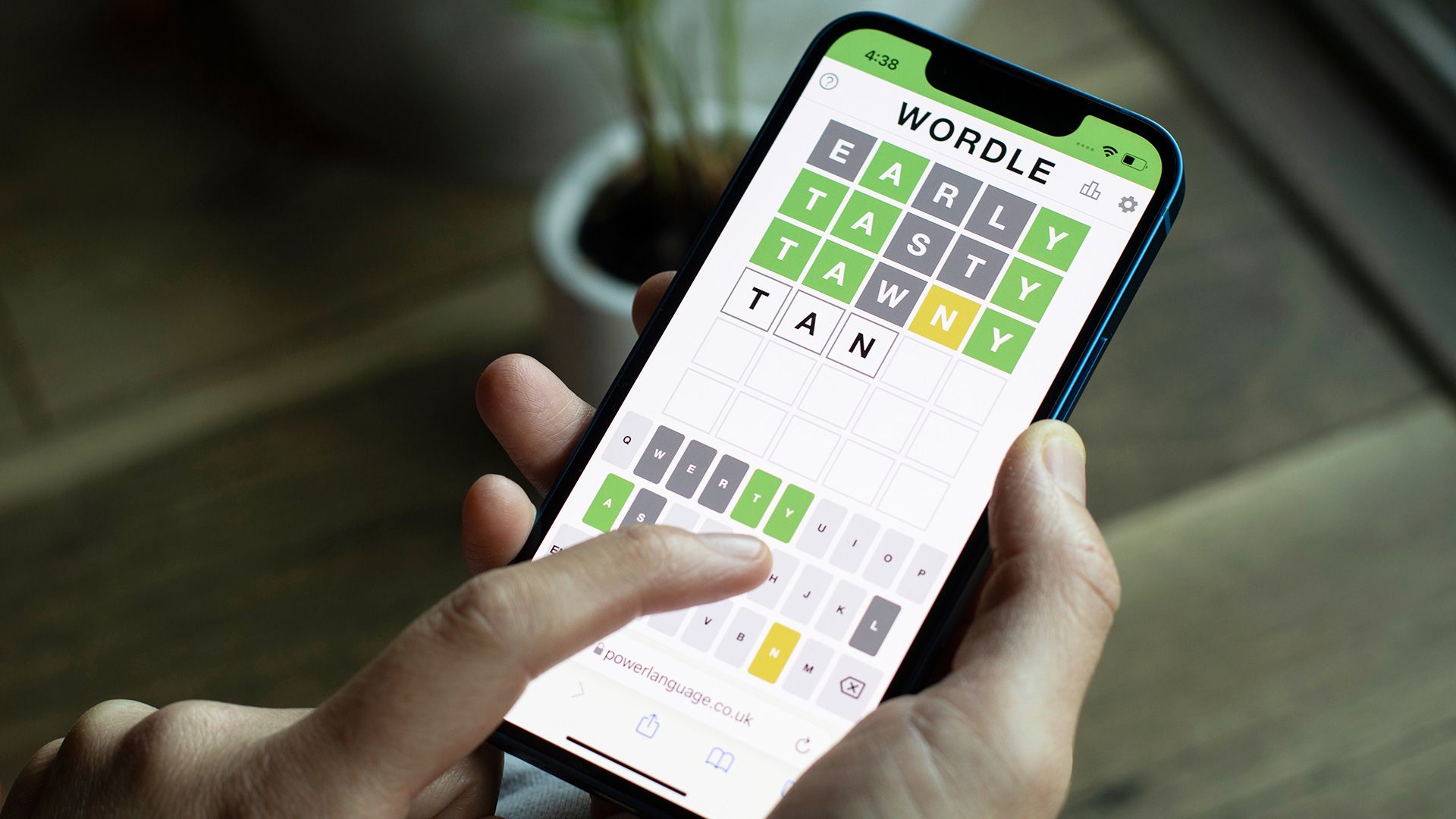
Mastering Wordle: The Definitive Guide to the Best Starting Words and Winning Strategies
This post has no video
The Science of the First Guess: Why Your Start Word Matters
For millions of daily players, Wordle is more than just a game—it's a ritual. However, the difference between a game won in three turns and a heartbreaking loss on the sixth often comes down to a single decision: the starting word. A mathematically optimized first guess doesn't just provide clues; it systematically eliminates the largest possible pool of incorrect answers, safeguarding your streak and improving your efficiency.
The Mathematics of Letter Frequency
To understand the best start words, one must look at the linguistics of the English language. Different datasets provide varying insights into which letters you should prioritize. Research from Oxford English Dictionary editors suggests that E, A, R, I, and O are the most frequent. Meanwhile, data from Google Books indicates that E, T, A, O, and I take the lead.
When analyzing the actual history of Wordle solutions, a more specific pattern emerges. The five most common letters in valid Wordle answers are E (53.3%), A (42.2%), R (38.8%), O (32.6%), and T (31.6%). By selecting a word that combines as many of these high-probability characters as possible, you maximize the chance of seeing yellow or green tiles on your very first attempt.
Top-Tier Wordle Starting Words
Depending on your goal—whether it is to solve the puzzle in the fewest moves or to rule out letters as quickly as possible—different words emerge as the optimal choice.
The Statistically Optimal Picks
Data scientists and programmers have run extensive algorithms across Wordle's 12,972 possible guesses. Words like SOARE, ROATE, and RAISE consistently rank at the top. Specifically, ROATE is often cited as the best for rapid elimination. However, since ROATE is not a valid solution in the game's answer list, it cannot provide a "hole-in-one." For those seeking the thrill of a 1/6 victory, RAISE is a superior alternative.
The Tom's Guide Recommendation: STARE
While algorithms provide the raw data, common sense applied to positioning is equally valuable. The word STARE is highly effective because it aligns with the most common letter placements: 'S' is a frequent starter, 'A' often occupies the third slot, and 'E' is the most common fifth letter. Combined with the high frequency of 'T' and 'R', STARE provides a balanced, aggressive start.
WordleBot's Expert Opinion
The New York Times' own WordleBot tool periodically updates its recommendations as its internal dictionary evolves. Currently, the Bot favors SLATE, CRANE, and TRACE. For those playing in 'Hard Mode,' TROPE is frequently highlighted as the most efficient path to victory.
The Vowel Debate: Strategy vs. Risk
A common strategy among casual players is the "vowel dump"—using words like ADIEU or AUDIO to identify the word's vowel structure immediately. While this seems intuitive, it carries a hidden risk. Many of these words, such as ADIEU, are not actually valid solutions, meaning you sacrifice the possibility of an immediate win. Furthermore, using AUDIO ignores the letter 'E', which is the most frequent letter in the entire game. A more balanced approach that mixes common consonants (S, T, R) with vowels is generally more successful.
Beyond the First Turn: The Second Word Strategy
The second guess is where the real strategy happens. If your first word yields little information, your second guess should be a "complementary" word—one that uses entirely different high-frequency letters.
- If you started with STARE: Consider follow-ups like PHONY, COULD, or DOING to test remaining vowels and common consonants like 'N', 'L', and 'C'.
- If you started with ORATE: Prioritize letters like L, I, S, N, and C. A word like TUNIC (if 'T' was yellow) can be a powerful second move.
By combining linguistic data with a disciplined second-turn strategy, you can move from guessing to solving, ensuring your Wordle streak remains intact regardless of the puzzle's difficulty.