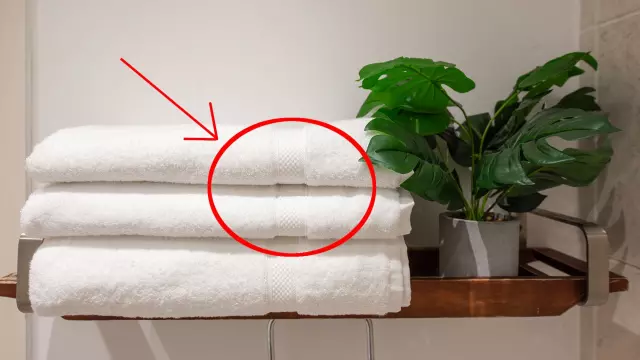
What is a Dobby Border? The Truth Behind Those Mysterious Towel Stripes
- Tags
- cleaning tips
- Home Improvement
- towels
- textiles
- bathroom accessories
- luxury living
Have you ever found yourself folding a fresh stack of towels and wondered about those distinct, often decorative, horizontal stripes woven into the fabric near the ends? These are known as 'dobby borders,' and while they are a common sight in luxury hotel bathrooms and high-end linen collections, their purpose is often misunderstood. To clear up the mystery, we consulted textile experts to understand whether these stripes are purely aesthetic or if they offer a functional benefit to your bath experience.
Origins of the Dobby Border
According to industry experts, the term 'dobby' refers to a specific, specialized weaving technique that originated in the 19th century. Originally, a dobby loom allowed weavers to incorporate intricate, small-scale geometric patterns or textures directly into the fabric weave. Over the decades, this technique was adapted by textile manufacturers for towels to create a distinct, flat-woven section that stands out from the plush, absorbent terry-loop body of the towel.
Is it a Sign of Luxury?
Many consumers assume that a towel featuring a woven dobby border is an indicator of superior quality or luxury. However, professionals in the textile and cleaning industry note that this is a common misconception. A dobby border is primarily a design choice, meant to add visual interest and texture to an otherwise simple garment. Because this section is typically woven flat, it does not possess the same pile height as the rest of the towel, meaning it does not contribute to overall absorbency. In fact, some of the highest-quality, most absorbent towels on the market do not feature a border at all.
What to Look For Instead
When shopping for new towels, experts suggest ignoring the presence of a dobby border as a primary metric for quality. Instead, focus on the following factors to ensure you are getting a durable and effective product:
- Material Quality: Look for 100% combed or long-staple cotton, which offers better durability and softness compared to synthetic blends.
- Stitch Integrity: Examine the hem and side seams. High-quality towels should have tight, uniform, double-needle stitching that prevents fraying after repeated washes.
- Absorbency and Weight: Check the GSM (grams per square meter). A higher GSM typically indicates a thicker, more plush, and more absorbent towel.
- Maintenance: Ensure the towel can withstand high-temperature washing if you prefer to sanitize your bathroom linens regularly.
Ultimately, while a dobby border can certainly make a towel look more sophisticated or 'hotel-like' on your rack, it is neither a prerequisite for luxury nor an indicator of a towel’s performance. By prioritizing the quality of the cotton and the integrity of the stitching, you can ensure your bath towels remain soft and effective for years to come.
Comments (0)
Sign in to join the conversation.Sign in
Loading comments...