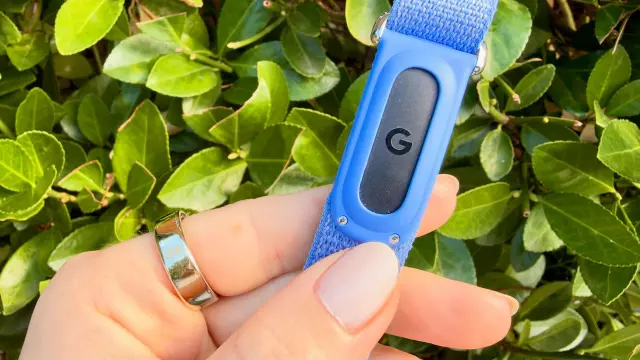
Fitbit Air vs. Oura Ring 5: The Ultimate Guide to Choosing Your Screenless Fitness Tracker
- Tags
- Wearable Technology
- Wellness
- Health Tracking
- Fitness Trackers
- Fitbit Air
- Oura Ring 5
- Smart Rings
In 2026, the rise of the 'screenless tracker' has fundamentally shifted how we monitor our health. These minimalist devices, designed to vanish into our daily routines, provide deep health insights without the persistent distraction of smartwatch notifications. After five months of rigorous testing, I have evaluated two of the most popular options on the market: the $99 Fitbit Air and the $399 Oura Ring 5.
Understanding Calorie Counting
When it comes to tracking calories, it is important to manage expectations. No wearable on the market can perfectly measure metabolic activity or actual heat production. Both the Fitbit Air and the Oura Ring 5 rely on algorithms based on personal metrics like age, height, and weight. While these devices offer a solid estimation of your daily burn, they should be viewed as tools to help you identify trends rather than precise medical instruments. In this category, it is a tie; both devices offer similar data quality.
Step Accuracy
Steps are a core metric for many fitness enthusiasts, and here the differences become clearer. In my testing, the Fitbit Air proved to be slightly more accurate in tracking steps throughout the day. To improve accuracy with the Oura Ring 5, you must ensure a proper, snug fit with the sensors positioned on the palm side of the finger. Linking the ring to health apps like Apple Health or Android Health can also help improve the consistency of the data.
Design and Comfort
The Oura Ring 5 is the clear winner for design. It is exceptionally lightweight, resembling a piece of jewelry more than a tech accessory. It is also more hygienic, as there is no wristband to trap sweat or grime. While the Fitbit Air is remarkably comfortable compared to bulkier competitors like the Whoop or Garmin, the Oura Ring 5 simply disappears on the finger, making it the superior choice for those who value aesthetics.
Battery Life
Both trackers excel when compared to traditional smartwatches like the Apple Watch, which often require daily charging. The Fitbit Air consistently delivers about seven days of battery life, while the Oura Ring 5 varies slightly based on ring size but generally offers around seven to nine days between charges. It’s a dead heat for battery endurance.
Advanced Sleep and Health Insights
Sleep is the third pillar of health, and both devices provide a detailed breakdown of sleep stages and a daily sleep score. However, Oura’s insights are more robust out of the box. To achieve a similar level of depth with the Fitbit Air, users must invest in a Google Health membership. Additionally, the Oura Ring 5 continues to lead in women's health, offering sophisticated features for menstrual, pregnancy, and menopause tracking, along with integration for Natural Cycles.
Final Verdict: Which One Should You Buy?
If you are on a budget and looking for a one-time purchase with no ongoing subscription costs, the Fitbit Air at $99 is the outstanding choice. It is highly capable and, with the optional subscription, features a world-class AI-powered health coach.
However, if you want a premium, unobtrusive health tracker that functions as both a fitness tool and a stylish accessory, the Oura Ring 5 is well worth the $399 investment. It offers superior data insights and a more sophisticated, durable design for long-term health tracking.
Comments (0)
Sign in to join the conversation.Sign in
Loading comments...