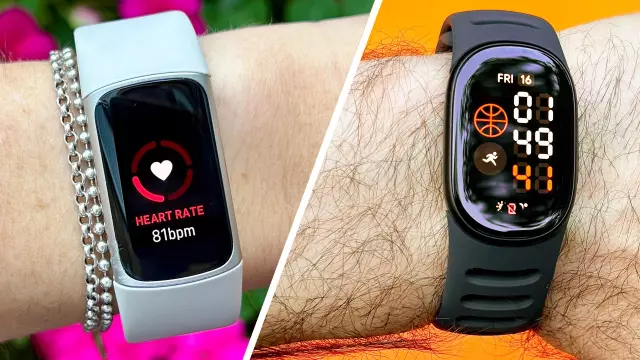
Fitbit Edge vs Fitbit Charge 6 — Which Google Fitness Tracker Wins?
- Tags
- Health Tech
- Wearable Tech
- Fitness Trackers
- Smartwatches
- Fitbit
Introduction: The Battle of Google Fitness Trackers
Choosing the right fitness tracker can be a daunting task, especially when comparing a well-established favorite with a brand-new release. While the natural inclination might be to immediately purchase the newer model, several key factors and price considerations might make the older option a more sensible choice for your daily routine.
The Fitbit Charge 6 has long stood as one of the premier fitness trackers on the market, offering incredible value and robust functionality. However, the introduction of the Fitbit Edge brings exciting new upgrades, including Google's latest health and safety tools, a more comfortable build, and a refined interface. Let's dive deep into a head-to-head comparison to see which Google-backed tracker truly wins the crown.
Cost and Availability
Pricing is often the deciding factor for many buyers. The Fitbit Edge launches at $179, sitting just $20 above the original $159 launch price of the Fitbit Charge 6. When adjusted for inflation, this minor price increase is quite reasonable for a next-generation device.
However, because the Fitbit Charge 6 has been available for a longer period, it frequently sees heavy discounts across major retailers like Walmart and Amazon, often dropping well below its initial price point. If budget is your primary concern, the older model holds a distinct financial advantage.
Design and Build Quality
When it comes to physical attributes, the Fitbit Charge 6 features a lightweight case weighing approximately 15g, while the newer Fitbit Edge is slightly heavier and bulkier at 17.7g, alongside larger overall dimensions. Despite the slight size increase, the Edge remains highly comfortable for all-day wear.
A notable distinction lies in the physical controls. While the Charge 6 uses a haptic button that vibrates upon pressing, the Fitbit Edge opts for a traditional, highly satisfying physical clickable button. Both devices maintain excellent comfort profiles, resulting in a tie for overall design ergonomics.
Display Comparison
Display technology has clearly advanced in the newer model. The Fitbit Edge steps up with a vibrant 1.34-inch AMOLED display, easily eclipsing the 1.04-inch panel found on the Fitbit Charge 6. While both feature bright, punchy colors, the Edge provides a higher maximum brightness output, ensuring effortless readability under direct sunlight. Combined with the extra screen real estate, interacting with your fitness metrics is noticeably more comfortable on the Edge.
Health and Fitness Tracking Capabilities
Both fitness trackers share a solid foundation of core wellness features, including continuous heart rate monitoring, skin temperature tracking, ECG sensors, SpO2 readings, and detailed sleep reports.
Where the Fitbit Edge pulls ahead is in advanced metrics and safety integrations. The Edge supports newer health insights such as insulin resistance and blood pressure trend tracking. Furthermore, it incorporates life-saving safety features like breathing emergency alerts and loss of pulse detection. Outdoor enthusiasts will also appreciate the inclusion of a barometric altimeter on the Edge for precise elevation gain and loss metrics.
Smart Features and Connectivity
Surprisingly, the older Fitbit Charge 6 holds an advantage in the smart features department. Both devices support smartphone notifications and media playback controls for paired iOS and Android phones.
However, the Fitbit Charge 6 includes built-in NFC and full support for Google Wallet, enabling seamless contactless payments directly from your wrist. Interestingly, Google omitted this feature on the Fitbit Edge, which may disappoint users who rely on on-wrist purchasing.
Battery Life and Charging Speed
Both fitness trackers are rated for up to seven days of battery life on a single charge. In practical everyday usage, the Charge 6 typically delivers around five to six days of performance. While real-world testing for the Edge is ongoing, it aims to meet or exceed these longevity benchmarks.
Charging times favor the newer model: a full recharge on the Fitbit Edge takes roughly 90 minutes, compared to the two-hour charge time required by the Charge 6.
The Verdict: Which One Should You Buy?
The Fitbit Charge 6 remains a sleek, cost-effective option equipped with handy NFC payments. However, the Fitbit Edge outshines its predecessor with a larger, brighter display, superior physical buttons, precise altimeter tracking, and a comprehensive suite of advanced health and safety tools. For users prioritizing cutting-edge health insights and display clarity, the Fitbit Edge is the ultimate winner.
Comments (0)
Sign in to join the conversation.Sign in
Loading comments...