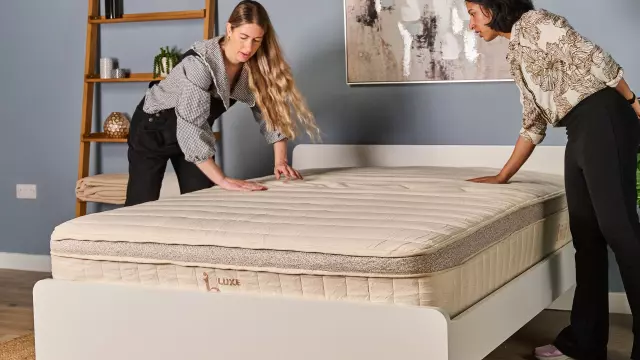
How Do Mattress Warranties Work? A Complete Guide to Coverage and Void Actions
- Tags
- mattress care
- Home Improvement
- Sleep Tips
- mattress warranties
- mattress buying guide
What is a mattress warranty?
A mattress warranty is a brand's formal guarantee that it will replace, repair, or refund a faulty product if structural defects due to manufacturing errors or damaged materials occur. Most mattress warranties are limited warranties that cover select defects or components, whereas full warranties protect against all defects. The typical length of a mattress warranty is 10 years, aligning closely with the average lifespan of a mattress.
Mattress warranties generally fall into three categories:
- Prorated mattress warranty: The consumer pays a growing percentage of replacement or repair costs the longer they own the mattress.
- Non-prorated mattress warranty: The company covers the full cost of replacement or repair for the duration of the policy, sometimes excluding minor delivery fees.
- Combination mattress warranty: Non-prorated up to a specific milestone, after which it transitions to a prorated structure—common in lifetime mattress warranties.
What do mattress warranties cover?
While specific terms vary by brand, most standard mattress warranties cover core manufacturing problems, including:
- Excessive sagging or indentations (measured by depth thresholds specified by the brand)
- Broken or protruding coils
- Material defects such as splits, cracks, or bunching foams
- Seams coming undone
- Faulty handles or zippers
- Manufacturing flaws in the mattress cover
- Sizing inconsistencies
10 Actions That Can Void Mattress Warranties
A mattress warranty offers critical protection against factory defects, but certain behaviors and oversight can accidentally void your coverage completely.
1. Improper support
Placing your mattress on an incompatible bed frame, a base with wide slat gaps, or directly on the floor can cause premature wear, tear, and structural failure, automatically voiding the warranty.
2. Removing the law tag
In the US, removing the white law tag or label (which contains vital factory codes, production dates, and location details) violates policy conditions. In the UK, removing the sewn-in British Standard fire safety tag (BS 7177) renders the warranty void.
3. Stains or soiling
Any evidence of spills, sweat stains, or soiling classifies the mattress as a biological hazard, voiding the warranty instantly due to health and safety regulations, regardless of whether the stain is related to your claim.
4. Exceeding advertised weight capacity
Every mattress has a weight limit (e.g., 600 lbs total or 300 lbs per person). Exceeding these specifications compromises internal support layers and causes excessive dipping.
5. Not having proof of purchase
Without an original receipt or invoice demonstrating when and where the mattress was bought—or if purchased secondhand—the warranty becomes entirely ineffective.
6. Ignoring care recommendations
Failing to follow manufacturer cleaning or maintenance guidelines, such as using harsh bleaching chemicals on delicate wool covers or exposing memory foam to extreme heat, voids protection.
7. Physical abuse or misuse
Using the bed for anything other than its intended sleeping purpose—such as jumping, standing, folding, or aggressively bending the internal core—invalidates your warranty.
8. Attempting to return a damaged mattress
Submitting a stained or physically damaged product during a sleep trial or warranty claim process often triggers an automatic rejection.
9. Leaving a mattress boxed for too long
Compressed mattress-in-a-box products must typically be unboxed within 30 days of delivery. Leaving them rolled up longer can cause permanent structural expansion failures.
10. Removing the mattress cover
Even if a cover features a zipper, attempting to completely remove or wash it on certain models leaves internal foam unprotected, directly violating warranty terms.
Comments (0)
Sign in to join the conversation.Sign in
Loading comments...