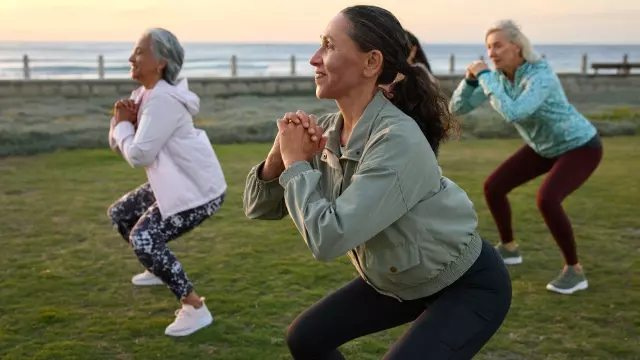
I teach people over 50 to build strength and mobility — here are the 3 staple moves I swear by for beginners
- Tags
- Fitness
- strength training
- Workouts
- Mobility
- Aging Well
- Seniors Fitness
Building Strength and Mobility After 50
Age is frequently described as just a number, and for good reason. While natural physiological changes occur as we grow older—such as a gradual decline in lean muscle mass and overall strength markers—it is entirely possible to build and maintain peak physical fitness well into your 50s, 60s, and beyond. In fact, many fitness professionals and trainers emphasize that consistency and smart training trump chronological age every single time.
As a coach specializing in functional mobility, I firmly believe that mobility routines hold just as much value as traditional resistance training programs. While lifting heavy weights or running marathons tends to attract the spotlight, dedicated mobility work is what keeps your joints healthy, your muscles active, and your body resilient against injury.
How well you move today dictates how well you will live in the future. To help you take control of your physical longevity, here are three essential, low-impact exercises designed specifically for beginners to build foundational strength and enhance overall mobility.
The 3 Staple Moves for Beginners
Incorporating micro-dosed mobility routines into your weekly schedule allows you to cultivate strength, control, and joint stability without overstressing your body. Combined with light resistance training, these movements act as a powerful anti-aging tool.
1. Good Morning x Squat Combo
This hybrid movement serves as a masterclass in mobility. It begins by targeting the posterior chain—the muscles along the back of your body—during the good morning phase, and then transitions into testing both thoracic and lower-body mobility at the bottom of a deep squat.
- How to perform: Start with your feet hip-width apart and hold a light weight in both hands behind your head, keeping your elbows pulled back and your chest proud. Hinge forward at your hips, maintain a soft bend in your knees, and push your butt back until your torso is parallel to the ground. Pause briefly, then bend your knees further while lifting your chest to lower your butt into the bottom of a squat position. Drive powerfully through your heels to return to standing.
- Sets and Reps: Perform 6 to 8 repetitions for 2 sets.
2. Prone Lat Pull-Downs
Designed to target the latissimus dorsi and enhance upper-body range of motion, this exercise is fantastic for anyone looking to improve their posture. Beginners can start using just their body weight before introducing light handheld weights.
- How to perform: Lie face down on your stomach holding light weights in your hands, with your arms fully extended in front of you at shoulder height and your gaze directed downward. Bend your elbows to draw them actively toward your hips, squeezing your shoulder blades and upper back. Extend your arms forward again with control.
- Sets and Reps: Perform 8 to 10 repetitions for 3 to 4 sets.
3. Half-Kneeling Rotations
This dynamic movement engages the upper and lower body simultaneously. The half-kneeling stance opens up the hips and groin with a strong focus on the inner thighs, while the rotational component activates the thoracic spine, chest, and shoulders.
- How to perform: Assume a half-kneeling position while holding a light weight in one hand. Sit your hips back slightly and lower your free elbow toward the ground in front of you while gently pressing your front knee outward in line with your toes. Simultaneously, raise the weighted hand overhead, letting your eyes follow the movement while keeping the weight securely stacked over your shoulder. Return to the starting position with your arm raised.
- Sets and Reps: Perform 8 to 12 repetitions per side for 3 to 4 sets, switching both legs and arms when changing sides.
The Benefits of Low-Impact Training
When combined, these three exercises offer a comprehensive approach to physical wellness. They target thoracic mobility, enhance upper and lower body strength, and unlock tight joints that commonly restrict daily movements like squatting or reaching.
As we age, gently moving joints through their full range of motion while applying light resistance yields incredible results. Ligaments, fascia, and joints respond exceptionally well to low-impact loading, making these movements ideal for beginners focusing on form, stability, and longevity.
Comments (0)
Sign in to join the conversation.Sign in
Loading comments...