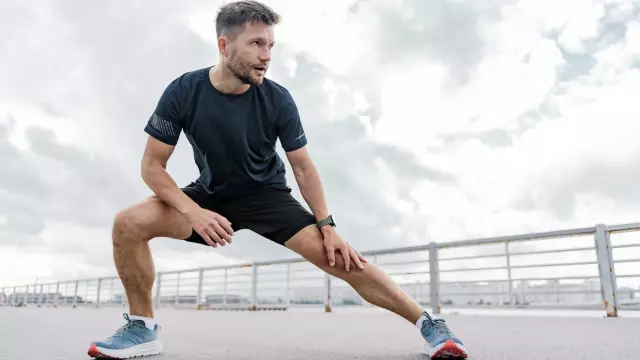
I Test Hip Mobility Exercises So You Don't Have to — This One Move Always Stands Out
- Tags
- Wellness
- Fitness
- Hip Mobility
- Workouts
- stretching
- personal trainer
The Importance of Comprehensive Hip Mobility
The quest for the ultimate hip mobility exercise is a common pursuit among fitness enthusiasts, but the reality is that no single movement can do it all. To maintain optimal pelvic health and joint function, you ideally need a combination of exercises that move your pelvis through different planes of motion, including both internal and external rotation.
Knowing what actually works can be confusing with so much conflicting fitness advice online. As a personal trainer, I regularly test various hip mobility exercises to separate the fads from the movements that genuinely deliver results. While strength training is essential for preserving muscle mass as we age, I have become even more passionate about encouraging regular mobility training—especially for adults over 50.
Why Internal Rotation is Often Overlooked
When most people think of a lower body warm-up, they picture hip rolls that externally rotate and open the hips, or leg swings that stretch the hip flexors in a simple forward-and-back motion. However, how often do you actively focus on internal hip rotation?
Internal rotation involves drawing your knee toward your body's midline, rotating the hip inward. Strong, healthy hips need to function seamlessly in all directions. Choosing exercises that challenge your hips in multiple planes of motion is vital for long-term joint longevity.
Among all the drills I have tested, internal rotation movements consistently stand out. You can perform this bodyweight exercise anywhere, gradually increasing your range of motion as your flexibility and control improve over time. For the best results, aim for 3 sets of 8 to 12 repetitions per side, focusing entirely on the quality and control of each rep rather than speed.
The Benefits of Mastering Internal Rotation
Building strength and control in internal rotation offers profound benefits for your entire lower body:
- Enhanced Pelvic Control: Helps build mobility, stability, and strength around the pelvis while delivering a deep, satisfying stretch.
- Increased Range of Motion: Translates directly to better movement efficiency in daily life and athletic pursuits.
- Targeted Muscle Activation: Primarily targets the glutes, hips, and groin, while engaging crucial stabilizing muscles like the gluteus minimus, medius, adductors, hip flexors, and tensor fascia latae.
Tips for Proper Form and Modifications
If you experience any sharp pain during the exercise, stop and rest immediately. Those working with specific injuries or underlying health conditions should consult a professional before adding new routines.
To modify the movement, slow down your pace and avoid pushing too deep into the stretch; simply pause for a moment at the point of tension before releasing. You can also reduce your total sets or reps.
If the exercise hurts your knees, check your posture. Keep a soft bend in your standing leg, square your hips, and lean your weight slightly forward while maintaining a straight back to enhance balance and glute activation. Remember that you are drawing the raised knee inward rather than twisting your entire torso to the side. Placing a hand on your hip can help you feel your pelvis doing the actual work.
Comments (0)
Sign in to join the conversation.Sign in
Loading comments...