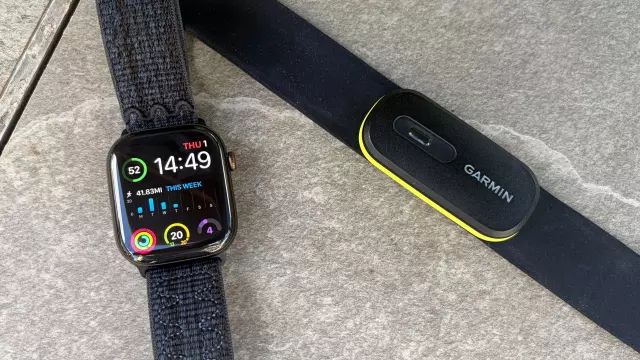
I tested the Apple Watch 12’s heart rate accuracy vs a chest strap for running, cycling, HIIT and strength workouts — here's my verdict
- Tags
- Apple Watch
- Wearable Tech
- Fitness Tracking
- Smartwatches
- Heart Rate Accuracy
Introduction
Ever since Apple updated its optical heart rate sensor starting with the Series 4, the Apple Watch has consistently ranked among the best smartwatches for workout tracking. With the release of the Apple Watch Series 12 and Apple Watch Ultra 4, Apple promises the most accurate heart rate tracking on the market, backed by internal studies comparing its metrics against a reference Polar H10 chest strap. To see if these bold claims hold up in real-world scenarios, I put the Apple Watch Series 12 through rigorous testing across running, indoor cycling, high-intensity interval training (HIIT), and strength workouts, comparing its data side-by-side with a Garmin HRM 600 chest strap.
How I Tested Heart Rate Accuracy
During testing, I logged over 100 miles of running while wearing the Apple Watch 12 on one wrist and pairing the Garmin HRM 600 chest strap to a separate tracking device on the other. I also incorporated strength training sessions, a bodyweight HIIT circuit, and an indoor cycling ride. All data graphs were thoroughly analyzed using the DC Rainmaker Analyzer tool. While chest straps remain the gold standard for measuring electrical heart signals directly, wearing a watch is undeniably more convenient. My goal was to see whether the Apple Watch 12 could close the accuracy gap enough to replace a traditional chest strap for dedicated athletes.
Running Performance
Running is my primary sport, and the Apple Watch 12 proved remarkably reliable outdoors. The optical sensor locked on quickly and maintained a close tracking curve compared to the chest strap across easy miles, long runs, and a half-marathon race. While the watch occasionally grayed out its heart rate reading for brief moments at the start of a run due to low initial confidence, these gaps were short-lived. A treadmill run revealed a few more minor discrepancies, resulting in a slightly higher average heart rate reading by the end, but overall, the performance was stellar and more than reliable enough to guide heart-rate-based training.
Indoor Cycling and Interval Training
During a 40-minute indoor cycling session, I incorporated 30-second maximum-effort sprints every five minutes to test how quickly the watch could react to rapid heart rate spikes. Optical wrist sensors traditionally struggle with quick transitions, but the Apple Watch 12 performed brilliantly. It responded rapidly to the changes in effort, ending the session with an average heart rate of 109.97 bpm, compared to 109.89 bpm on the chest strap. While a tiny fraction behind the chest strap during interval onsets, it successfully logged every single sprint, making it a dependable companion for spin classes.
Strength and HIIT Workouts
Gym workouts represent the ultimate challenge for optical wrist sensors due to unpredictable wrist movements and random muscular contractions. When launching a HIIT session, the Apple Watch even prompts users to connect a Bluetooth chest strap if they desire absolute precision. During my strength and bodyweight HIIT sessions, the watch's heart rate readings generally rose and fell in tandem with the chest strap, though they consistently lagged by a few seconds. While it captured most major spikes in effort, it occasionally missed minor fluctuations. For casual fitness tracking, it is more than sufficient, but dedicated gym-goers focusing heavily on zone training may still prefer a chest strap.
The Verdict
The Apple Watch 12 is a fantastic fitness companion with an impressive sensor, but its heart rate accuracy is on par with other top-tier wearables like Garmin's latest devices featuring the Elevate v5 sensor rather than an industry-shattering leap forward. If you enjoy casual running, cycling, and general fitness tracking, the Apple Watch 12 is exceptional. However, if your training strictly relies on precise, real-time heart rate zones during high-intensity intervals or strength workouts, investing in a dedicated chest strap remains a smart choice.
Comments (0)
Sign in to join the conversation.Sign in
Loading comments...