I Tried the Meta VR Glasses — This is Exactly What I Want from the Apple Vision Air
- Tags
- Tech News
- Meta
- Virtual Reality
- Spatial Computing
- VR Glasses
- Apple Vision Pro
Introduction to Meta's New VR Glasses
There are lingering rumors that Apple's Vision Pro ecosystem is on "life support." However, after spending hands-on time with the newly announced Meta VR Glasses, slated to hit the market this spring for $1,299, it's clear that it would be entirely premature for Apple to abandon the spatial computing space. As industry reports suggest Apple is actively exploring thinner and lighter iterations of the Vision Pro—rumored for late 2028—Meta has secured a massive head start. These new glasses offer a lightweight, highly accessible alternative that captures many of the Vision Pro's core benefits at a fraction of the cost and weight.
Ergonomics and Wearability: A Revelatory Design
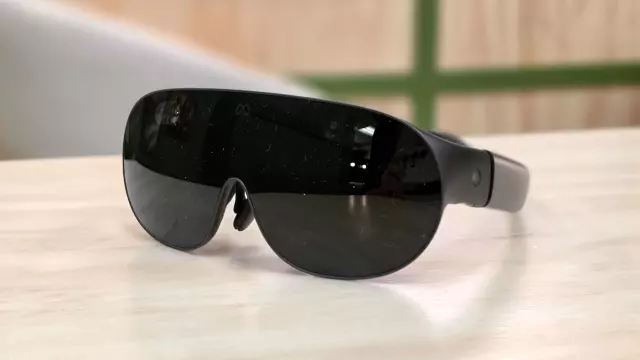
Weighing a mere 100 grams, the Meta VR Glasses completely eliminate the neck strain associated with the bulky, 650-gram Apple Vision Pro. Visually reminiscent of Oakley shield-style sunglasses equipped with a wire, they utilize advanced video passthrough rather than see-through lenses. During a rigorous 40-minute demo session, the headset felt virtually weightless, and adjusting the Interpupillary Distance (IPD) was effortless thanks to smooth sliding mechanisms.
While the companion puck computing unit—housing the Snapdragon Reality Elite chip, 12GB of RAM, local storage, and the battery—weighs 300 grams (10.6 ounces), its built-in belt clip makes it far more practical than dangling a loose battery in your pocket. Furthermore, battery life outclasses Apple's headset, delivering approximately 3 hours of continuous runtime compared to the Vision Pro's 2.5 hours.
Interface and Navigation: Intuitive Tracking
Setting up the Meta VR Glasses immediately evokes comparisons to visionOS. Users rely on their eyes as cursors and their fingers as mice, utilizing a familiar pinch gesture (bringing index finger and thumb together) to tap. Eye-calibration involves a quick routine of following and clicking onscreen dots.
The gesture control scheme is fluid. Scrolling is accomplished by rubbing your finger up and down along your index finger while maintaining a closed fist, or by utilizing standard outstretched arm pinches. Backed by Meta's Muse AI assistant, hands-free voice commands make closing applications and returning to the home screen seamless.
Immersive Entertainment and Sports Content
Media consumption on the Meta VR Glasses is remarkably immersive. A 3D performance by Billie Eilish, co-directed alongside James Cameron, places the viewer directly in the front row. Similarly, sports fans can experience 180-degree live feeds, such as classic NBA moments from behind the backboard, capturing the raw energy of live events. Meta promises up to 100 live sports events annually included for free.
Despite a 70-degree field of view—narrower than the Meta Quest 3's 110 degrees—the visual experience remains compelling, devoid of annoying light leakage. Movie playback, such as "Avengers: Infinity War," pairs dynamic virtual environments with the on-screen action, hinting at an exciting future for true 3D cinema.
Productivity and Virtual Computing
For office tasks, projecting a virtual keyboard onto a physical desk feels surprisingly natural. Though typing on a flat surface lacks tactile key travel, the system includes an accurate separate virtual touchpad. Additionally, the glasses function as a portable multi-monitor display, allowing users to effortlessly extend their Mac or PC desktop wirelessly or via USB-C.
Gaming and Mixed Reality Potential
Mixed reality gaming shines through titles like Dragon Grove, where users interact with virtual elements overlaid neatly onto their real-world environment. With support for over 75 launch games optimized for hand gestures—alongside backward compatibility with thousands of traditional VR titles via Touch Plus controllers—the gaming ecosystem is robust.
Meta VR Glasses vs. Xreal Aura
Competition in the spatial computing market is fierce, notably from the Xreal Aura, priced at $1,279 and powered by Android XR and Gemini AI. Unlike Meta's video passthrough approach, the Aura allows users to look straight through optical lenses, though at a lower per-eye resolution (1900 x 1200 versus Meta's crisp 2.5K display).
Final Outlook
The Meta VR Glasses successfully bridge the gap between premium spatial computing and consumer accessibility. By delivering incredible comfort, intuitive tracking, and robust media capabilities at $1,299, Meta has set a high bar. If Apple intends to compete effectively, its future lightweight headset developments should look closely at what Meta has achieved here.
Comments (0)
Sign in to join the conversation.Sign in
Loading comments...