iPhone Duo Pre-Orders Open This Week: 7 Major Questions Still Unanswered
- Tags
- iPhone Duo
- Apple
- foldable phone
- Tech News
- iPhone 18
Introduction to the iPhone Duo Launch
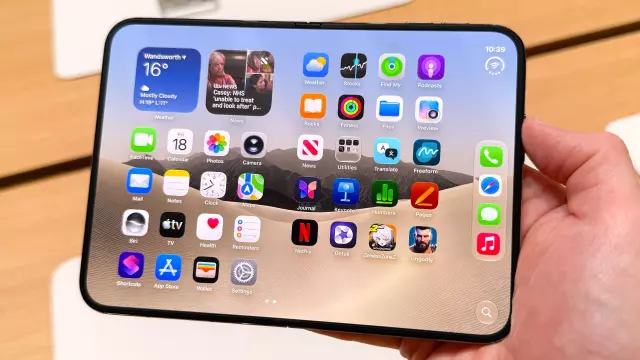
Pre-orders for Apple's highly anticipated iPhone Duo are officially kicking off this week, offering foldable enthusiasts the chance to secure their devices ahead of the October 23 release date. While many early adopters are rushing to lock in their pre-orders to avoid lengthy shipping delays, there are still several critical questions surrounding Apple's first foldable phone that remain unanswered.
Unlike major surprises or hidden hardware specs—which Apple has been relatively open about—these are the nuances you can only truly understand from extended, real-world usage. For some buyers, these lingering unknowns might be the deciding factor between purchasing a day-one unit or waiting for a second or third-generation iteration.
1. Real-World Battery Life Performance
Phone manufacturers always boast about battery longevity, and Apple is no exception. The iPhone Duo is officially rated for up to 44 hours of video playback from the external display and 31 hours when using the larger inner folding screen. However, how these metrics translate into mixed, heavy, real-world usage remains unclear. Because independent reviewers haven't yet put the Duo through comprehensive endurance trials, comparisons against standard flagship iPhones or competing foldables are purely speculative for now.
For context, the iPhone 18 Pro boasts up to 36 hours of video playback, while the Pro Max reaches 45 hours. In Tom's Guide rigorous 5G battery tests, those models scored impressive figures of 16 hours and 17 minutes and 18 hours and 27 minutes, respectively. Given that the Duo shares similar energy-efficient internal architecture—including the powerful A20 Pro chip and the C2 modem—it should theoretically offer solid endurance, but we won't know for sure until full testing is complete.
2. Screen Performance and the Nano-Texture Display
A massive point of emphasis for the iPhone Duo is its foldable screen, specifically Apple's choice to use a matte "nano-texture" display instead of the traditional glossy glass panels found on most premium smartphones. While early impressions of this anti-reflective approach have been surprisingly positive, its actual performance in harsh, brightly lit environments still needs rigorous testing.
Furthermore, questions remain regarding how the nano-texture coating affects overall color vibrancy and image quality. Additionally, Apple has heavily marketed the Duo as having a completely crease-free inner display. However, as consumers have learned with other foldables on the market, creases often develop over time with repeated folding. Seeing how the Duo's display holds up after three to six months of daily wear and tear will be vital.
3. Accessory Support and Form Factor Compatibility
The iPhone Duo features full MagSafe support, but its unique, compact foldable shape means many existing MagSafe accessories simply won't fit properly. Early online reports and community examples already indicate that the phone's chassis can be too short to accommodate standard MagSafe card wallets neatly.
Because credit card dimensions are fixed, this raises concerns about how other magnetic accessories—such as external battery packs and desktop stands—will interact with the device. While standard wireless charging pucks should work fine, physical wraparound peripherals like USB-C mobile game controllers will also face compatibility hurdles, forcing users to lean heavily on wireless alternatives.
4. Camera System Capabilities Without a Telephoto Lens
Apple holds a stellar reputation for smartphone photography, consistently delivering some of the best camera systems on the market. However, much like the iPhone Air, the iPhone Duo arrives with compromises that spark concern: notably, the absence of a dedicated telephoto lens. Instead, Apple is relying on a digital-only "optical quality" crop feature for zoomed shots.
While Apple's computational photography software is remarkable—allowing single-lens or minimalist setups to capture stunning imagery—the lack of optical zoom hardware is a notable omission at a luxury price point. Competitors like Samsung have proven that users notice the absence of a true telephoto lens, making real-world camera comparisons essential.
Durability has historically been the Achilles' heel of foldable phones, with many models failing to seal their internal mechanisms against dust and moisture properly. Apple has incorporated robust engineering measures into the iPhone Duo, including a Grade 5 titanium chassis and durable Ceramic Shield 2 on the outer cover display.
Even so, recent history shows that Apple's hardware finishes aren't entirely immune to cosmetic wear—as seen with previous scuff-prone titanium designs. The long-term physical resilience of the inner folding screen and hinge mechanism remains one of the device's biggest question marks until drop and stress tests are published.
6. Third-Party App Optimization
Software optimization is arguably the most critical pillar of any foldable smartphone experience. While Apple has worked closely with select developers to ensure native and major third-party apps scale seamlessly across both the outer and inner screens, achieving widespread adoption is another challenge entirely.
As seen on the Android tablet and foldable ecosystem, many developers fail to optimize their applications, leaving users with poorly scaled, blown-up phone apps. The success of the iPhone Duo will heavily depend on how quickly developers embrace Apple's layout guidelines on day one.
7. Long-Term Ergonomics and Comfort
During initial hands-on sessions, reviewers noted that the iPhone Duo is neither the thinnest nor the lightest foldable on the market. Weighing in at roughly 8.9 ounces, it stands as the heaviest iPhone Apple has ever produced. Combined with an unconventional folded width and thickness, long-term handheld comfort is a legitimate concern.
While wider foldable form factors generally feel better to hold than ultra-narrow designs, the Duo's substantial weight could lead to hand fatigue during extended reading or gaming sessions. Ultimately, these unanswered questions highlight why prospective buyers should pay close attention to comprehensive reviews before diving into the pre-order pool.
Comments (0)
Sign in to join the conversation.Sign in
Loading comments...