Level Up Your Game: 3 Essential 3D-Printed Golf Accessories That Actually Work
This post has no video
Merging Additive Manufacturing with the Fairway
Golf is notoriously known as one of the most expensive hobbies a person can pursue. From high-end club sets and premium footwear to the ever-increasing cost of tee times, the financial barrier to entry—and maintenance—is steep. However, for those who own a 3D printer, there is a way to mitigate some of these costs while adding a layer of custom utility to their practice routine.
Using a Bambu Lab A1 Combo, we tested a variety of community-designed prints to see if 3D-printed gear could withstand the rigors of the game. While many hobbyist prints end up as "dust gatherers," we discovered three specific accessories that provide genuine value, particularly for those utilizing home simulators or spending hours at the driving range.
1. The Golf Ball Dispenser Pro: A Home Range Essential
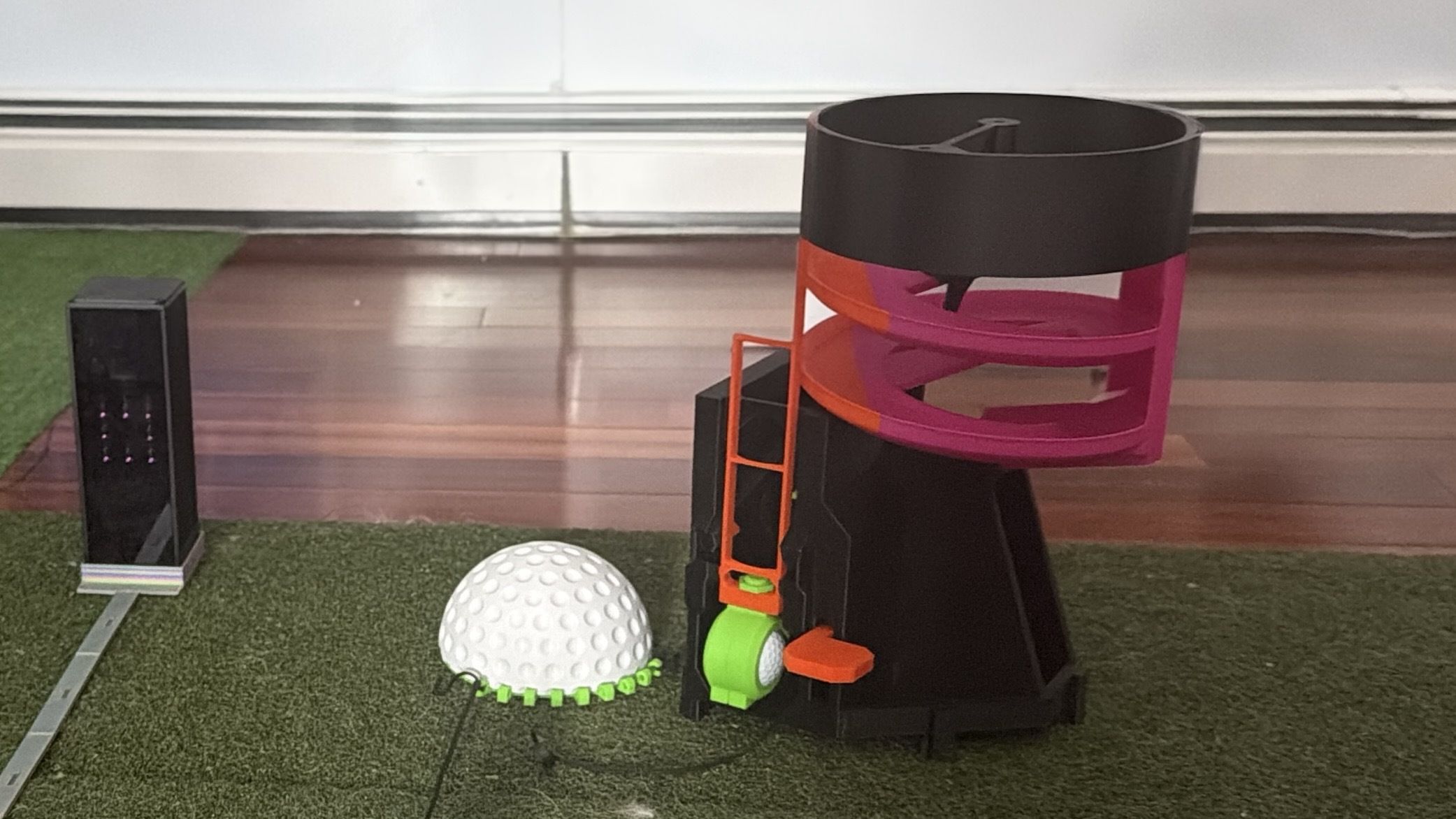
The Golf Ball Dispenser Pro is perhaps the most transformative piece of gear for the home golfer. It replicates the convenience of high-end auto-tee systems found at professional driving ranges, allowing you to focus on your swing rather than constantly bending over to reset your ball.
While the main unit provides the core mechanical functionality, the real secret to efficiency lies in the optional add-ons. We highly recommend printing a companion funnel or the expanded "ball garage." These attachments allow the dispenser to hold a higher volume of balls, ensuring your practice flow remains uninterrupted. For those looking to build this, the designs are readily available on platforms like MakerWorld, requiring no custom CAD knowledge—just the right filament and a bit of patience.
2. Weighted Tee Base: Efficiency for the Simulator
Anyone who has used a golf simulator knows the frustration of the "flying tee." A single misplaced driver shot can send your plastic tees scattering across the room, wasting valuable practice time. The Weighted Tee Base solves this problem through a simple but effective design.
By printing a hollow base and filling it with a heavy medium—such as sand or small pebbles—you create a stable anchor for your tee. When paired with a simple rubber-band tether, the tee stays exactly where it belongs. This mimics expensive commercial products like the K2 Golf tee holder but at a fraction of the cost. The result is a more streamlined practice session, allowing for more repetitions in less time, which is the key to rapid improvement.
3. The Golf Tee Elevator: Precision on the Tee Box
Consistency is the bedrock of a good golf game. For the particular golfer, the exact height of the ball on the tee can be the difference between a perfect drive and a topped shot. However, consistency is difficult when you are using a variety of different tee brands or lengths found on the course.
The Golf Tee Elevator acts as a precision guide. By slotting any standard tee into the elevator, you can set it into the ground at a predetermined, consistent height every single time. While it may not magically fix a slice, it eliminates one more variable from the equation, reducing mental distractions and providing a standardized setup for every drive.
The Verdict: Is 3D Printing Worth It for Golf?
It is important to be realistic: a 3D printer is a significant investment that costs far more than the retail price of these three accessories. However, when viewed as part of a broader maker ecosystem, these prints are invaluable. There is a unique satisfaction in creating a tool that solves a specific problem on the course.
Beyond these three, the community continues to innovate with grip training aids, alignment stick holders, and custom tees. For the modern golfer, the intersection of technology and sport offers a way to customize their game, improve their practice efficiency, and save a few dollars along the way.