AMD Issues Reality Check to Nvidia's RTX Spark and Warns Arm
- Tags
- Microsoft
- Laptops
- Nvidia
- AMD
- RTX Spark
- CPUs
Introduction: The Battle for the Unified Memory Laptop Market
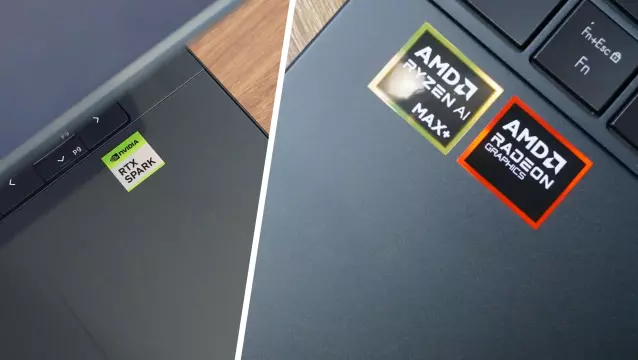
Nvidia recently unveiled its RTX Spark alongside Microsoft’s flagship Surface Laptop Ultra, heralding a new era of personal computing featuring massive unified memory, local AI processing, and desktop-class performance in a portable chassis. However, industry competitor AMD was quick to point out that Nvidia didn't invent this category—it merely validated an architecture that AMD has been selling and refining for over a year.
Speaking shortly after the RTX Spark reveal, Mike Nordquist, CVP of Client Product Marketing at AMD, didn't hold back. In a candid discussion, Nordquist laid out a pragmatic case for why AMD believes its second-generation Ryzen AI Max 400 series leaves Nvidia’s new offering behind, while raising critical questions about the reliance on Arm architecture.
The Category Pioneers: AMD’s Head Start
While Nvidia embraces the unified-memory laptop paradigm, AMD emphasized that it pioneered this exact hardware architecture with its Strix Halo chips in early 2025. According to Nordquist, industry competition is a positive driving force, but AMD is already iterating on its initial concepts.
'The exciting part is just the category development. We introduced a similar product in early 2025, so having more people come in and validate that... I think that’s good overall,' Nordquist noted. He highlighted that AMD has already entered its second generation with products like the Ryzen AI Max+ Pro 495, which boasts a massive 192GB memory ceiling—offering 50% more capacity than the RTX Spark’s 128GB limit. This extra overhead allows users to run complex local AI models up to 300 billion parameters with superior quality.
The Elephant in the Keynote: The Silence on Arm
One of the sharpest critiques from AMD targeted a glaring omission in Nvidia and Microsoft’s launch keynotes: the word 'Arm' was noticeably absent from the script. Traditional Windows PCs have run on x86 architecture for over 30 years. While Arm-based chips like Nvidia's RTX Spark and Qualcomm's Snapdragon X Elite offer power efficiency gains, they require an emulation layer to translate legacy x86 software, introducing potential performance penalties and compatibility friction.
'Everything just runs native [on AMD], and I still don’t know what that experience is going to be... I didn’t hear Arm mentioned once,' Nordquist stated. AMD maintains that x86 remains battle-tested, eliminating the uncertainty of code translation and ensuring out-of-the-box compatibility for heavy applications and native PC gaming.
Thirty Years of Laptop DNA vs. A GPU Giant's First Clamshell
Nvidia undoubtedly dominates the AI data center market and manufactures top-tier discrete GPUs for gaming laptops, but designing a cohesive consumer laptop platform involves navigating complex thermal constraints, dynamic battery curves, and sleep states. Nordquist emphasized that building a standalone client laptop platform requires decades of experience.
'They’re new to the laptop market in general. We’ve been doing it for 30 years-plus in this space, so I think we know how to run Windows,' Nordquist added. With AMD’s mature x86 ecosystem, users get guaranteed native performance without worrying about software breaking due to translation layers.
Conclusion: The Silicon War Moves to Benchmarks
As the dust settles on the latest product announcements, the debate boils down to a few key factors: the compatibility tax of software emulation on Arm, memory ceilings for local AI workloads, and the maturity of the hardware platform. While Nvidia and Microsoft brought undeniable star power to their launch, AMD's established x86 lineup and massive memory configurations present a formidable challenge. Ultimately, real-world benchmarking will determine whether Nvidia’s new Arm-based silicon can truly outperform AMD's battle-tested hardware brute force.
Comments (0)
Sign in to join the conversation.Sign in
Loading comments...