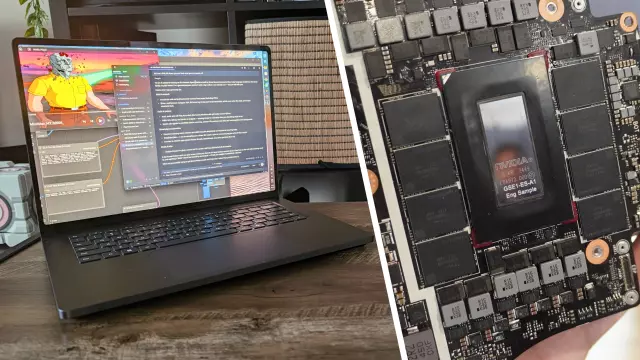
Benchmarking Nvidia RTX Spark LIVE: Testing CPU, GPU, AI, and Gaming Performance
- Tags
- Tech News
- AI Laptops
- CPU Performance
- Nvidia RTX Spark
- GPU Benchmarks
- Blackwell Architecture
Introduction to the Nvidia RTX Spark Benchmark Thunderdome
The tech industry is buzzing with the arrival of Nvidia's new RTX Spark chip, which merges an Arm-based Grace CPU with a powerhouse Blackwell RTX GPU, sharing up to 128GB of unified memory. Putting this silicon through its paces reveals how it handles heavy workloads, complex rendering, local AI pipelines, and modern PC gaming. This live-testing breakdown explores whether Nvidia’s bold promises translate to real-world performance.
Geekbench 7: Analyzing CPU Performance
When examining pure CPU math, how does Nvidia’s Arm-based Grace architecture stack up against Apple, AMD, and Intel? In Geekbench 7 benchmarks, the 20-core RTX Spark CPU delivers solid numbers but trails behind Apple's M5 Pro and Max chips in single-core and multi-core efficiency crowns. However, it holds its ground competitively against Qualcomm's Snapdragon X2 Elite Extreme and outpaces several x86 rivals in multi-threaded tasks.
3DMark Gaming Benchmarks and Graphical Prowess
Fitted with a massive 6,144-core Blackwell RTX GPU, the RTX Spark shines brightly when running graphical stress tests. In 3DMark benchmarks—including Steel Nomad and Solar Bay Extreme—the hybrid chip matches the performance levels expected from high-end RTX 5070 gaming laptops, seamlessly managing x86 emulation across various graphical environments without breaking a sweat.
Local AI Performance and UL Procyon Results
With unified memory acting as a giant shared pool for both processing and VRAM, local AI execution is where the RTX Spark truly distinguishes itself. UL Procyon AI benchmarks highlight exceptional text generation speeds for models like Phi 3.5, Mistral 7B, and Llama 3.1, surpassing many conventional laptop configurations and coming remarkably close to desktop-grade hardware performance.
Battery Life and Efficiency Realities
Nvidia promised 'all-day battery life,' and while web browsing tests on the Microsoft Surface Laptop Ultra show a respectable 10 hours and 15 minutes of endurance, it still falls short of Apple’s industry-leading efficiency standards. Under heavy gaming or intensive AI workloads, power consumption scales similarly to traditional gaming laptops, reinforcing its identity as a prosumer workstation solution.
Comments (0)
Sign in to join the conversation.Sign in
Loading comments...