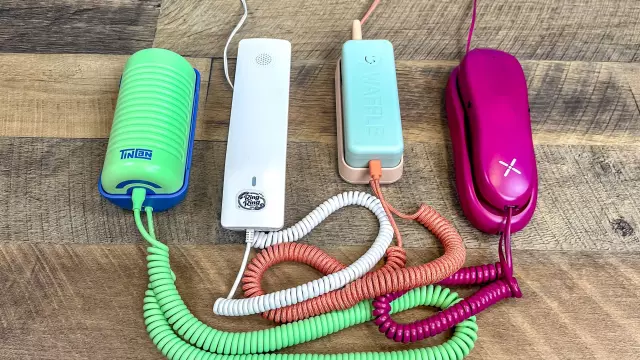
Best Kids' Landline Phones Tested: A Comprehensive Review of Pinwheel, Ring Ring, Tin Can, and Waffle
- Tags
- Product Review
- Parental Controls
- parenting
- Kids Tech
- landline phones
- digital safety
For parents seeking to introduce their children to communication without the overwhelming risks and complexities of a full-fledged smartphone, the modern 'kid-friendly landline' has emerged as a compelling solution. These devices, which leverage VoIP technology rather than traditional copper wiring, offer a controlled environment where parents can dictate who their child talks to, and when. Recently, we put four leading models to the test—the Pinwheel, Ring Ring, Tin Can, and the newly launched Waffle—to determine which truly reigns supreme.
Design and Hardware
When evaluating devices designed for younger users, ergonomics and durability are paramount. The Tin Can phone stood out for its fun, colorful aesthetic, which resonated well with younger testers, though its wide handset proved slightly challenging for smaller hands. Its generous cord length also provided better maneuverability than its competitors. Waffle, meanwhile, impresses with its compact, narrow handset and a unique internal battery that allows for room-to-room mobility. Pinwheel and Ring Ring offer more utilitarian, mountable designs, with Ring Ring leaning into a nostalgic 90s aesthetic that may hold more appeal for parents than children.
Parental Controls and App Ecosystem
Security is the primary driver for these purchases. The Ring Ring app is a top performer in this category, offering a seamless interface that allows for contact management, 'quiet hour' scheduling, and daily time limits ranging from 15 to 240 minutes. It also provides useful functionality like voicemail access and ringer customization. Tin Can and Waffle both provide reliable, easy-to-use apps, though they lack the granularity of the Ring Ring system. Pinwheel, while robust, can feel overly complex due to its dual-purpose app that manages both its landlines and cellular devices, leading to a cluttered user experience.
Setup and Usability
Ease of setup varied significantly. Tin Can and Waffle provided the most straightforward, friction-free experiences, utilizing QR codes and simple app-based pairing. Ring Ring requires an initial wired connection to a router, adding an extra step to the installation process. Pinwheel’s setup process was the most tedious, involving multiple steps including entering Airplane mode and manual network configuration.
Subscription Pricing
While all four services allow for limited communication without a monthly fee, the real value lies in their paid tiers which enable unlimited external calling. Tin Can and Waffle are generally more expensive on the hardware front, though Tin Can offers attractive discounts for bulk device purchases. Pinwheel provides the most flexible subscription structure, offering tiered plans that accommodate different household needs.
Verdict: Which Should You Buy?
After extensive testing, Tin Can emerged as the overall winner with a score of 85, favored for its design and simplicity. Ring Ring followed closely with an 82, offering the best app experience and value for money. Pinwheel and Waffle tied for third at 72, each offering distinct advantages—Pinwheel for its flexible, affordable plans, and Waffle for its innovative hardware features like caller ID and an internal battery. Ultimately, the best choice may depend on the ecosystem already adopted by your child’s social circle.
Comments (0)
Sign in to join the conversation.Sign in
Loading comments...