Beyond the Headset: Hands-On with Meta's Revolutionary New VR Glasses
- Tags
- Wearable Tech
- Meta
- Smart Glasses
- Meta Connect 2026
- Virtual Reality
- Augmented Reality
The End of the 'Bucket' Era
For years, virtual reality has been plagued by a significant barrier to entry: the hardware. From the early days of bulky goggles to the modern Quest series, the experience has often felt like wearing a heavy bucket on one's head—isolating, cumbersome, and physically taxing. However, the reveal at Meta Connect 2026 suggests that the era of the clunky headset is officially coming to a close.
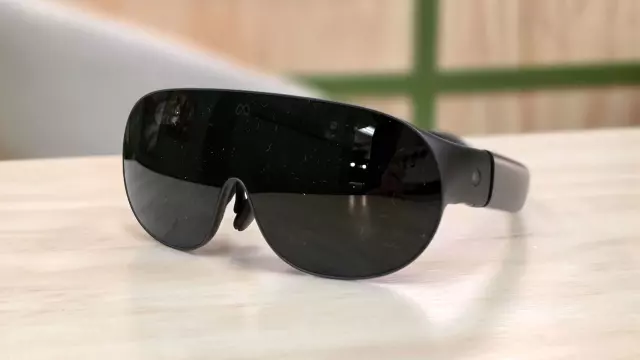
Meta's latest foray into wearable tech is a daring hybrid. It blends the immersive power of a VR headset with the sleek form factor of AR glasses. The result is a device that feels less like a piece of peripheral equipment and more like the future of personal computing.
Hardware Breakdown: Slicing the Bulk
The design philosophy behind the Meta VR Glasses is simple: remove everything non-essential from the face. The glasses themselves house only the lenses, the display, and the necessary sensors. This architectural shift allows the device to weigh a mere 100 grams (approximately 3.57 ounces), a staggering drop from the 500-gram average of traditional Quest headsets.
The Power Puck
To achieve this lightness, Meta moved the 'brains' and the power source into a separate, tethered puck. This external unit contains the Qualcomm XR2 Gen 3 chipset (also known as the Snapdragon Reality Elite) and a battery capable of powering the device for roughly three hours. While this introduces a wire, the trade-off in comfort and thermal management is immense; the glasses remain cool, while the heat is dissipated through the puck.
Cinematic Visuals
Visual fidelity has seen a massive leap. The glasses utilize Micro OLED 5K "ultra compact" pancake screens. These displays are not only Dolby Vision certified with Dolby color but are also IMAX certified—a first for any wearable headset. This ensures that whether you are reading code or watching a 3D blockbuster, the image is crisp, vibrant, and immersive.
A New Way to Interact: Eyes and Gestures
One of the most striking departures from traditional VR is the absence of mandatory controllers. While Bluetooth support for Quest Touch controllers remains for those who want them, the core experience is driven by intuitive eye-tracking and hand-gesture controls.
The glasses use a sophisticated array of sensors on the front and underside to capture movement. This allows for 'natural' computing; users can keep their hands comfortably in their lap or flat on a desk, simply looking at an icon and performing a 'pinch' gesture to activate an app. This eliminates the 'reaching into the aether' movements that have made previous gesture-based systems look awkward in public.
Content and Use Cases: More Than Just Gaming
While Meta's previous hardware was heavily marketed toward gamers, these glasses pivot toward a broader content ecosystem. While 75 "hands-first" titles will launch, the focus is firmly on media and productivity.
- Immersive Cinema: With partnerships including Lionsgate and James Cameron, Meta is pushing a store of 3D movies and shows.
- Spatial Sports: The glasses support 180-degree spatial versions of major sporting events, such as the NBA Finals, allowing users to feel as though they are sitting courtside.
- Virtual Workstations: Demos showed multi-screen environments where the text readability is significantly improved over previous AR attempts, solving the common issue of blurriness when reading small fonts in virtual space.
The Growing Pains: UI and Haptics
Despite the brilliance of the hardware, the software is still evolving. During early hands-on sessions, the user interface (UI) struggled with 'highlighting.' Selecting an item with the eyes only makes the icon slightly brighter, which is nearly invisible on white backgrounds. A bolder border or color change will be necessary for a polished consumer launch.
Additionally, the "Surface Keyboard"—a virtual trackpad and keyboard projected onto a physical table—highlights the ongoing struggle with haptics. Typing without physical feedback remains a challenge, and it remains unclear if third-party haptic gloves or vests will be compatible with this new form factor.
Verdict: The Midpoint of Evolution
With a starting price of $1,299 and a projected release in Spring 2027, Meta is positioning these glasses as a premium bridge between the current VR world and a future where AI glasses are ubiquitous. By nearly eliminating the bulk, Meta has removed the biggest psychological barrier to VR adoption. While the isolation of the VR experience remains, the physical liberation offered by these glasses marks a pivotal step toward a world where our computers are as light as our eyewear.
Comments (0)
Sign in to join the conversation.Sign in
Loading comments...