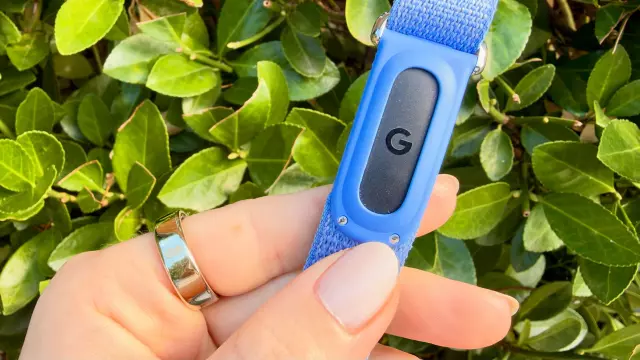
Fitbit Air vs Oura Ring 5: Which Screenless Fitness Tracker Should You Buy?
- Tags
- Wearable Tech
- Fitness Trackers
- Fitbit Air
- Oura Ring 5
- Health and Fitness
- Smart Rings
Introduction: The Rise of Screenless Trackers
2026 has officially emerged as the year of the screenless tracker, a trend that health enthusiasts and minimalists alike are enthusiastically embracing. These discreet, distraction-free devices are engineered to sit seamlessly on your pulse points—tracking your daily steps, stress levels, sleep stages, and workout routines without the constant barrage of smartphone notifications, buzzing alerts, or glowing displays. Among the most anticipated releases in this category are the budget-friendly $99 Fitbit Air and the sleek, premium $399 Oura Ring 5, which stands as the smallest and lightest smart ring currently on the market.
Having tested both devices rigorously over a five-month period, our health experts have broken down every performance metric, design choice, and feature set to help you decide which screenless tracker deserves a spot on your body.
Design and Comfort: Wristband vs. Ring
When it comes to everyday wearability, both the Fitbit Air and Oura Ring 5 excel in comfort, yet they cater to very different aesthetic preferences.
The Fitbit Air is remarkably lightweight and compact compared to bulkier fitness bands or sports watches like the Whoop 5.0 or Garmin Cirqa. Furthermore, it avoids the frustrating issue of holding onto moisture on your skin for hours after a workout or a swim. However, the undisputed winner in the design category is the Oura Ring 5. It truly disappears on your finger, masquerading as high-end jewelry. For professionals or individuals who prefer wearing a traditional mechanical watch—or no watch at all—the Oura Ring 5 is the ultimate discreet health companion. Additionally, it wins major points for hygiene, as rings are exceptionally easy to sanitize and eliminate concerns over sweaty, smelly wrist bands.
Tracking Core Health Metrics: Calories and Steps
Tracking physical activity remains the primary catalyst for purchasing a wearable, but accuracy can vary significantly depending on form factor and algorithms.
Counting Calories
If you are tracking calories for weight management or metabolic health, it is important to remember that no wearable directly measures true metabolic activity or cellular heat production. Instead, devices like the Fitbit Air and Oura Ring 5 rely on educated estimations based on metrics like height, weight, age, and heart rate, while often overlooking granular biological variables like basal metabolic rate (BMR) and body composition. For calorie tracking, this matchup results in a tie—view your daily calorie output as a general trend rather than an absolute scientific fact.
Counting Steps
Step tracking is a staple metric for millions, and after months of side-by-side comparison, the Fitbit Air proved slightly more consistent and accurate for daily step counting out of the box compared to the Oura Ring. While smart rings can achieve high step-tracking accuracy, they require precise placement—ensuring the sensors rest comfortably on the underside of your finger without restricting blood flow—and often benefit from being synced with Apple Health or Android Health platforms.
Sleep Tracking and Recovery Insights
Sleep is increasingly recognized as a vital pillar of longevity, rivaling both diet and exercise in its importance for long-term health and cardiovascular resilience.
Both the Fitbit Air and Oura Ring 5 provide comprehensive sleep analytics, including a daily sleep score out of 100, detailed breakdowns of sleep stages (REM, deep, and light sleep), and personalized actionable tips. However, Oura Ring 5 takes the lead here. Oura provides deeper, more granular sleep analysis natively, whereas unlocking equivalent depth from the Fitbit ecosystem requires a paid Google Health subscription.
Stress, Recovery, and AI Coaching
Monitoring how your body handles daily stressors is crucial for avoiding burnout. Both trackers offer great insights into your nervous system's resilience, focusing heavily on balance rather than raw athletic strain.
While it is a tight race, Fitbit gains a massive edge if you utilize its optional Google Health subscription. The Gemini-powered AI health coach integrated into Fitbit's software ecosystem is arguably the best on the market, offering personalized, context-aware coaching based on your sleep quality, recovery status, and physical exertion.
Female Health Tracking
When it comes to specialized tracking features, the winner is clear: the Oura Ring 5. Oura has historically set the industry standard for menstrual cycle tracking, pregnancy monitoring, and menopause management. Its seamless compatibility with third-party fertility apps like Natural Cycles makes it an indispensable tool for family planning. While the Fitbit Air includes skin temperature sensors, its current software implementation lags behind Oura's robust reproductive health suite.
Price and Value
The financial commitment between these two devices is vastly different:
- Fitbit Air: Priced at $99, it offers incredible value as a one-time hardware purchase for users who do not want ongoing subscription fees.
- Oura Ring 5: Starting at $399, it represents a premium investment that also requires an ongoing membership subscription to unlock its full analytical potential.
Final Verdict: Which Screenless Tracker Should You Buy?
Choosing between the Fitbit Air and the Oura Ring 5 ultimately boils down to your budget, style preferences, and feature priorities:
- Buy the Fitbit Air if: You want a budget-friendly, highly accurate step counter, prefer a screenless experience without breaking the bank, and don't require advanced women's health tracking.
- Buy the Oura Ring 5 if: You want an exquisite, jewelry-grade tracker that allows you to wear your favorite traditional watch, prioritize deep sleep analytics, and need industry-leading female health tracking features.
Comments (0)
Sign in to join the conversation.Sign in
Loading comments...