Google Launches Ambitious 'Project Suncatcher' to Test Space-Based AI Data Centers
- Tags
- AI
- Technology
- SpaceX
- Project Suncatcher
- Data Centers
- Cloud Computing
A New Frontier for AI Infrastructure
The explosive growth of artificial intelligence has created an unprecedented demand for computing power, leading to a scramble for energy that has begun to test the limits of Earth's electrical grid. In an effort to address these mounting challenges, Google has initiated 'Project Suncatcher,' a bold, science-fiction-inspired experiment to move AI data processing into orbit.
Testing Hardware in Extreme Environments
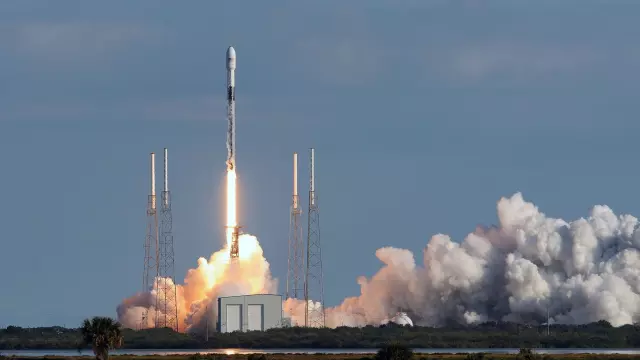
Google is not launching a full-scale data center just yet. The initial phase involves sending its Tensor Processing Units (TPUs) into low Earth orbit via a partnership with SpaceX. The primary objective of this mission is to determine whether these specialized chips can withstand the harsh realities of space, including the violent forces of a rocket launch and the intense radiation of the orbital environment.
To prepare, Google has already subjected its Trillium TPUs to radiation testing at the UC Davis' Crocker Nuclear Laboratory, confirming the chips can endure ionizing doses equivalent to a five-year mission in space. Next week's launch aboard SpaceX's Transporter-18 mission will provide the first real-world data on their performance.
Solving the Energy and Cooling Conundrum
Moving data centers to space offers a significant theoretical advantage: nearly unlimited, consistent access to solar energy. Research suggests that solar panels in orbit can generate up to eight times the power of those on Earth, potentially bypassing the power-grid limitations currently plaguing terrestrial server farms.
However, this transition introduces complex new challenges—most notably, thermal management. In the vacuum of space, heat cannot be dissipated through airflow. Google is currently testing innovative heat pipe and radiator systems designed to dump heat into the void. Furthermore, future iterations would require high-speed laser links to connect clusters of satellites, allowing them to function as a singular, massive, space-borne supercomputer.
The Path Forward
Project Suncatcher remains firmly experimental. Economic viability is a major hurdle; Google estimates that launch costs must drop significantly—to under $200 per kilogram—to make orbital data centers competitive with Earth-based facilities. While wide-scale adoption may still be a distant prospect, the project signals a paradigm shift in how tech giants are conceptualizing the future of AI infrastructure. For now, the world will be watching to see if Google’s gamble in the stars pays off.
Comments (0)
Sign in to join the conversation.Sign in
Loading comments...