Googlebooks Hands-On: Testing the New Android-Powered Laptops and the One That Outshines the Rest
- Tags
- Tech News
- Gemini AI
- Googlebooks
- Android Laptops
- Asus Googlebook 14
- Laptop Reviews
A New Era for the Android Ecosystem
For years, the seamless integration of the Apple ecosystem—where an iPhone, iPad, and MacBook work in perfect harmony—has been the gold standard for consumer electronics. Google is finally launching a direct challenge to this dominance with the introduction of Googlebooks. These are not simply Chromebooks; they represent a entirely new class of laptops powered by a hybrid OS that blends the versatility of Android with the productivity of ChromeOS, all purpose-built to leverage Gemini AI intelligence.
Designed specifically for Android users, Googlebooks aim to eliminate the friction between mobile and desktop computing. Whether it is instant app synchronization or shared system intelligence, these machines are engineered to make your laptop feel like a natural extension of your smartphone. We went hands-on with the first five models to see if they can truly disrupt the market.
First Impressions: Premium Hardware and the 'Glowbar'
While each manufacturer brings its own design philosophy to the table, there is a consistent level of premium quality across the lineup. Every Googlebook we tested featured a high-end aluminum shell, a responsive touchscreen, and a haptic touchpad. To distinguish this new category from traditional notebooks, Google has introduced the 'Glowbar'—a distinct lighting element that serves as a signature for the Googlebook brand.
Starting at $899, these machines aren't budget-friendly entry-level devices. With a standard 16GB of RAM and professional-grade builds, they are clearly positioned as productivity powerhouses for the modern mobile professional.
The Showstopper: Asus Googlebook 14
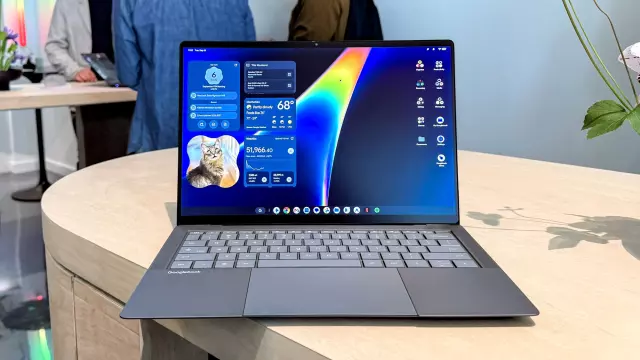
Among the five contenders, the Asus Googlebook 14 ($1,299) is the clear standout. The first thing that strikes you is its impossible lightness; weighing just 2.2 pounds, it rivals the MacBook Air in portability. Despite its feather-light weight, the Nano Ceramic magnesium-aluminum chassis feels incredibly rigid, ensuring the 0.43-inch thin frame doesn't flex under pressure.
Technical Prowess and Display
Under the hood, the base model is powered by the Intel Core Ultra 5 Panther Lake CPU. Asus has paired this with a 70Wh battery, claiming up to 18 hours of endurance, and an advanced cooling system designed to keep the machine silent even during sustained workloads.
The display is where the Asus truly shines. It features a 14-inch 3K OLED touchscreen capable of hitting 1,000 nits of peak HDR brightness. More importantly, the integrated anti-glare technology is highly effective, making it an ideal choice for those who work in bright offices or outdoors.
Multimedia and Tactile Experience
The audio experience is surprisingly robust for such a thin device, utilizing a six-speaker array with dual force-canceling woofers. On the input side, the six-point force-sensing haptic touchpad provides a consistent click feel across its entire surface, complemented by a springy, spacious keyboard that makes long-form typing a breeze.
Exploring the Rest of the Lineup
While the Asus took the crown, the other four Googlebooks offer compelling alternatives depending on user needs:
- Acer Googlebook 14 ($899): The most accessible entry point and the only 2-in-1 convertible in the bunch. It's the perfect hybrid for users who want a tablet-laptop crossover without breaking the $1,000 barrier.
- Dell XPS Googlebook ($999): Bringing the legendary XPS build quality to the Android world, this model features a Qualcomm Snapdragon X Elite chip and a stunning 13.4-inch 2.5K touch display.
- HP Googlebook 14 ($1,299): A svelte machine weighing 2.74 pounds. It distinguishes itself with a unique lattice-less keyboard design that increases deck density while maintaining excellent key travel.
- Lenovo Googlebook 15 ($1,099): The 'big brother' of the group, featuring a 15.3-inch display and a boxier, Pro-style design. Constructed from magnesium-alloy and carbon fiber, it's the go-to for those who prioritize screen real estate.
The Verdict: A Lifestyle Shift in Computing
The introduction of Googlebooks is more than just a hardware refresh; it is a strategic move to create a lifestyle-centric computing experience. By focusing on interoperability and AI integration rather than raw specs alone, Google is targeting the heart of the Android user base.
While the specialized nature of the OS may limit its appeal to those outside the Android ecosystem, the sheer quality of the hardware—exemplified by the Asus Googlebook 14—makes this a formidable alternative to the MacBook. The first wave hits shelves on October 4, marking a pivotal moment in the battle for the future of the mobile office.
Comments (0)
Sign in to join the conversation.Sign in
Loading comments...