Googlebooks Have a Battery Life Problem — Here's What Our Results Show
- Tags
- Tech News
- Laptops
- Googlebooks
- Battery Life
- Chromebooks
Introduction to the Googlebook Battery Dilemma
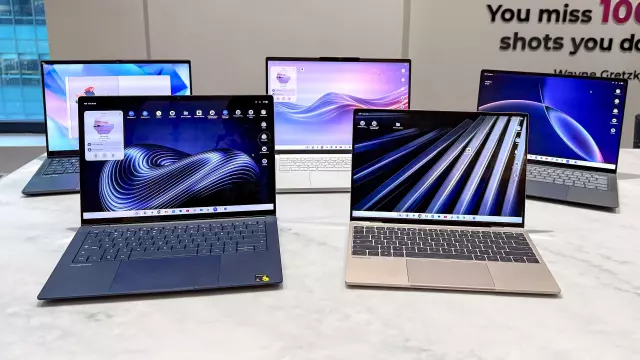
When Google recently introduced its new lineup of Googlebooks, tech enthusiasts were eager to see how the fresh operating system and premium hardware would stack up against established titans like the best Windows laptops and Apple's MacBooks. Powered by advanced chips like the Snapdragon X Elite and Intel Core Ultra, models such as the Dell XPS Googlebook and the HP Googlebook 14 certainly held their own in performance benchmarks. However, as our comprehensive lab testing reveals, these new machines share a glaring shortcoming: a disappointing battery life that falls far short of Google's lofty claims.
How Google Tests vs. Real-World Benchmarking
Google officially claims that its new Googlebooks can deliver at least 14 hours of endurance on a single charge. According to company support documentation, these figures are achieved by running tests with screen brightness set to a minimum of 100 nits, enabling the Dark theme and Battery Saver mode, and maintaining a connected Wi-Fi browsing session.
By contrast, Tom's Guide approaches laptop battery testing with a much more rigorous methodology. Inheriting the demanding test protocol previously used for Chromebooks, our benchmark utilizes a live internet connection powered by a dedicated Chrome extension that automatically cycles through 30 live websites every 30 seconds until the battery is entirely depleted. Furthermore, we configure the displays to a standardized 150 nits of brightness, disable Bluetooth and location services, keep the default theme, and leave the 120Hz refresh rate enabled out of the box. Each machine undergoes this grueling process three times to secure an accurate average.
The Test Results: How the New Googlebooks Stack Up
Our lab data paints a telling picture of how Googlebooks perform under heavy web-browsing conditions. While the HP Googlebook 14 led the pack with a respectable 11 hours and 52 minutes, other models lagged noticeably behind:
- HP Googlebook 14 (70 Wh): 11 hours, 52 minutes
- Acer Googlebook 14 (71 Wh): 10 hours, 25 minutes
- Lenovo Googlebook 15 (70 Wh): 10 hours, 25 minutes
- Dell XPS Googlebook 14 (52 Wh): 10 hours, 4 minutes
- Asus Googlebook 14 (70 Wh): 6 hours, 18 minutes
When placed side-by-side with competing architectures, the gap widens significantly. For instance, the Dell XPS 13 running an identical Intel Core Ultra processor stretched its battery to 14 hours and 57 minutes, while the 13-inch MacBook Air M5 powered through an impressive 15 hours and 37 minutes under similar stress.
The most alarming outlier in our testing was the Asus Googlebook 14, which managed a mere 6 hours and 18 minutes on its first run and 7 hours and 23 minutes on its second, averaging roughly 6 hours and 50 minutes. We are currently working alongside Asus to determine if this specific unit suffered from a hardware defect.
The Impact of OLED Displays and Refresh Rates
A critical factor influencing these power drains is hardware configuration. With the exception of the Dell XPS Googlebook, every Googlebook we tested comes equipped with vibrant OLED panels. While stunning to look at, OLED screens are notoriously power-hungry. Additionally, the XPS model likely saw shorter baseline numbers simply due to its smaller 52Wh battery compared to the 70Wh capacities found on its rivals.
Interestingly, when we tested dropping the display refresh rate from 120Hz down to 60Hz on select models like the Dell XPS Googlebook and HP Googlebook 14, battery life increased by nearly two hours. For mobile professionals constantly on the move, that minor visual adjustment could mean the difference between finishing a workday or searching desperately for an outlet.
Outlook and Final Verdict
Googlebook OS is undeniably in its infancy, leaving open the possibility that future software updates and backend optimizations could improve energy efficiency over time. Real-world usage scenarios, such as continuous Google Meet video calls and heavy web navigation, closely mirrored our benchmark results—with devices like the Lenovo Chromebook 14 dropping from 95% to 74% in just two hours.
For anyone considering a purchase, temper your expectations: a Googlebook will not match the multi-day endurance of a MacBook or an elite Windows machine. If you do decide to take the plunge into Google's new ecosystem, dropping your display refresh rate to 60Hz is an essential step to maximize your daily battery life.
Comments (0)
Sign in to join the conversation.Sign in
Loading comments...