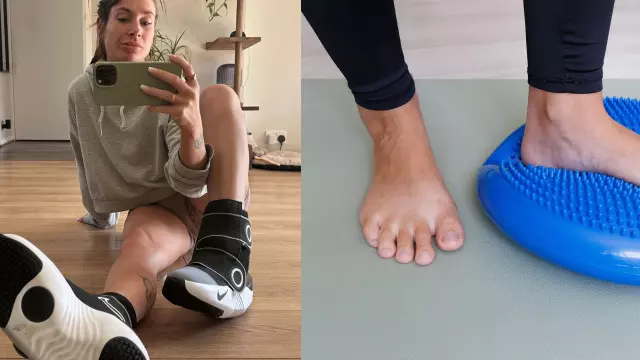
I trained my feet and ankles for a week after having abdominal surgery — and these 3 balance exercises are game-changers
- Tags
- fitness recovery
- balance exercises
- ankle mobility
- low-impact workouts
- surgery recovery
- core stability
Introduction: Navigating Recovery Through Movement
Being told to "just rest" after undergoing surgery can be an immense mental and physical challenge, especially for someone who struggles with sitting still and works as a fitness professional. Following a recent keyhole abdominal surgery, medical advice restricted heavy lifting for up to four weeks, while recommending low-impact and light activities during the initial recovery phase.
Rather than sitting completely inactive, exploring safe ways to move can significantly benefit both mental well-being and physical recovery. To preserve balance, stability, and lower-body strength without compromising healing, incorporating specific beginner-friendly, low-impact foot and ankle exercises proved to be a complete game-changer.
The 3 Essential Balance and Mobility Exercises
These grounding, low-impact movements require minimal equipment—just a standard yoga mat—and can profoundly improve mobility and stability for future strength workouts, yoga, or Pilates routines.
1. Hip Aeroplanes
How to do it: Stand with your feet hip-width apart. Lift your left leg, square your hips, then hinge forward while raising your left leg behind you with control. Once your torso runs parallel to the ground, rotate your hips outward to the left. Pause briefly, then slowly rotate forward to re-square your hips. Complete 6 repetitions before switching sides.
Benefits: This exercise is exceptional for enhancing balance, core control, glute stability, and joint health across the hips, knees, and ankles. Opening the hip delivers a deep stretch that supports long-term mobility.
2. Toe Splays and Scrunches
How to do it: Stand with your feet hip-width apart, pressing down evenly through your big toes, little toes, and heels. Begin rolling your feet from their outer to inner edges, and from heels to toes. Roll through your toes individually from big to little, pressing firmly into the mat. Next, rapidly scrunch and release your feet. Continue this sequence for 60 to 90 seconds per foot.
Benefits: Improving foot-ground connection bolsters your base stability and power during standing or single-leg exercises. It also acts as a grounding technique to reduce stress, boost local circulation, and alleviate restlessness.
3. Figure-4 Heel Raises
How to do it: Stand with feet hip-width apart, placing your hands on your hips and your right ankle just above your left knee. Open your hips as wide as possible. Slowly raise your left heel off the ground into a calf raise. Pause at the top, engage your calf muscles, and lower back down with control. Complete 6 to 8 repetitions before switching sides.
Benefits: This movement targets ankle mobility and calf strength while deeply opening the hips and groin of the standing leg. Because calves act as a secondary circulatory pump, keeping them active supports healthy blood flow.
Why Foot and Stance Training Matters for All Workouts
Developing proper foot-ground connection, toe splay, and ankle mobility establishes a solid foundation for any fitness journey. Whether you engage in unilateral training like running and lunging, or heavy powerlifting and resistance exercises such as Bulgarian split squats, stability starts from the ground up.
By taking things slow, focusing on precise mechanics, and practicing tripod foot placement (distributing weight across the heel, big toe, and little toe), you can preserve lower-body strength and move safely through any recovery period.
Comments (0)
Sign in to join the conversation.Sign in
Loading comments...