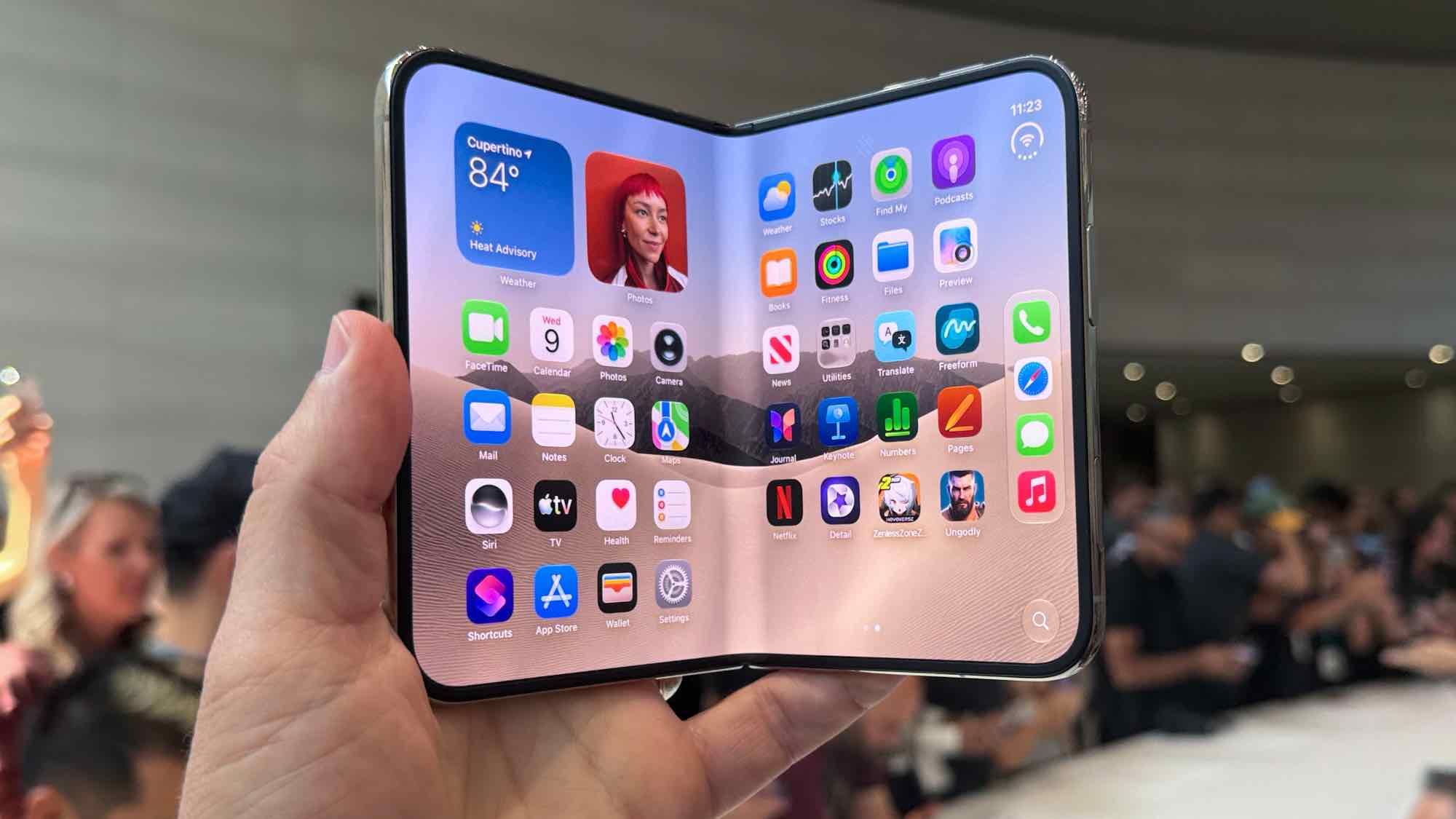
iPhone Duo Hands-On: Apple’s First Foldable Redefines the Category and Challenges Samsung
This post has no video
A New Era for the iPhone: The Foldable Arrival
For years, the tech world has speculated about when Apple would finally enter the foldable smartphone arena. After a period of strategic patience, the wait is over. The iPhone Duo isn't just a new device; it is a statement of intent. Based on initial hands-on impressions, Apple has avoided the first-generation pitfalls that often plague new form factors, delivering a device that feels polished, refined, and ready for the mass market.
The magic of the iPhone Duo lies in its seamless transition. Moving from a standard smartphone profile to a tablet-like experience is fluid, and the integration between hardware and software is quintessential Apple. While competitors have been iterating on the foldable design for several years, Apple's entry puts the rest of the industry on notice.
Design and Display: Engineering Elegance
The iPhone Duo utilizes a dual-screen configuration: a 5.4-inch cover display for quick interactions and a breathtaking 7.6-inch Super Retina XDR main screen. The outer display is thoughtfully proportioned, remaining wide enough for usability without becoming awkward for one-handed operation. A clever addition is the placement of Control Center shortcuts on the right side, optimizing ergonomics for most users.
Inside, the main display is a triumph of engineering. While a crease is visible, it is virtually imperceptible to the touch—a significant achievement in foldable tech. The display is further enhanced by a nano-texture cover layer and a scratch-resistant coating that Apple claims is 40% stiffer than competing products. Additionally, the inner FaceTime camera remains invisible until active, maintaining an uninterrupted viewing experience.
Build Quality and Durability
Apple has leveraged Grade 5 titanium for the iPhone Duo's chassis, ensuring a sturdy build that can withstand the rigors of daily use. The exterior is protected by Ceramic Shield on the back and Ceramic Shield 2 on the front.
Perhaps the most significant advantage over the Samsung Galaxy Z Fold 8 is the iPhone Duo's IP68 rating. While many foldables only offer water resistance, the Duo is protected against both water and dust, making it a much more viable companion for environments like the beach. However, this durability comes with a weight penalty; at 254 grams, it is noticeably heavier than the Galaxy Z Fold 8.
Performance: The Power of A20 Pro
Under the hood, the iPhone Duo is powered by the A20 Pro processor. This chip is specifically tuned for the demands of a larger screen, featuring a 7-core GPU that delivers up to 40% faster graphics performance. During gaming tests, the results were cinematic, with smooth frame rates and high-fidelity textures.
To manage the heat generated by this power, Apple integrated a custom vapor chamber, resulting in 35% better sustained performance compared to the iPhone 17 Pro Max. This ensures that whether you are editing 4K video or playing an intensive adventure game, the device maintains peak efficiency without aggressive throttling.
Software and Multitasking
The software experience is where Apple truly separates itself. Rather than simply stretching iOS, Apple has redesigned its app ecosystem for the foldable form factor. Controls have been shifted to the right side of the screen to facilitate easier reach on the larger display.
The "Flex View" mode allows the software to react dynamically to the angle of the fold. For instance, in Netflix, the video occupies the top half while controls reside on the bottom when the device is half-open. Multitasking is equally intuitive; users can easily snap apps to the left or right of the screen to run two applications simultaneously. Key third-party apps like Zoom and Slack have already been optimized for the Duo.
Camera Capabilities and Innovation
The iPhone Duo opts for a streamlined rear camera array featuring a 48MP Fusion Main camera and a 48MP Ultrawide lens. While it lacks the dedicated telephoto lens found in the Pro series, it utilizes "optical quality" 2x crops for zooming.
Apple is using the foldable design to introduce new photography modes. "Smart Take" allows the device to be propped up and automatically snap photos when subjects are in focus. Other features include "Duo Preview," which allows subjects to see a live preview on the outer screen, and "Kid Cue," which uses animations to help children smile for the camera.
Comparison: iPhone Duo vs. Galaxy Z Fold 8
The rivalry between Apple and Samsung reaches a new peak here. The iPhone Duo wins on durability (IP68), software polish, and Apple Pencil support. It also features MagSafe integration, which Samsung lacks natively.
Conversely, the Galaxy Z Fold 8 maintains an edge in portability, being both thinner and lighter. Samsung also offers more advanced multitasking, allowing three apps to run simultaneously compared to Apple's two. Furthermore, the Z Fold 8 includes a desktop mode for monitor connection and arrives at a slightly lower price point.
Pricing and Availability
The iPhone Duo is a premium investment with a starting price of $1,999 for the 256GB model. Storage options scale up to 2TB, with the top-tier model reaching $3,199. Pre-orders are set to begin on October 16, with an official release date of October 23.