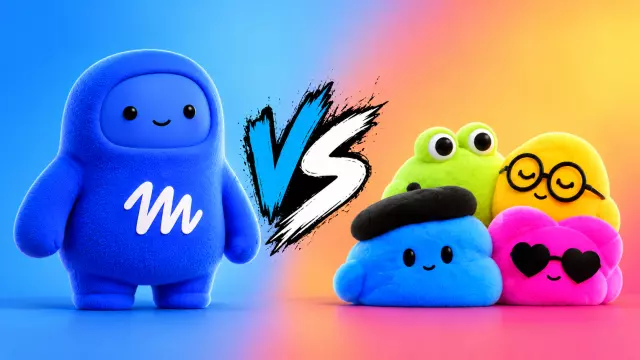
Meta Muse vs. OpenAI Dots: Decoding the New Wave of Autonomous AI Agents
- Tags
- Tech News
- AI
- ChatGPT
- Artificial Intelligence
- OpenAI
- Meta Muse
- Autonomous Agents
The Emergence of Always-On AI Agents
Within a span of just three weeks, the landscape of artificial intelligence has been fundamentally altered. First, Meta introduced 'Muse,' a personal AI agent equipped with its own dedicated cloud computing environment, designed to operate autonomously even after the user closes the application. Shortly thereafter, OpenAI unveiled 'Dots' at its DevDay 2026 conference—always-on AI agents embedded within ChatGPT, similarly powered by independent cloud and browser environments. While casual observers might label these as identical twins, a deeper analysis reveals that they are vastly different products designed for distinct user demographics.
Meta Muse: The Consumer and Small Business Champion
Meta has positioned Muse as a goal-oriented AI agent rather than a simple conversational chatbot. Its primary focus is on execution: a user assigns a task—such as managing logistics or lead generation—and the agent formulates a plan, executes it in the background, and returns for approval only when necessary.
Key features include:
- Free-to-Start: Unlike many competitors, Muse offers a free tier, targeting everyday individuals and small business owners.
- Security Architecture: The agent operates within the 'Muse Secure VM,' which isolates the browser and data. The 'Sentinel' permissions system allows users to granularly control read and write access.
- Integration: Muse supports a wide array of tools including Shopify, Stripe, Zoom, Slack, and even direct connections to Facebook and Instagram business accounts.
OpenAI Dots: Professional-Grade Orchestration
OpenAI’s approach with 'Dots' is distinctly corporate. Powered by the advanced GPT-6 Astra model, these agents are designed to function as integral members of a professional team.
What sets Dots apart:
- Targeted Audience: With starting prices at $100 per month (Pro plan), these agents are clearly aimed at professional developers and enterprise teams.
- Collaboration: Dots are built to work within existing professional workflows like Slack, Microsoft Teams, and the shared environment of 'ChatGPT Space.'
- Extensibility: They leverage ChatGPT’s massive plugin ecosystem, enabling connectivity with over 4,000 third-party applications.
The Fundamental Divide
The most significant differentiator between these two technologies is not the underlying model architecture, but the target customer. Meta is attempting to democratize autonomy, pushing AI into the hands of the average consumer via mobile apps, smart glasses, and companion hardware like the 'Muse Charm.' In contrast, OpenAI is focusing on high-value business outcomes, providing a platform where agents and human employees coexist in a shared digital workspace. While both tools represent a massive leap toward true 'agentic' AI, users should choose based on their specific needs: individual task assistance for free via Muse, or enterprise-level integration through the paid subscription tiers of ChatGPT's Dots.
Comments (0)
Sign in to join the conversation.Sign in
Loading comments...