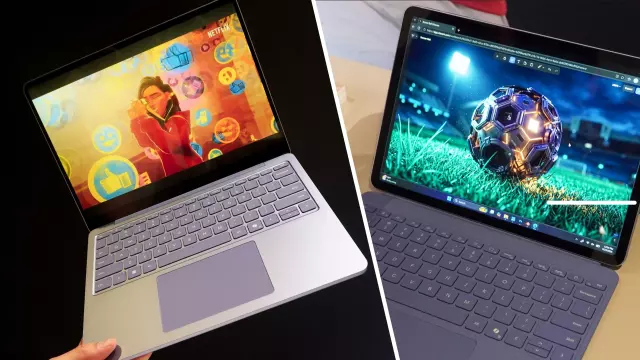
Microsoft's Fanless Snapdragon X2 Plus Surface Pro and Laptop: A Formidable Threat to the MacBook Air
- Tags
- Microsoft Surface
- Snapdragon X2 Plus
- Fanless Laptop
- MacBook Air Rival
- Windows on ARM
- Surface Pro 12-inch
- Surface Laptop 13-inch
A New Era of Silent Power
For years, Apple has held an uncontested lead in the realm of thin, light, and silent computing. The MacBook Air has long served as the gold standard, providing a blueprint for efficiency that Windows laptops struggled to replicate. While many PC manufacturers attempted to match the Air's portability, they often sacrificed either performance or thermal stability, resulting in noisy fans or severe thermal throttling.
However, the landscape is shifting. Microsoft has officially unveiled the new Surface Pro 12-inch and Surface Laptop 13-inch, both powered by the cutting-edge Snapdragon X2 Plus processor. These devices aren't just incremental updates; they represent a fundamental change in how Windows hardware handles high-intensity workloads without relying on active cooling.
Thermal Mastery: Cold Under Pressure
The most striking achievement of the new Surface lineup is its thermal management. Both the Surface Pro and Surface Laptop are entirely fanless, utilizing a sophisticated system of dense cooling pipes to dissipate heat. In previous generations, fanless Windows designs were often plagued by "scorched aluminum" chassis and performance dips as the CPU throttled to prevent overheating.
In rigorous hands-on testing, these devices were pushed through a demanding creative pipeline that would typically trigger loud fans on any high-end laptop. The workflow included:
- Drafting original sketches in real-time.
- Importing those assets into Blender for full 3D geometry rendering.
- Transferring completed renders into Photoshop for complex, multi-layered editing.
Remarkably, all three resource-intensive applications remained active in the background with instantaneous switching and zero perceptible stutter. Even under this load, the chassis of the Surface Pro remained cool to the touch, proving that the Snapdragon X2 Plus architecture can maintain sustained performance without thermal penalties.
Powering the Future with X2 Plus and AI
The efficiency of these machines is driven by the Snapdragon X2 Plus silicon. This architecture boasts graphics rendering speeds up to 60% faster than its predecessors. Furthermore, the inclusion of an 80 TOPS (Trillions of Operations Per Second) NPU ensures that on-device AI tasks are handled with lightning speed, reducing reliance on the cloud and enhancing privacy and responsiveness.
Premium Design and Ergonomics
Beyond the internals, Microsoft has leaned into a premium aesthetic. Both devices feature stunning 500-nit PixelSense displays that provide vibrant, punchy visuals. The aluminum shells are not only durable but come in a variety of playful hues that mask the industrial power within.
The typing experience remains a highlight, with tactile, responsive keyboards that offer satisfying travel. For Surface Pro users, the updated Surface Pen introduces impressive haptics. This "two-way conversation" between the user and the screen allows for tactile feedback—such as feeling the rumble of sand in a digital zen garden or a physical "snap" when aligning images in Photoshop—bringing a new layer of immersion to digital art.
The 'Lapability' Trade-off
Despite the triumphs, there is one notable ergonomic shift in the Surface Pro 12-inch. Traditionally, the keyboard deck snapped magnetically to the bottom bezel to create a stable, locked-in feel. The new design attaches strictly at the bottom spine. While this simplifies the connection, it raises questions about "lapability." Without the angled magnetic brace, the device may feel more wobbly when used on a lap compared to a traditional clamshell laptop.
Final Verdict: The MacBook Air's Greatest Rival
Starting at $1,149 for the Surface Pro and $1,199 for the Surface Laptop, Microsoft is positioning these devices as direct competitors to Apple's core lineup. While the Surface Pro is the clear choice for creators who value versatility, the Surface Laptop offers a more traditional, stable experience.
With their fanless operation, sustained thermal composure, and snappy ARM-based silicon, the Surface Pro and Laptop are the closest Microsoft has ever come to matching the "everyday magic" of the MacBook Air. For the first time, the benchmark has a legitimate challenger.
Comments (0)
Sign in to join the conversation.Sign in
Loading comments...