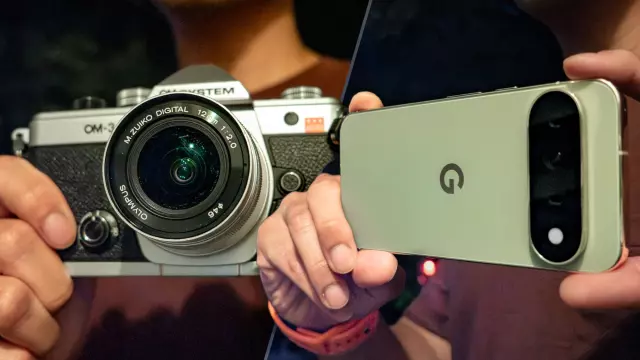
Pixel 11 Pro XL vs $3,000 Astro Camera: A Surprising Night Sky Showdown
- Tags
- Google Pixel 11 Pro XL
- Astrophotography
- Camera Comparison
- Smartphone Photography
- Night Sight
The New Frontier of Mobile Astrophotography
For years, the Google Pixel series has been the gold standard for computational night sky photography. With the release of the Pixel 11 Pro XL, Google has refined its Night Sight engine to be 4.5 times faster than previous generations. But can a smartphone truly compete with dedicated professional hardware? I decided to find out by pitting the Pixel 11 Pro XL against the high-end OM SYSTEM OM-3 Astro, a professional-grade mirrorless camera body priced at $2,500, paired with an Olympus 12mm f/2 lens.
The Battle of Complexity vs. Convenience
Shooting with the OM SYSTEM OM-3 Astro is a discipline that requires patience and expertise. To get the best results, one must manually configure exposure times, balance ISO settings, and ensure absolute focus. It is a process that rewards technical skill but demands time and effort.
In contrast, the Pixel 11 Pro XL offers a seamless, 'point and shoot' experience. The user simply secures the device on a tripod, aims it at the stars, and initiates Night Sight. The device's software automatically identifies that the phone is stationary, enabling a specialized Astrophotography mode that does the heavy lifting, processing light and noise in the background with a single tap of the shutter.
Analyzing the Results
When comparing the final images, the divergence in philosophy is clear. The Pixel 11 Pro XL consistently produces images that are bright and exceptionally clean. The AI-driven processing lifts shadows to an almost overexposed, cool-gray tone, revealing details in the landscape that are invisible to the naked eye. While incredibly impressive, it occasionally bears the hallmarks of high-dynamic-range (HDR) computational processing—a slightly flattened aesthetic.
Conversely, the OM SYSTEM OM-3 Astro delivers an atmospheric, deep-teal sky with punchy natural contrast. The stars themselves are crisper and more defined. However, the mirrorless camera requires manual long-exposure techniques, which can lead to motion blur in the foreground if not perfectly balanced. The Pixel, by contrast, manages to keep both the sky and the ground remarkably sharp through its clever multi-exposure stacking.
The Time-Lapse Factor
Beyond still photography, the Pixel 11 Pro XL offers a significant advantage in workflow. Every astrophotography session on the Pixel automatically generates a smooth time-lapse video of the sky's movement. To achieve this on the OM-3, a user would need an intervalometer, hundreds of individual frames, and significant time in post-production software to render the sequence.
Conclusion: Which is Right for You?
If you are a purist chasing the absolute depth, contrast, and optical clarity of the cosmos, the OM SYSTEM OM-3 Astro remains the superior choice for professional results. However, the Pixel 11 Pro XL makes an undeniable case for the power of computational photography. It offers an incredible capability that is accessible to anyone with a tripod, proving that you don't need to be a seasoned professional to capture the beauty of the night sky.
Comments (0)
Sign in to join the conversation.Sign in
Loading comments...