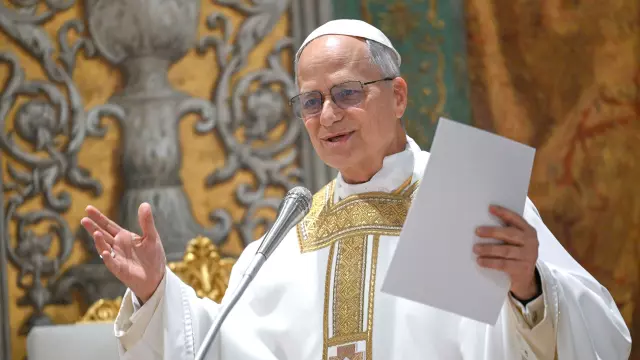
Pope Leo XIV Doubles Down on Anti-AI Stance: 'Algorithms Lack the Spark of Humanity'
- Tags
- Technology News
- Artificial Intelligence
- AI Ethics
- Generative AI
- Pope Leo XIV
- Vatican
- Human Creativity
In a bold declaration that continues his ongoing critique of rapid technological advancement, Pope Leo XIV has issued a strong warning against the proliferation of artificial intelligence in the creative sector. The leader of the Catholic Church took to social media platform X to express his concerns, emphasizing a fundamental divide between human ingenuity and machine-generated content.
The Moral and Ontological Divide
Pope Leo XIV’s latest statement strikes at the heart of the ongoing debate surrounding generative AI. He asserted that there is an 'ontological difference, even before an aesthetic one, between art and what a machine can generate through statistical calculation based on millions of images created by others.' According to the Pope, the absence of a 'spark of humanity' renders AI-generated output fundamentally distinct from the creative expression of a living person. He urged society to act with urgency to distinguish human-authored works from synthetic, algorithmic outputs.
A History of Skepticism
This is not the first instance where Pope Leo XIV has criticized the direction of modern AI development. Earlier in the year, he published an encyclical letter that called for AI technology to be 'disarmed,' suggesting that humanity should focus on preserving human dignity rather than yielding to the influence of autonomous systems. In that same document, he famously referenced J.R.R. Tolkien’s Gandalf to illustrate the moral imperative of acting as guardians of the world, rather than master architects of potentially dangerous technological tides.
Challenges from Industry Leaders
Despite the Vatican's vocal opposition, the push for AI integration remains relentless. Recent reports indicate that companies like Anthropic have attempted to engage with high-profile figures, including the Pope, to present arguments suggesting that their AI models possess a form of consciousness. Such claims have faced intense scrutiny, as critics argue that equating sophisticated statistical patterns with human consciousness is a dangerous mischaracterization. As global institutions grapple with the rapid acceleration of these technologies, the Vatican’s firm, human-centric position highlights the deepening friction between traditional ethics and the Silicon Valley-driven 'AI revolution.'
Comments (0)
Sign in to join the conversation.Sign in
Loading comments...