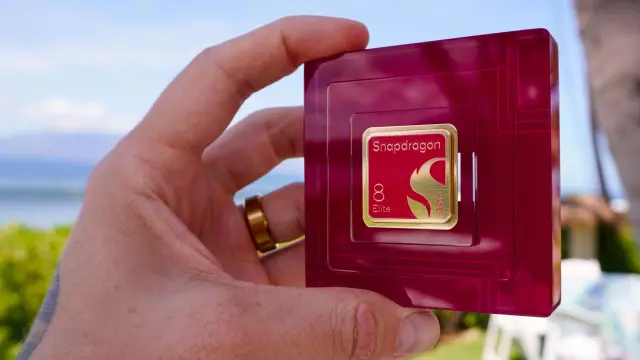
Snapdragon 8 Elite Gen 6 Unleashed: Can the World's First 5GHz Phone Chip Outperform Apple's A20 Pro?
- Tags
- iPhone 18 Pro
- Apple A20 Pro
- Qualcomm
- Snapdragon 8 Elite Gen 6
- Smartphone CPUs
- Mobile Gaming
- Agentic AI
The New Era of Mobile Silicon
The annual battle for smartphone supremacy has reached a fever pitch. Qualcomm has officially unveiled its latest powerhouse: the Snapdragon 8 Elite Gen 6. But in a surprising twist, the company isn't just releasing one chip; they've introduced a tiered approach with the standard 8 Elite Gen 6 and a high-performance 'Extreme' variant. As we move into the 'agentic AI age,' these processors are designed not just to run apps, but to act as intuitive digital assistants that anticipate user needs.
The industry is now looking toward a clash of titans. With Apple's A20 Pro powering the iPhone 18 Pro series, the stage is set for a showdown between Qualcomm's raw clock speeds and Apple's legendary efficiency. Here are the four key areas where the Snapdragon 8 Elite Gen 6 could potentially crush the competition.
1. Breaking the 5GHz Barrier
In a landmark achievement for mobile engineering, the Snapdragon 8 Elite Gen 6 is the world's first mobile CPU to hit 5GHz. Utilizing re-engineered Oryon CPU cores, Qualcomm has pushed clock speeds to levels previously reserved for desktop computers. While Apple has historically dominated single-core performance through architectural 'wizardry,' the sheer frequency of Qualcomm's Prime Cores suggests a massive leap in multicore throughput. This ensures that the most intensive multitasking and professional-grade workloads are handled with unprecedented speed.
2. Console-Grade Gaming with AI Upscaling
Gaming is where the Snapdragon 8 Elite Gen 6 truly attempts to separate itself from the A20 Pro. The chip introduces Adreno Neural Fusion, a technology that brings AI-driven super-resolution and frame generation to smartphones—essentially bringing DLSS-like capabilities to the palm of your hand. Early data suggests a 40% improvement in performance for demanding titles like Honkai: Star Rail and Naraka: Bladepoint. By integrating these features directly into game engines, Qualcomm is lowering the barrier for AAA developers to port high-fidelity titles to Android devices.
3. The 'Sensing Hub' and Agentic AI
Beyond raw power, Qualcomm is betting on 'Agentic AI.' To facilitate this, they've implemented the Sensing Hub. This dedicated system allows the device to remain in a low-power 'always-listening' state, capturing ambient voice and context with minimal latency. While the A20 Pro is undoubtedly powerful, the 8 Elite Gen 6 pairs a massive NPU with a separate, dedicated neural chip. This dual-layer AI approach allows for complex, on-device AI loops to run entirely locally, enhancing privacy and response times for next-generation AI agents.
4. Lifting the Camera Ceiling
For videographers and photography enthusiasts, the 'Extreme' version of the chip is a game-changer. It features an advanced Spectra Image Signal Processor (ISP) that pushes the boundaries of mobile recording. We are now looking at capabilities of 8K video recording at 60 FPS and stunning 4K slow-motion at 240 FPS. While Apple continues to lead in color science and overall image quality, Qualcomm is winning the war of resolution and raw capture capability, giving professional creators more headroom to work with in post-production.
The Common Ground
Despite the fierce competition, the similarities between the Snapdragon 8 Elite Gen 6 and the Apple A20 Pro are striking. Both chips now utilize AI-accelerated GPU cores, prioritize a hybrid blend of performance and efficiency cores, and incorporate a secure enclave for biometric and financial data protection.
Ultimately, both companies are chasing the same goal: maximizing NPU throughput and memory bandwidth to support a future where AI is not a feature, but the core of the operating system. As benchmarks begin to roll in, the world will finally see if raw 5GHz power can overcome Apple's vertically integrated ecosystem.
Comments (0)
Sign in to join the conversation.Sign in
Loading comments...