The End of Clunky VR: Hands-On With Meta’s Revolutionary New VR Glasses
- Tags
- Wearable Technology
- Meta
- Smart Glasses
- Meta Connect 2026
- Virtual Reality
- VR
For years, the virtual reality landscape has been dominated by bulky, heavy headsets that leave users feeling isolated and physically drained after short sessions. During Meta Connect 2026, I finally got the chance to test Meta's latest breakthrough in wearable technology: a pair of sleek, lightweight VR glasses that aim to permanently relegate clunky face-buckets to history.
A New Form Factor for Immersion
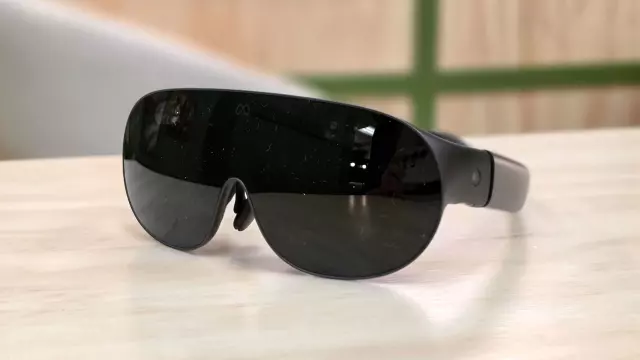
Meta’s new VR glasses adopt a design language closer to high-end aviator goggles than the plastic bricks we are used to. Weighing in at a mere 100 grams, compared to the 500-gram average of traditional headsets like the Quest 3, these glasses are remarkably comfortable. By offloading the primary processing and battery power to a tethered external puck, Meta has achieved a featherlight profile that doesn't overheat or fatigue the wearer.
Visual Fidelity and Precision Control
The core of the experience lies in the internal hardware. The glasses feature Micro OLED 5K 'ultra-compact' pancake lenses, which are both Dolby Vision and IMAX certified. During my time with the device, the sharpness of the display was striking; reading complex code and websites was crisp, avoiding the blurriness typical of earlier AR and VR iterations.
Furthermore, the system relies on intuitive eye tracking and gesture controls. Rather than fumbling for physical controllers or reaching into empty space, I could simply look at an icon and perform a subtle pinch gesture to interact. While the UI occasionally struggled with highlight visibility—making it hard to discern if an item was truly selected—the underlying sensor array is a technological marvel that tracks subtle hand movements with high precision.
Beyond Gaming: The Future of Entertainment
While Meta hasn't abandoned gaming, the focus here is clearly on content consumption and spatial computing. The 3D environment demos were compelling, offering immersive experiences ranging from a concert where you feel part of the crowd to spatial sports broadcasts. The ability to create a multi-screen workstation, combined with the lightweight design, suggests these glasses are positioned as a genuine daily tool for productivity and media consumption rather than just a gaming peripheral.
The Path Forward
With an anticipated launch in spring 2027 and a projected price point of $1,299, this device represents a bold, if expensive, step forward. While the gesture controls require further refinement and the reliance on a tethered puck is a design trade-off, these glasses provide a glimpse into a future where VR is comfortable, accessible, and integrated into our daily workflows. Clunky headsets may not be gone overnight, but the blueprint for their replacement has officially arrived.
Comments (0)
Sign in to join the conversation.Sign in
Loading comments...