Trump Proposes Rebranding AI as 'Super Intelligence': A Linguistic Shift with Technical Consequences
- Tags
- Artificial Intelligence
- Donald Trump
- Superintelligence
- Tech Policy
- ASI
- AI Regulation
A Bold Rebranding at the United Nations
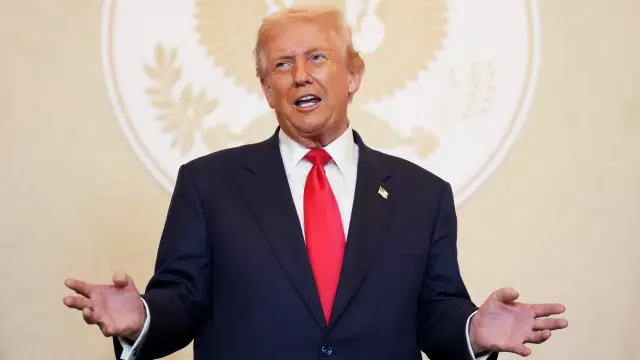
In a high-profile address to the United Nations General Assembly, Donald Trump announced a significant shift in how the United States government will categorize and discuss one of the most transformative technologies of the modern era. The former president declared that the U.S. government would begin replacing the term "artificial intelligence" (AI) with "Super Intelligence" (SI). The rationale behind this change is primarily linguistic: Trump argued that the word "artificial" implies the intelligence is fake or fraudulent, whereas "super" better reflects the extraordinary capabilities of the technology.
"From this point forward, all of United States documents, and hopefully the world's, will be changed to use the much more accurate term 'super' as opposed to artificial," Trump told the assembled delegates. This announcement follows a pattern of messaging previously seen on Truth Social, where Trump urged the United States to accelerate the development of these systems rather than implementing restrictive safety measures that might hinder progress.
The Technical Gap: AI vs. Superintelligence
While the proposal may seem like a simple matter of terminology, it creates a significant clash with established scientific definitions. In the field of computer science and AI research, "superintelligence" is not a synonym for the tools we use today, such as ChatGPT, Claude, or Gemini. Instead, researchers categorize machine intelligence into three distinct tiers:
- Artificial Narrow Intelligence (ANI): This refers to AI designed for specific tasks—such as facial recognition, language translation, or generative text. All current AI, including the most advanced LLMs, falls into this category.
- Artificial General Intelligence (AGI): A hypothetical state where an AI possesses the ability to understand, learn, and apply its intelligence to any intellectual task that a human being can do.
- Artificial Superintelligence (ASI): The theoretical stage beyond AGI, where a system's cognitive abilities surpass those of the brightest human minds across every single intellectual domain, including social skills, general wisdom, and scientific creativity.
By rebranding current ANI as "Super Intelligence," the administration risks blurring the line between existing tools and a theoretical, potentially world-altering technology that has not yet been achieved.
The Risks of Linguistic Ambiguity
The move toward "SI" terminology introduces potential confusion in policy, regulation, and public perception. If a government report warns of the "risks of super intelligence," it becomes unclear whether the document is referring to the current hallucinations and errors of existing chatbots or the existential risks associated with a hypothetical ASI that exceeds human control.
Furthermore, there is a concern regarding consumer trust. Current AI models are far from perfect; they frequently hallucinate facts and struggle with complex multi-step reasoning. Labeling a system that can still provide confidently incorrect answers as "Super Intelligence" may lead users to over-rely on the technology, assuming a level of infallibility that does not exist.
The Global AI Arms Race
Beyond the semantics, the rebranding is a signal of geopolitical intent. Trump framed the mastery of AI as a direct competition between the United States and China. By pushing for "Super Intelligence," the rhetoric emphasizes a drive for dominance and acceleration.
This stance puts the U.S. at odds with several other global leaders and institutions that are currently advocating for international coordination. Many countries are calling for AI to remain under strict human supervision and for the establishment of common global standards to prevent a "race to the bottom" regarding safety and ethics.
Conclusion: A Name Change or a Strategy?
Whether the federal government fully adopts the "SI" acronym remains to be seen, but the proposal highlights a fundamental tension in the AI era: the struggle to balance rapid innovation with accurate description and safe regulation. While changing a label doesn't change the code, it fundamentally changes the conversation about what we are building and how we perceive its power.
Comments (0)
Sign in to join the conversation.Sign in
Loading comments...