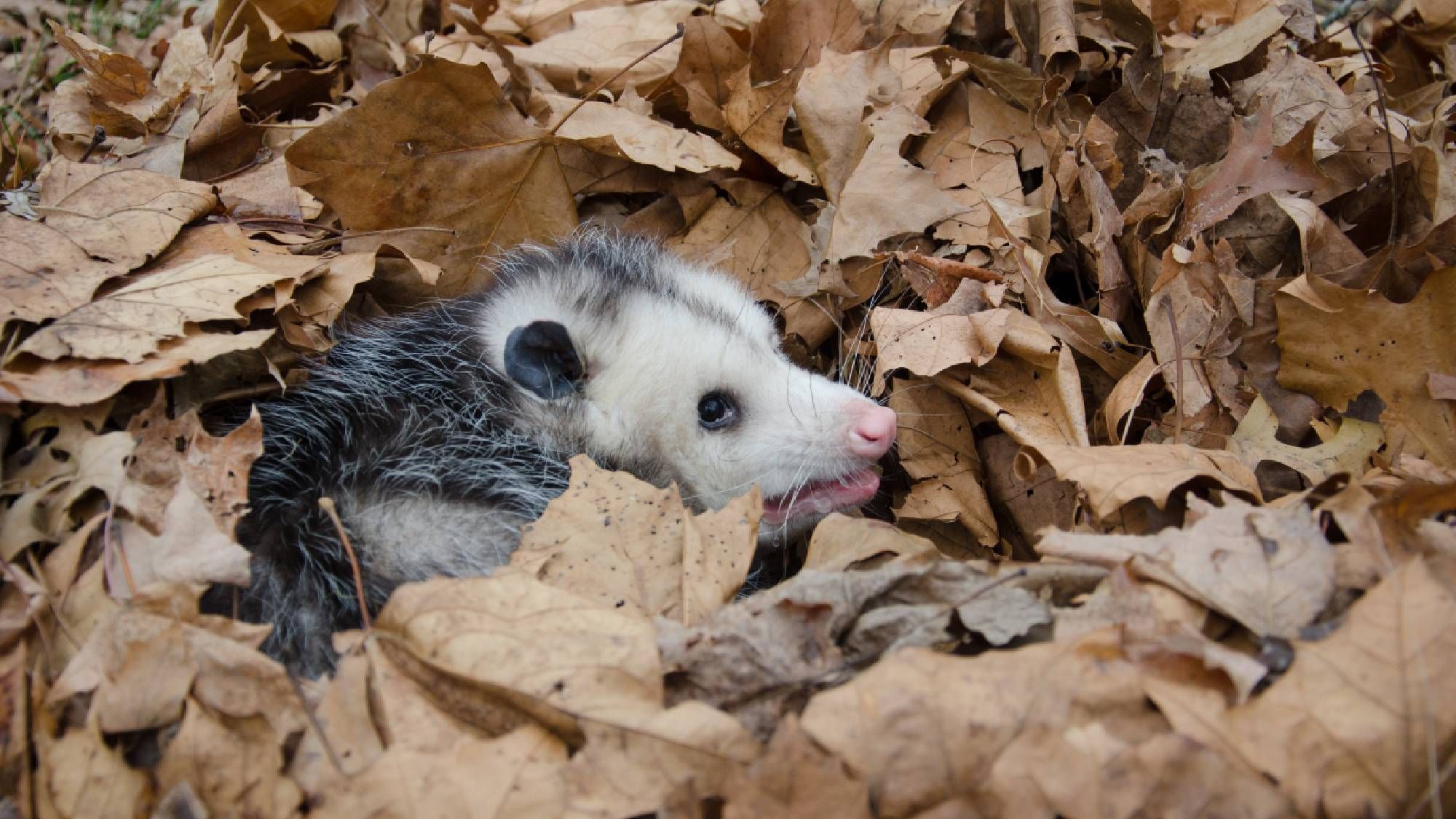
Don't Rake Those Leaves: They Could Be a Home for a Hidden Opossum
This post has no video
As autumn approaches and leaves begin to blanket our lawns, the standard seasonal chore is to grab a rake and clear the clutter. However, before you clear that messy pile of leaves, debris, or twigs from under your deck or near the garage, you might want to take a closer look. That heap of yard waste could actually be a temporary sanctuary for one of North America's most misunderstood creatures: the opossum.
How to Spot an Opossum Nest
Unlike many other animals that construct elaborate, woven structures, opossums are opportunistic, low-effort nesters. They generally look for quiet, sheltered, and dark cavities—such as spaces beneath shed foundations, under stairs, or inside neglected corners of garages. Their nests are essentially un-woven, compressed bundles of dried grass, twigs, bark, and leaves. If you find a dense, slightly messy collection of natural materials stuffed into an out-of-the-way crevice, you are likely looking at an opossum den rather than simple lawn debris.
The 'Leaf Trail' Identifier
One of the most fascinating traits of the opossum is its use of a prehensile tail. Opossums collect bedding by gathering materials with their mouths and using their feet to pass the bundle underneath their bodies. Once they have a suitable load, they wrap their tail firmly around the bundle to carry it back to their chosen spot. If you notice a clear path or scattered leaf trails leading into a gap in your home's foundation, you may have a transient guest nesting nearby.
Debunking Common Opossum Myths
Misinformation about opossums often leads homeowners to fear them unnecessarily. It is time to set the record straight on these beneficial, docile neighbors:
- The Rabies Myth: While it is technically possible for any mammal to contract rabies, it is exceptionally rare in opossums, with reported cases accounting for less than 1% of wildlife instances. Their naturally low body temperature is believed to make them a poor host for the virus, though their solitary, non-confrontational nature is the primary reason they rarely encounter or spread the disease.
- The 'Tick-Eating' Myth: A persistent viral claim suggests that opossums eat thousands of ticks per season. While they are meticulous groomers and might accidentally swallow a tick, recent scientific studies have shown they are not effective tick-control agents. Their diet consists primarily of fallen fruit, insects, and opportunistic scavenging, not tick hunting.
- Property Damage Concerns: Opossums are not built to be vandals. They lack the jaw strength and gnawing instincts of rodents like rats or squirrels. They do not burrow or chew through wood or concrete. If an opossum is under your deck, it didn't create the hole—it simply moved into an existing one.
Why You Should Let Them Be
Opossums are transient, solitary creatures. Most of the time, they are only using a space for a few days to stay warm, dry, and safe. They are unlikely to cause structural damage and typically prefer to avoid human contact altogether. If you encounter an opossum nest, the best approach is to simply leave it alone until the inhabitant moves on, which usually happens quite quickly.