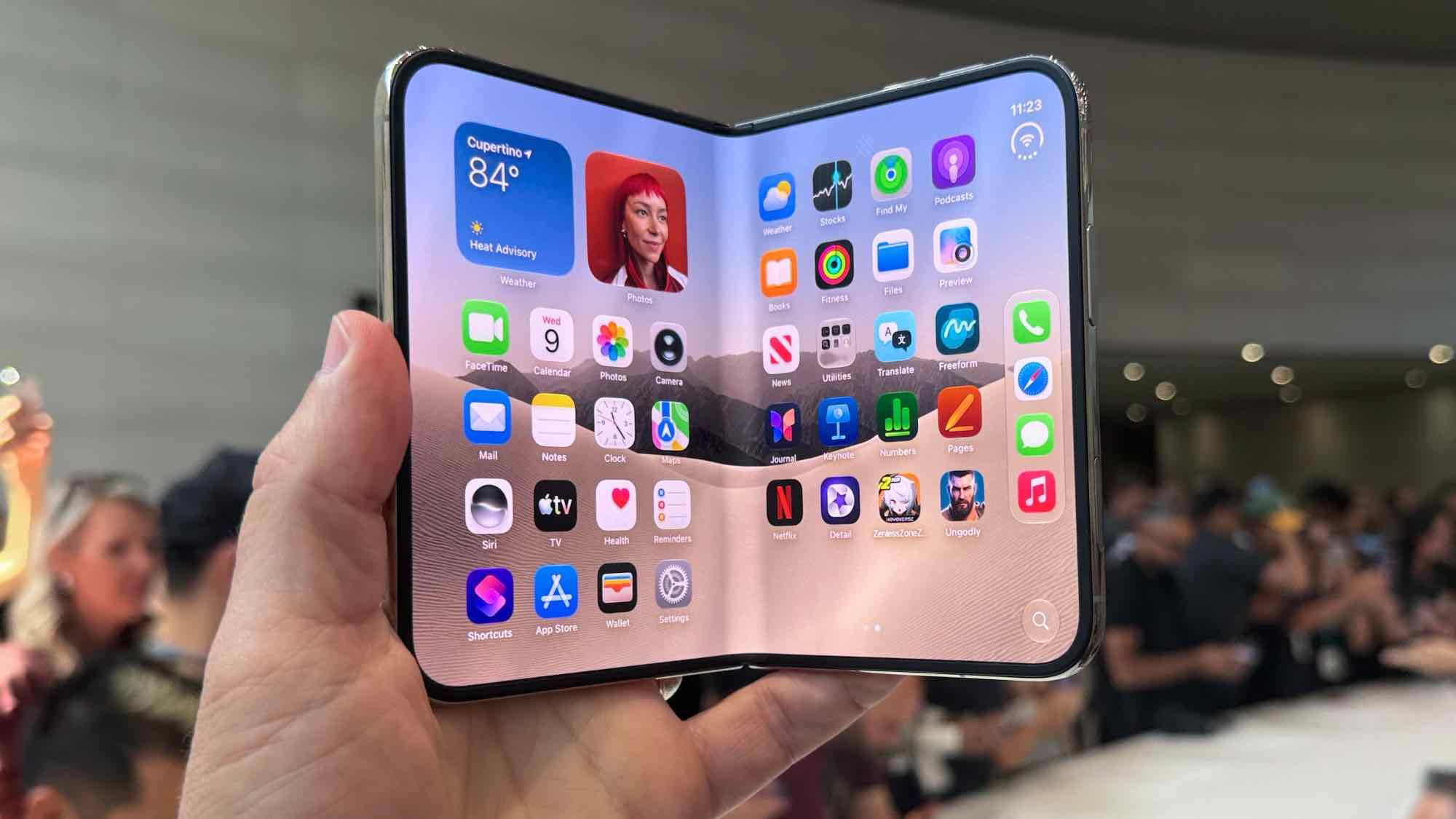
iPhone Duo Hands-On: Apple’s First Foldable Reinvents the Smartphone Experience
A New Era for Apple: The Arrival of the iPhone Duo
For years, the tech world has speculated when Apple would finally enter the foldable arena. While competitors like Samsung and Google have spent several generations refining their folding glass, Apple has opted for a strategy of patient observation. That patience has culminated in the iPhone Duo, a device that doesn't just enter the market—it seeks to redefine it. After a detailed hands-on experience, it is clear that Apple has focused on the 'polish' that has long been the Achilles' heel of the foldable category.
The iPhone Duo seamlessly bridges the gap between a standard smartphone and a compact tablet. The transition is fluid, and the hardware feels like a natural evolution of the iPhone lineage rather than a forced experiment. While it isn't the lightest or thinnest foldable ever made, it brings a level of refinement to the user experience that puts the rest of the industry on notice.
Design, Displays, and the 'Invisible' Crease
The iPhone Duo utilizes a dual-screen setup: a 5.4-inch outer cover display and a massive 7.6-inch main internal screen. The cover display is cleverly proportioned, avoiding the awkward narrowness of some rivals, and features thoughtfully placed Control Center shortcuts on the right side for easier one-handed access.
Inside, the 7.6-inch Super Retina XDR display is nothing short of breathtaking. One of the most significant achievements here is the crease. While still visible under certain lighting, it is virtually imperceptible to the touch. Apple has managed to create a surface that feels continuous, enhancing the immersion whether you are reading an e-book or streaming a movie. Furthermore, the internal screen supports Apple Pencil input, transforming the device into a powerful portable canvas for creators.
Additional design flourishes include an invisible FaceTime camera on the inner display that disappears when not in use, maintaining the integrity of the screen real estate.
Durability and Build Quality
Apple has leveraged Grade 5 titanium for the chassis, ensuring the iPhone Duo is rugged enough for daily wear and tear. Protection is handled by Ceramic Shield on the rear and Ceramic Shield 2 on the front. For the internal display, Apple introduced a nano-texture cover layer with a scratch-resistant coating that is reportedly 40% stiffer than competing foldable screens.
In a major win for longevity, the iPhone Duo boasts an IP68 rating. Unlike many foldables that are only water-resistant, the Duo is protected against both water and dust, making it a viable companion for environments like the beach where sand usually poses a lethal threat to folding hinges.
Performance and Powerhouse Specs
Under the hood, the iPhone Duo is powered by the A20 Pro chip. This processor is specifically tuned for the demands of multitasking and high-end gaming. With a new 7-core GPU, Apple claims a 40% increase in graphics performance, which translates to cinematic visuals in modern titles. To keep the device cool during sustained loads, Apple has integrated a custom vapor chamber, offering up to 35% better sustained performance compared to the iPhone 17 Pro Max.
Battery life is handled by a dual-battery system, providing impressive endurance. Apple rates the device for 44 hours of video playback on the outer display and 31 hours on the main internal screen. Charging is equally rapid, with 60W wired charging capable of hitting 50% in just 20 minutes.
Software: The Secret Sauce
Hardware is only half the story; the software is where the iPhone Duo truly shines. Apple has redesigned its native apps so that controls are shifted to the right side of the screen, optimizing the grip for larger displays. The 'Flex View' mode allows the device to react to its folding angle—for instance, placing Netflix controls on the bottom half and the video on the top when partially folded.
Multitasking is intuitive, allowing users to snap two apps side-by-side with simple gestures. Third-party support is already strong, with apps like Zoom and Slack fully optimized for the unique aspect ratios of the Duo.
The Competitive Landscape: iPhone Duo vs. Galaxy Z Fold 8
The primary rival is the Samsung Galaxy Z Fold 8. When compared, the iPhone Duo wins on durability (IP68 vs IP48), adds MagSafe integration, and offers a more polished software ecosystem. However, Samsung still holds some advantages: the Z Fold 8 is thinner, lighter, and allows for three apps to run simultaneously (compared to the Duo's two). Samsung also offers a desktop mode and comes in at a slightly lower price point.
Final Verdict: Is it Worth the Premium?
With a starting price of $1,999 for 256GB, the iPhone Duo is a significant investment. It is heavier and thicker than some might have hoped, but it compensates with an unparalleled level of build quality and software integration. For those within the Apple ecosystem, the Duo represents the gold standard of what a foldable phone should be.
Comments (0)
Sign in to join the conversation.Sign in
Loading comments...